Annapurna Base Camp Adventure Trek

Trip snapshot
Everything you need to know at a glance
Trip overview
The Annapurna Base Camp Trek is one of Nepal’s most popular Himalayan adventures, offering a perfect combination of breathtaking mountain scenery, traditional village culture, peaceful forests, and unforgettable trekking experiences. This journey takes trekkers deep into the heart of the Annapurna Sanctuary, surrounded by some of the most beautiful snow-capped peaks in the world.
The adventure begins with your arrival in Kathmandu before traveling to Pokhara, the beautiful lake city and gateway to the Annapurna region. From Pokhara, the trek starts through scenic Gurung villages, terraced farmlands, suspension bridges, waterfalls, and lush rhododendron forests while gradually ascending toward the higher Himalayan landscapes.
Highlights of the trek include the traditional villages of Chhomrong, Bamboo, Dovan, and Deurali, where trekkers experience authentic mountain culture, warm hospitality, and peaceful natural surroundings. The trail passes through dense bamboo forests, glacier valleys, alpine landscapes, and dramatic mountain viewpoints with constant views of Annapurna South, Hiunchuli, and the iconic Machhapuchhre (Fishtail Mountain).
One of the most rewarding moments of the journey is reaching Annapurna Base Camp (4,130m), where trekkers are surrounded by a natural amphitheater of towering Himalayan peaks including Annapurna I, Annapurna South, Machhapuchhre, Hiunchuli, Gangapurna, and several glacier-covered mountains. The sunrise view from Annapurna Base Camp creates a magical Himalayan experience that remains unforgettable for every traveler.
The return journey descends through beautiful forests and mountain villages toward Jhinu Danda, where trekkers can relax in natural hot springs beside the Modi Khola River before driving back to Pokhara. The peaceful lakeside atmosphere of Pokhara offers the perfect place to relax after completing the trek. Finally, travelers return to Kathmandu carrying unforgettable memories of Himalayan landscapes, mountain culture, and adventure in Nepal.
Key Highlights:
• Trekking through rhododendron forests, rivers, waterfalls, and glacier valleys
• Stunning close-up views of Annapurna I, Machhapuchhre, Hiunchuli, and Annapurna South
• Exploring traditional Gurung mountain villages and local culture
• Sunrise experience at Annapurna Base Camp (4,130m)
• Scenic trekking inside the Annapurna Sanctuary
• Natural hot spring experience at Jhinu Danda
• Peaceful lakeside relaxation in Pokhara after the trek
• One of Nepal’s most scenic and beginner-friendly Himalayan treks
Day-by-day itinerary
-
Meet and greet upon arrival at Tribhuvan International Airport and transfer to hotel. Traditional garland welcome upon arrival. Check into the hotel and relax after your journey. Evening free for leisure and exploration around Kathmandu city. Overnight stay at hotel in Kathmandu.
Accommodation: 3 Star Hotel
-
After breakfast, drive to Pokhara via Prithvi Highway enjoying scenic rivers, green hills, terraced fields, and countryside landscapes. Upon arrival, check into the hotel and spend the evening exploring Lakeside Pokhara with beautiful views of Phewa Lake and the Annapurna range. Overnight stay at hotel in Pokhara.
Accommodation: 3 Star Hotel
-
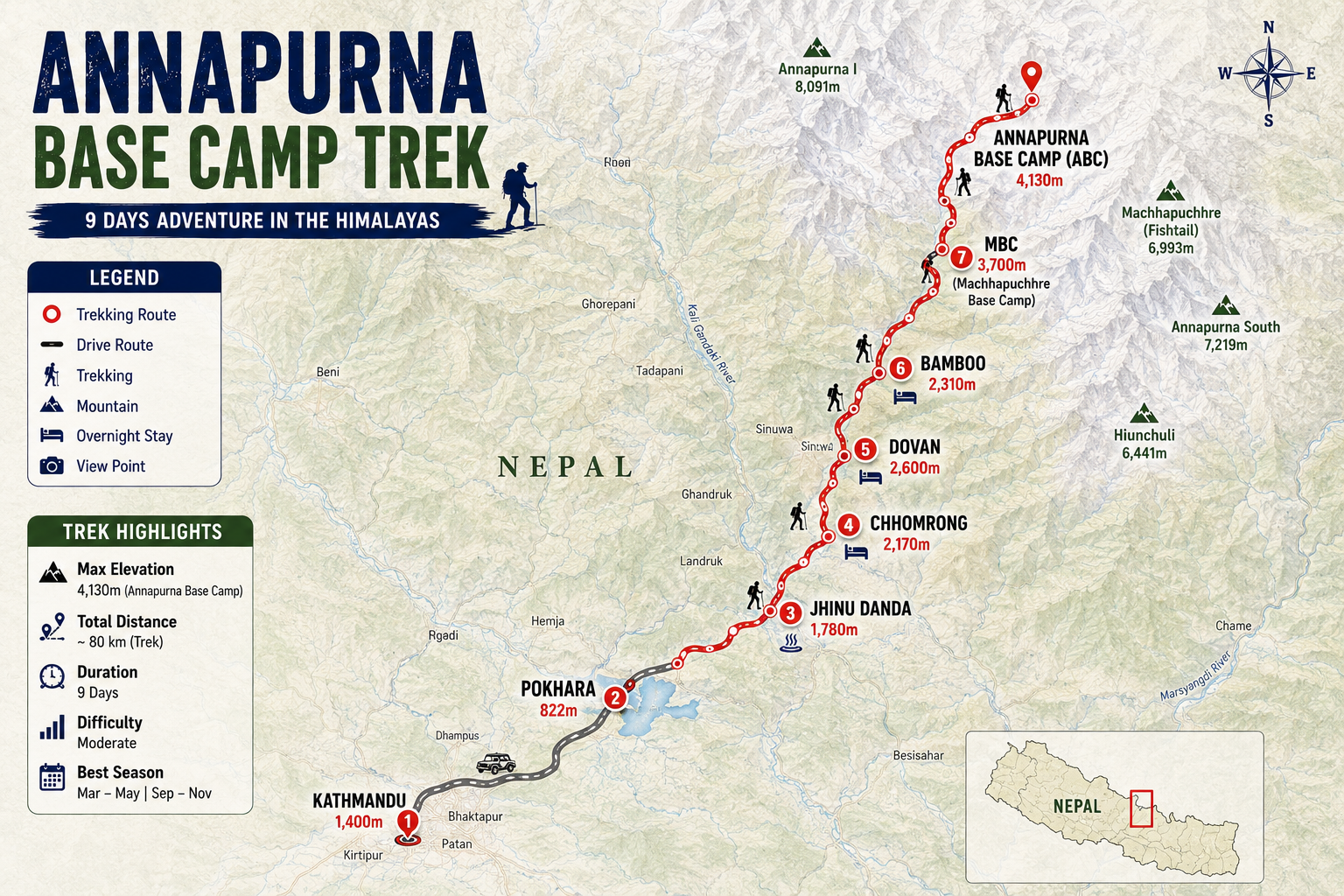
Drive from Pokhara to Jhinu Danda and begin trekking towards Chhomrong village. The trail passes through suspension bridges, waterfalls, terraced farmlands, and traditional Gurung settlements with stunning mountain scenery throughout the journey. Chhomrong offers beautiful panoramic views of Annapurna South and Machhapuchhre. Overnight stay at the lodge in Chhomrong.
Accommodation: Tea House/ Lodge
-
Today’s trek continues through beautiful rhododendron and bamboo forests while crossing rivers and peaceful mountain trails. Descend to Chhomrong Khola before gradually ascending through Sinuwa, Bamboo, and finally reaching Dovan. Enjoy the peaceful Himalayan atmosphere and natural surroundings. Overnight stay at the lodge in Dovan.
Accommodation: Tea House/ Lodge
-
One of the most exciting days of the trek. Continue ascending through the Himalaya, Deurali, and Machhapuchhre Base Camp while enjoying breathtaking glacier scenery and panoramic Himalayan views. Upon arrival at Annapurna Base Camp, witness incredible close-up views of Annapurna I, Machhapuchhre, Hiunchuli, Annapurna South, and surrounding snowy peaks. Overnight stay at the lodge in Annapurna Base Camp.
Accommodation: Tea House/ Lodge
-
Wake up early to witness the magical Himalayan sunrise over Annapurna Base Camp. After breakfast, begin descending through Machhapuchhre Base Camp, Deurali, Himalaya, and forested trails towards Bamboo. Enjoy changing landscapes and peaceful mountain scenery along the descent. Overnight stay at the lodge in Bamboo.
Accommodation: Tea House/ Lodge
-
After breakfast, continue descending through scenic forests and villages towards Jhinu Danda. After approximately 5 hours of trekking, catch a jeep back to Pokhara. Upon arrival, relax and enjoy the peaceful lakeside atmosphere after completing the Annapurna Base Camp adventure. Overnight stay at hotel in Pokhara.
Accommodation: 3 Star Hotel
-
After breakfast, drive back to Kathmandu enjoying scenic highway views of rivers, hills, and countryside villages. Upon arrival, transfer to hotel and enjoy free time for shopping or sightseeing around Kathmandu city. Overnight stay at hotel in Kathmandu.
Accommodation: 3 Star Hotel
-
Breakfast and free time until transfer to Tribhuvan International Airport for your onward journey with unforgettable memories of Annapurna Base Camp Trek and the beautiful Himalayan landscapes of Nepal.
What's included
Included
- Daily Plan briefings and Safety Orientation
- Special traditional welcome on arrival at international airport.
- Meals on full board basis (Breakfast, Lunch & Dinner)
- Hotel Pick-up and Drop-off
- Annapurana Conservation Area entry permit Fees
- Experienced, Government-licensed, English-speaking Guide trained in first Aid
- Accomondation at Kathmandu Hotel (3 Star Hotel in BB plan Menu )
- Tour Map with detailed briefing before Departure
- Accommodation at lodge/ Tea House during the Trek
- Local transportation on a sharing basis during the trek
- All staff-related expenses, including salaries, meals, and Transportation
- Basic first-Aid kit with necessary Medications carried by the Guide
- 24/7 Emergency Support and Coordination by Organization
- Cultural Interaction with local Communities
Not included
- All the Personal Expenses as Tip, Laundry, Beverages and Bar Bill etc.
- Personal Travel Insurance (must cover Trekking and Emergency evacuation)
- Fees charged by Banks for International Transcation
- Extra costs due to weather, road conditions, or unforeseen delays.
- Any Services or Costs not clearly listed under “Package Inclusions”
Dates & availability
There are no fixed group departures for this trip. We run it as a private trip on your preferred dates.
Route map
 View full size
Packing list
| Clothing / Apparel | Clothing Accessories | Footwear |
|---|---|---|
| • Down Jacket | • Warm Gloves | • Trekking Boots |
| • Waterproof Jacket | • Woolen Hat / Beanie | • Lightweight Sandals / Slippers |
| • Fleece Jacket | • Sun Hat / Cap | • Extra Shoelaces |
| • Thermal Inner Wear | • Rain Cover / Rain Coat | • 3 Pairs of Warm Socks |
| • Trekking T-Shirts | • Comfortable Underwear |
|
| • Trekking Pants |
|
|
| Trekking Equipment | Personal Items | Documents | Medical & Safety / Optional Items |
| • Backpack (40L–60L) | • Sunscreen | • Passport Copy | • Personal Medicines |
| • Daypack | • Lip Balm | • Passport Size Photos | • Basic First Aid Kit |
| • Trekking Poles | • Toothbrush & Toothpaste | • Trekking Permits | • Diamox (if required) |
| • Sleeping Bag | • Wet Wipes / Tissue Paper | • Cash for Personal Expenses | • Bandages & Pain Relief Spray |
| • Headlamp / Torch | • Hand Sanitizer | • Water Purification Tablets | |
| • Water Bottles | • Quick Dry Towel | • Snacks / Energy Bars | |
| • Sunglasses | • Soap / Shampoo | • Neck Gaiter / Buff | |
| • Power Bank | • Personal Toiletries | • Earphones | |
| • Camera | • Notebook / Journal | ||
| • Mobile Phone | • Binoculars | ||
| • Drone Camera (with permits if required) |
Frequently asked questions
What is the altitude of Annapurna Base Camp?
Annapurna Base Camp is located at approximately 4,130 meters above sea level.
Can beginners do the Annapurna Base Camp trek?
Yes. Beginners with reasonable fitness and proper preparation can successfully complete the trek.
Is altitude sickness common in Annapurna Base Camp?
Altitude sickness can happen above 3,000 meters if trekkers ascend too quickly. Proper acclimatization, hydration, and rest help reduce risks.
Why is Annapurna Base Camp one of Nepal’s most popular treks?
Annapurna Base Camp is popular because it offers stunning mountain scenery, moderate trekking difficulty, rich culture, tea house experiences, diverse landscapes, and unforgettable Himalayan adventure in a relatively short trekking duration.
How difficult is the Annapurna Base Camp trek?
The trek is considered moderate in difficulty and suitable for beginners with good physical fitness and preparation.
Is Annapurna Base Camp worth visiting?
Yes. Annapurna Base Camp is one of Nepal’s most rewarding trekking destinations offering incredible mountain landscapes, peaceful trails, and unforgettable experiences.
Can travelers combine Annapurna Base Camp with Poon Hill trek?
Yes. Many trekkers combine Poon Hill with Annapurna Base Camp to enjoy panoramic sunrise views and additional scenic trails.
Can travelers see snow at Annapurna Base Camp?
Yes. Snow is common during winter and colder months, especially near the higher sections of the trek.
More details
 Annapurna Base Camp Trek Accommodation Types
The Annapurna Base Camp Trek offers a unique blend of comfortable city hotels and authentic Himalayan teahouses. Before and after the trek, you'll stay in well-equipped hotels in Kathmandu and Pokhara. During the trek, accommodation is provided in traditional family-run teahouses, allowing you to experience the warmth of local hospitality while enjoying spectacular mountain scenery. Although the facilities become more basic as you gain altitude, they provide everything needed for a comfortable and memorable stay.
Accommodation Overview
| Location | Accommodation Type |
|---|---|
| Kathmandu | 3★–5★ Hotels, Boutique Hotels & Guesthouses |
| Pokhara | Hotels, Lakeside Resorts & Guesthouses |
| Trekking Route | Traditional Teahouses & Mountain Lodges |
| Annapurna Base Camp | Basic Mountain Lodges or Seasonal Teahouses |
Room Facilities
Most teahouses offer simple yet comfortable rooms designed for trekkers.
- Twin-sharing rooms with comfortable beds
- Blankets and pillows provided
- Simple wooden furniture
- Shared bathrooms in most villages
- Attached bathrooms available in selected lower-altitude villages
- Bedrooms are generally not heated, so a warm sleeping bag is recommended
Dining Facilities
The dining hall is the social hub of every teahouse, where trekkers enjoy meals, relax, and share stories after a day on the trail.
Dining facilities include:
- Heated dining room with a wood-burning stove
- Freshly prepared breakfast, lunch, and dinner
- Nepali, Tibetan, Chinese, and Western cuisine
- Tea, coffee, hot chocolate, and other beverages
- Comfortable communal seating for trekkers
Additional Facilities
| Facility | Availability |
|---|---|
| Hot Shower | Available (additional charge) |
| Wi-Fi | Available in many villages (paid) |
| Mobile Charging | Available (additional charge) |
| Drinking Water | Boiled, filtered, or bottled water |
| Laundry Service | Available in lower villages only |
| Heating | Dining hall only |
Additional Charges
Some facilities require an additional payment.
| Service | Approximate Cost |
|---|---|
| Hot Shower | NPR 200–500 |
| Mobile Charging | NPR 200–500 |
| Wi-Fi | Varies by location |
| Boiled Drinking Water | Small additional charge |
What to Expect
As you ascend into the Annapurna region, accommodation becomes more traditional and basic due to the remote mountain environment. Rather than luxury hotels, you'll stay in cozy teahouses operated by local families. These lodges offer clean rooms, hearty home-cooked meals, and a welcoming atmosphere where trekkers from around the world gather each evening.
You can expect:
- Comfortable and clean mountain accommodation
- Warm hospitality from local hosts
- Home-cooked meals prepared fresh daily
- Peaceful surroundings with spectacular Himalayan views
- Cozy evenings in the communal dining hall
Accommodation Tips
To make your stay more comfortable, consider the following tips:
- Carry a four-season sleeping bag for extra warmth.
- Bring a power bank to reduce charging costs.
- Carry small Nepalese Rupee notes for Wi-Fi, hot showers, and charging fees.
- Wear warm clothing inside your room, especially during winter.
- Book early during spring and autumn, as teahouses fill up quickly.
- Respect local customs and keep shared facilities clean.
- Spend your evenings in the dining hall, where you can stay warm and meet fellow trekkers.
Why You'll Love Staying on the Annapurna Base Camp Trek
Accommodation on the Annapurna Base Camp Trek is more than just a place to sleep. It offers an authentic Himalayan experience where you'll enjoy genuine local hospitality, delicious home-cooked meals, and peaceful nights surrounded by majestic mountain landscapes. While the facilities are simple, the unforgettable atmosphere, friendly hosts, and breathtaking scenery make every overnight stay a memorable part of your trekking adventure.
 What to Expect from the Annapurna Base Camp Trek
The Annapurna Base Camp Trek is one of Nepal's most iconic Himalayan adventures, offering an incredible combination of breathtaking mountain scenery, diverse landscapes, rich cultural experiences, and authentic village life. From lush forests and cascading waterfalls to towering snow-capped peaks, every day brings a new adventure. The journey takes you deep into the Annapurna Sanctuary, where you'll stand surrounded by some of the highest mountains in the world, creating memories that last a lifetime.
Himalayan Mountain Views
The trek offers spectacular panoramic views of the Annapurna Himalayan range throughout the journey.
| Mountain | Elevation |
|---|---|
| Annapurna I | 8,091 m |
| Machhapuchhre (Fishtail) | 6,993 m |
| Annapurna South | 7,219 m |
| Hiunchuli | 6,441 m |
| Gangapurna | 7,455 m |
| Annapurna III | 7,555 m |
Diverse Landscapes
One of the highlights of the trek is the constantly changing scenery.
You'll walk through:
- Terraced farmlands and traditional villages
- Dense rhododendron, oak, and bamboo forests
- Crystal-clear rivers and waterfalls
- Suspension bridges over deep gorges
- Rocky mountain trails and stone staircases
- Alpine meadows and glacial valleys
- Snow-covered landscapes near the base camp
Traditional Mountain Villages
The trail passes through charming Himalayan villages where you can experience local culture and hospitality.
Popular villages include:
- Ghandruk
- Chhomrong
- Sinuwa
- Bamboo
- Dovan
- Himalaya
- Deurali
Machhapuchhre Base Camp (MBC)
These villages offer:
- Traditional Gurung and Magar culture
- Stone-built houses with slate roofs
- Local handicrafts and mountain lifestyle
- Warm hospitality from local families
- Beautiful viewpoints overlooking the Himalayas
Flora and Wildlife
The Annapurna Conservation Area is Nepal's largest protected area and is home to diverse wildlife and vegetation.
You may encounter:
- Rhododendron forests in spring
- Pine, oak, and bamboo forests
- Himalayan langur monkeys
- Himalayan tahr
- Eagles and colorful Himalayan birds
- Butterflies and seasonal wildflowers
Photography Opportunities
The Annapurna Base Camp Trek is a paradise for photographers.
Popular photography locations include:
- Annapurna Base Camp
- Machhapuchhre (Fishtail Mountain)
- Sunrise over the Annapurna Range
- Rhododendron forests
- Traditional mountain villages
- Suspension bridges
- Waterfalls and rivers
- Jhinu Danda Hot Springs
Natural Hot Springs
After several days of trekking, the natural hot springs at Jhinu Danda provide the perfect place to relax.
Visitors can enjoy:
- Warm natural mineral pools
- Relaxation for tired muscles
- Beautiful riverside surroundings
- A refreshing experience before ending the trek
Cultural Experiences
The Annapurna Base Camp Trek is also a cultural journey through some of Nepal's most welcoming mountain communities.
Along the route you'll experience:
- Traditional Gurung and Magar culture
- Buddhist monasteries and stupas
- Prayer flags and mani walls
- Local festivals (seasonal)
- Traditional mountain architecture
- Authentic Nepalese hospitality
Sunrise and Sunset Views
Every day begins and ends with spectacular Himalayan scenery.
Expect to enjoy:
- Golden sunrise over the Annapurna range
- Sunset illuminating snow-covered peaks
- Crystal-clear mountain skies
- Stunning stargazing on clear nights
A Typical Day on the Trek
A normal trekking day follows a relaxed and enjoyable routine.
| Time | Activity |
|---|---|
| Early Morning | Wake up and enjoy breakfast at the teahouse |
| Morning | Begin trekking through forests, villages, and mountain trails |
| Midday | Lunch at a local teahouse along the route |
| Afternoon | Continue trekking with photo and rest stops |
| Late Afternoon | Arrive at the next village and check into your teahouse |
| Evening | Dinner, trip briefing, and overnight stay |
What Makes the Annapurna Base Camp Trek Special?
Unlike many Himalayan treks, the Annapurna Base Camp Trek offers an incredible variety of experiences in a relatively short period. You'll explore lush forests, traditional villages, high alpine landscapes, natural hot springs, and the magnificent Annapurna Sanctuary, all while enjoying comfortable teahouse accommodation and warm local hospitality. Whether you're a first-time trekker or an experienced adventurer, this journey combines breathtaking scenery, cultural discovery, and unforgettable mountain experiences into one remarkable adventure.
 Best Time / Season to Visit Annapurna Base Camp Trek
The Annapurna Base Camp Trek can be enjoyed throughout the year, but each season offers a different experience. Spring and autumn are considered the best times to trek because of their pleasant weather, excellent visibility, and comfortable temperatures. Winter offers peaceful trails and snowy landscapes, while the monsoon season transforms the region into a lush green paradise, although rain can make trekking more challenging.
Best Seasons at a Glance
| Season | Months | Weather | Trekking Experience |
|---|---|---|---|
| 🌸 Spring | March – May | Mild & Clear | Best for flowers and mountain views |
| ☀️ Summer/Monsoon | June – August | Warm & Rainy | Lush landscapes with fewer trekkers |
| 🍂 Autumn | September – November | Cool & Stable | Best visibility and ideal trekking conditions |
| ❄️ Winter | December – February | Cold & Dry | Snow-covered scenery with quieter trails |
🌸 Spring (March – May)
Spring is one of the most popular seasons for the Annapurna Base Camp Trek.
Highlights include:
- Blooming rhododendron forests
- Pleasant daytime temperatures
- Clear mountain views
- Colorful landscapes
- Excellent photography opportunities
🍂 Autumn (September – November)
Autumn is considered the best trekking season in Nepal.
Why choose autumn?
- Crystal-clear skies
- Stable weather conditions
- Comfortable temperatures
- Outstanding Himalayan views
- Ideal trail conditions
❄️ Winter (December – February)
Winter offers a peaceful trekking experience with beautiful snow-covered scenery.
Expect:
- Cold mornings and nights
- Fewer trekkers
- Snow near Annapurna Base Camp
- Clear mountain views on sunny days
- A quieter trekking experience
☀️ Summer / Monsoon (June – August)
Although less popular, monsoon trekking has its own unique charm.
During this season:
- Hills become lush and green
- Waterfalls are at their fullest
- Trails are quieter
- Rainfall can make paths slippery
- Clouds may reduce mountain visibility
Weather Tips
- Dress in layers for changing temperatures.
- Carry waterproof clothing during the monsoon season.
- Pack sunscreen, sunglasses, and a hat in every season.
- Check weather forecasts before starting the trek.
- Morning hours usually provide the clearest mountain views.
Why Spring & Autumn Are Recommended
Spring and autumn offer the perfect balance of comfortable temperatures, clear skies, spectacular mountain views, and safe trekking conditions. These seasons are ideal for both first-time trekkers and experienced hikers looking to experience the beauty of the Annapurna region.
 Nearby Places to Explore from the Annapurna Base Camp Trek
The Annapurna Base Camp Trek can easily be combined with several of Nepal's most popular tourist destinations. Whether you're looking for cultural sightseeing, peaceful lakes, adventure activities, or short hikes, there are plenty of places worth exploring before or after your trek.
Popular Nearby Destinations
| Destination | Highlights |
|---|---|
| Pokhara | Lakes, adventure activities, restaurants |
| Phewa Lake | Boating and mountain reflections |
| Sarangkot | Sunrise and paragliding |
| World Peace Pagoda | Panoramic views of Pokhara |
| Davis Falls | Unique underground waterfall |
| Gupteshwor Cave | Sacred limestone cave |
| Ghandruk Village | Traditional Gurung culture |
| Jhinu Danda | Natural hot springs |
| Poon Hill | Famous Himalayan sunrise viewpoint |
| Mardi Himal Trek | Short Himalayan trekking adventure |
Pokhara
Pokhara is the gateway to the Annapurna region and one of Nepal's most beautiful cities.
Things to enjoy:
- Lakeside cafés and restaurants
- Boating on Phewa Lake
- Shopping and nightlife
- Adventure sports
- Relaxing lakeside atmosphere
Ghandruk Village
A beautiful Gurung village known for its culture and mountain views.
Highlights include:
- Traditional stone houses
- Gurung Museum
- Local handicrafts
- Stunning Annapurna views
- Friendly local hospitality
Jhinu Danda
Located on the trekking route, Jhinu Danda is famous for its natural hot springs.
Visitors can enjoy:
- Natural hot water pools
- Relaxing riverside environment
- Beautiful forest surroundings
Adventure Activities in Pokhara
After your trek, you can also enjoy:
- Paragliding
- Zip Flying
- Ultra-light Flights
- Bungee Jumping
- Boating
- Mountain Biking
Why Extend Your Trip?
Adding a few extra days allows you to relax after the trek, experience more of Nepal's natural beauty, and explore the cultural and adventure attractions around Pokhara.
 Foods Available on the Annapurna Base Camp Trek
The Annapurna Base Camp Trek offers a surprisingly wide variety of meals. Teahouses serve freshly prepared food every day, with options ranging from traditional Nepali dishes to Tibetan, Chinese, and Western cuisine. Meals are designed to provide the energy needed for long days of trekking while giving visitors the opportunity to experience local flavors.
Breakfast Options
Popular breakfast choices include:
- Porridge
- Tibetan Bread
- Pancakes
- Toast with Jam
- Eggs and Omelets
- Muesli
- Chapati
- Tea or Coffee
Lunch & Dinner Options
Most teahouses offer:
- Nepali Dal Bhat
- Fried Rice
- Chowmein
- Fried Noodles
- Momos
- Pasta
- Pizza (lower villages)
- Vegetable Curry
- Garlic Soup
- Mushroom Soup
- Potato Dishes
Drinks Available
You can enjoy:
- Black Tea
- Milk Tea
- Ginger Tea
- Lemon Honey Tea
- Coffee
- Hot Chocolate
- Soft Drinks
- Bottled Water
- Boiled Drinking Water
Local Food to Try
Don't miss these popular Nepali dishes:
- Dal Bhat
- Momos
- Tibetan Bread
- Thukpa
- Apple Pie
- Rice Pudding
Food Safety Tips
For a healthy trekking experience:
- Eat freshly cooked meals.
- Drink only boiled, filtered, or bottled water.
- Avoid raw salads at higher elevations.
- Wash or sanitize your hands before eating.
- Stay hydrated by drinking 3–4 liters of water daily.
- Inform your guide about any food allergies.
Dining Experience
Most meals are served in the teahouse dining hall, where trekkers gather around a warm stove to enjoy delicious food, relax after hiking, and share stories with fellow travelers.
 Culture and Etiquette of the Annapurna Base Camp Trek
The Annapurna Base Camp Trek passes through villages inhabited mainly by the Gurung and Magar communities, who are known for their warm hospitality and rich cultural traditions. Along the route, you'll also encounter Buddhist monasteries, prayer flags, chortens, and ancient customs that have been preserved for generations. Respecting local traditions helps create meaningful cultural experiences while supporting responsible tourism.
Local Communities
The trek passes through villages primarily inhabited by:
- Gurung Community
Magar Community
These communities are known for:
- Warm hospitality
- Traditional lifestyles
- Rich cultural heritage
- Farming and tourism-based livelihoods
Cultural Highlights
During the trek, you'll see:
- Buddhist monasteries
- Prayer flags
- Chortens (Buddhist shrines)
- Mani walls
- Traditional stone houses
- Local handicrafts
Local Etiquette
Respect local customs by following these simple guidelines:
- Greet people with "Namaste."
- Remove shoes before entering homes or monasteries.
- Dress modestly in villages.
- Ask permission before taking photographs of people.
- Walk clockwise around stupas and mani walls.
- Respect religious sites and local traditions.
- Avoid littering and help protect the environment.
Responsible Tourism
Help preserve the Annapurna region by:
- Carrying reusable water bottles.
- Avoiding single-use plastics.
- Staying on marked trails.
- Supporting locally owned teahouses.
- Respecting wildlife and natural habitats.
- Purchasing local products whenever possible.
Cultural Experience
One of the most rewarding parts of the Annapurna Base Camp Trek is the opportunity to connect with local communities, learn about Himalayan traditions, enjoy authentic Nepali hospitality, and experience a way of life that has remained unchanged for generations. This cultural richness makes the journey just as memorable as the spectacular mountain scenery.
 Safety and Security on the Annapurna Base Camp Trek
The Annapurna Base Camp Trek is considered one of the safest and most popular trekking routes in Nepal. The trail is well-marked, teahouses are available throughout the route, and local guides are experienced in handling mountain conditions. However, trekking in the Himalayas requires proper preparation, awareness of altitude, and respect for changing weather conditions. Following basic safety guidelines will help ensure a safe, enjoyable, and memorable trekking experience.
General Safety Tips
Following these simple precautions will make your trek safer and more enjoyable.
- Hire a licensed guide or trek with a registered trekking company.
- Start your hike early each morning to avoid afternoon weather changes.
- Stay on marked trails and avoid taking shortcuts.
- Walk at a steady pace and take regular rest breaks.
- Inform your guide immediately if you feel unwell.
- Carry enough drinking water and stay hydrated.
- Keep emergency contact information with you at all times.
Altitude Safety
The highest point of the trek is Annapurna Base Camp (4,130 m), where the risk of Acute Mountain Sickness (AMS) increases.
Common Symptoms of Altitude Sickness
- Headache
- Dizziness
- Nausea or vomiting
- Loss of appetite
- Fatigue
- Difficulty sleeping
- Shortness of breath
How to Prevent Altitude Sickness
- Ascend gradually and avoid rushing.
- Drink 3–4 liters of water daily.
- Eat nutritious, high-energy meals.
- Avoid alcohol and smoking.
- Listen to your guide's advice.
- Descend immediately if symptoms become severe.
Trail Safety
Although the trail is well-established, some sections require extra caution.
Be careful when:
- Crossing suspension bridges.
- Walking on steep stone staircases.
- Trekking through narrow mountain trails.
- Walking during rain or snowfall.
- Passing landslide-prone sections after heavy rainfall.
Using trekking poles can improve balance and reduce strain on your knees.
Weather Safety
Mountain weather can change quickly, even during the best trekking seasons.
Carry:
- Waterproof jacket
- Warm clothing
- Gloves and hat
- Sunglasses
- Sunscreen
- Rain cover for your backpack
Always check the weather forecast before starting each day's trek.
Health & Hygiene
Maintaining good hygiene is essential during the trek.
- Drink only boiled, filtered, or bottled water.
- Wash or sanitize your hands before meals.
- Eat freshly cooked food.
- Carry personal medications.
- Pack a basic first-aid kit for minor injuries.
Emergency Services
In case of an emergency:
- Inform your guide immediately.
- Most guides carry basic first-aid supplies.
- Helicopter evacuation is available if necessary.
- Comprehensive travel insurance covering high-altitude trekking and emergency evacuation is highly recommended.
Essential Safety Gear
Carry these items for a safer trek:
- First-aid kit
- Headlamp or flashlight
- Trekking poles
- Power bank
- Reusable water bottle
- Water purification tablets or filter
- Emergency whistle
- Personal medications
Safety Tips for Solo Trekkers
If trekking independently or with a guide:
- Share your itinerary with family or friends.
- Avoid trekking alone after dark.
- Keep valuables secure.
- Carry a fully charged mobile phone.
- Stay in established teahouses.
Why Safety Matters
Proper preparation and responsible trekking are the keys to a successful Annapurna Base Camp adventure. By following your guide's instructions, staying aware of altitude and weather conditions, and carrying the right equipment, you can safely enjoy one of Nepal's most breathtaking trekking experiences. With sensible planning and a positive attitude, the Annapurna Base Camp Trek offers a rewarding and unforgettable journey through the heart of the Himalayas.
 Transportation Facilities for the Annapurna Base Camp Trek
Reaching the Annapurna Base Camp Trek is convenient, with several transportation options available from Kathmandu to Pokhara and onward to the trekking starting point. Travelers can choose between flights, tourist buses, or private vehicles depending on their budget, schedule, and comfort preferences. Most trekking packages include transportation as specified in the itinerary.
Transportation Overview
| Route | Transportation Options | Duration |
|---|---|---|
| Kathmandu → Pokhara | Tourist Bus | 7–9 Hours |
| Kathmandu → Pokhara | Domestic Flight | 25–30 Minutes |
| Kathmandu → Pokhara | Private Car/Jeep | 6–7 Hours |
| Pokhara → Trek Starting Point | Private Jeep | 2–3 Hours |
| Trek Ending Point → Pokhara | Jeep/Private Vehicle | 2–3 Hours |
Transportation Options
Depending on your itinerary, you may travel by:
- Tourist Bus
- Domestic Flight
- Private Car
- Private Jeep
- Shared Local Jeep
Tourist Bus
Tourist buses are the most popular and economical option.
Features include:
- Comfortable reclining seats
- Air-conditioned buses (selected operators)
- Scenic drive along rivers and hills
- Rest stops for meals and refreshments
Domestic Flight
Flying is the quickest way to reach Pokhara.
Benefits include:
- Flight duration of approximately 25–30 minutes
- Spectacular aerial views of the Himalayas
- Saves valuable trekking time
- Daily scheduled departures
Private Vehicle
Private transportation is ideal for families and small groups.
Advantages:
- Flexible departure times
- Comfortable journey
- Direct hotel pickup and drop-off
- Suitable for customized itineraries
Transportation Tips
- Book flights early during peak trekking seasons.
- Carry essential items in your daypack.
- Keep valuables with you at all times.
- Weather may occasionally affect domestic flight schedules.
- Travel insurance is recommended for flight delays or cancellations.
 Annapurna Base Camp Trek Difficulty and Physical Fitness Required
The Annapurna Base Camp Trek is considered a moderate Himalayan trek. It is suitable for beginners with good physical fitness as well as experienced trekkers seeking a rewarding mountain adventure. Although the trail does not require technical climbing skills, it involves several days of walking through varied terrain, including steep stone staircases, forest trails, and high-altitude paths.
Trek Overview
| Difficulty Level | Moderate |
|---|---|
| Maximum Elevation | 4,130 m (Annapurna Base Camp) |
| Trek Duration | 7–12 Days |
| Daily Walking | 5–7 Hours |
| Trail Type | Stone Steps, Forest Trails & Mountain Paths |
Physical Fitness Required
This trek is suitable for:
- Beginners with good fitness
- Regular hikers
- Adventure enthusiasts
- Families with active teenagers
- Experienced trekkers
Physical Preparation
Before the trek, it's recommended to:
- Walk regularly for several weeks.
- Practice hiking on hills or stairs.
- Improve cardiovascular fitness through running, cycling, or swimming.
- Strengthen leg and core muscles.
- Practice carrying a light backpack.
Trek Challenges
During the trek, you may encounter:
- Long uphill climbs
- Steep stone staircases
- High altitude above 3,000 meters
- Changing mountain weather
- Cold mornings and evenings
Tips for a Comfortable Trek
- Walk slowly and maintain a steady pace.
- Drink plenty of water.
- Take regular breaks.
- Eat nutritious meals.
- Listen to your guide's instructions.
- Get adequate rest each night.
Is This Trek Right for You?
The Annapurna Base Camp Trek is an excellent choice for anyone looking to experience Nepal's Himalayan beauty without requiring technical mountaineering skills. With proper preparation and a positive attitude, trekkers of various ages and experience levels can successfully complete this unforgettable journey.
 Annapurna Base Camp Trek Cost Breakdown
The cost of the Annapurna Base Camp Trek depends on the duration of the trek, accommodation standard, transportation, and services included in your package. While most trekking packages cover accommodation, permits, guide services, and transportation, travelers should also budget for personal expenses such as beverages, Wi-Fi, charging, hot showers, and tips.
Estimated Cost Breakdown
| Expense | Estimated Cost (USD) |
|---|---|
| Trek Package | $550–$900 |
| Guide | Usually Included |
| Accommodation | Usually Included |
| Meals During Trek | Usually Included |
| ACAP Permit | Included or Approx. $25 |
| Transportation | Included (Depends on Package) |
| Porter (Optional) | $20–30 per day |
| Travel Insurance | Varies |
| Personal Expenses | $100–200 |
Personal Expenses
You may need extra money for:
- Hot showers
- Mobile charging
- Wi-Fi
- Bottled drinks
- Snacks
- Laundry
- Souvenirs
- Tips for guides and porters
Payment Methods
Most trekking companies accept:
- Credit/Debit Cards
- Bank Transfer
- Online Payment Gateway
- Cash (Nepalese Rupees or USD)
Money-Saving Tips
- Book as a group for better rates.
- Carry a reusable water bottle.
- Bring snacks from Kathmandu or Pokhara.
- Carry enough cash for mountain villages.
- Book your trek in advance.
 Tips for Your Annapurna Base Camp Trek
Proper preparation is the key to enjoying a safe and memorable trekking experience. Packing wisely, staying hydrated, and respecting mountain conditions will help you make the most of your Annapurna Base Camp adventure.
Before the Trek
- Improve your fitness with regular walking or hiking.
- Break in your trekking boots before the trip.
- Purchase comprehensive travel insurance.
- Check weather forecasts before departure.
- Pack light but include essential gear.
During the Trek
- Walk at a comfortable pace.
- Drink 3–4 liters of water daily.
- Eat balanced meals for energy.
- Wear layered clothing.
- Protect yourself from the sun with sunscreen and sunglasses.
- Listen to your guide at all times.
Packing Essentials
Don't forget to bring:
- Warm clothing
- Waterproof jacket
- Trekking boots
- Trekking poles
- Sleeping bag
- Water bottle
- Personal medications
- Power bank
- Headlamp
- Camera
Helpful Advice
- Carry enough cash for personal expenses.
- Start trekking early each morning.
- Respect local customs and traditions.
- Keep the trails clean.
- Enjoy the journey, not just the destination.
 Documents Required for the Annapurna Base Camp Trek
Before beginning your trek, ensure you have all the necessary travel documents. Carrying both printed and digital copies is recommended to avoid any inconvenience during your journey. These documents are required for permit processing, hotel check-ins, and emergency situations.
Essential Documents
| Document | Required |
|---|---|
| Valid Passport (Minimum 6 Months Validity) | ✅ |
| Nepal Tourist Visa | ✅ (Foreign Nationals) |
| Passport-sized Photographs | Recommended |
| Travel Insurance Certificate | Highly Recommended |
| Flight Tickets | Recommended |
| Hotel & Trek Booking Confirmation | Recommended |
| Emergency Contact Details | Recommended |
For Indian Citizens
Indian nationals may enter Nepal using:
- Valid Passport or
- Original Voter ID Card
Travel Insurance
Your insurance should ideally cover:
- High-altitude trekking up to 3,000 meters
- Emergency helicopter evacuation
- Medical treatment
- Trip cancellation or interruption
- Personal accident coverage
Document Tips
- Keep digital copies on your phone or cloud storage.
- Carry photocopies separately from the originals.
- Store important documents in a waterproof pouch.
- Present documents whenever requested at checkpoints or hotels.
Having all the necessary documents prepared before your departure ensures a smooth and hassle-free trekking experience, allowing you to focus on enjoying the incredible journey to Annapurna Base Camp.
 Permits Needed for the Annapurna Base Camp Trek
To protect the natural beauty and biodiversity of the Annapurna region, every trekker must obtain the required trekking permits before entering the conservation area. These permits support trail maintenance, environmental conservation, local community development, and visitor safety. When you book with a registered trekking company, the permit process is usually handled on your behalf.
Required Permits
| Permit | Required | Purpose |
|---|---|---|
| Annapurna Conservation Area Permit (ACAP) | ✅ Yes | Entry into the Annapurna Conservation Area |
| TIMS Card* | Depending on current regulations | Trekker registration and safety |
*TIMS requirements may vary depending on the latest trekking regulations and whether you are trekking independently or through a registered agency.
Annapurna Conservation Area Permit (ACAP)
The ACAP is mandatory for all trekkers entering the Annapurna Conservation Area.
Permit Details
- Required for all foreign trekkers
- Valid for the entire trekking duration
- Helps protect wildlife, forests, and local communities
- Checked at several checkpoints along the trail
Documents Required for Permit Application
Prepare the following documents:
- Valid Passport
- Passport-sized photographs (if required)
- Nepal Tourist Visa
- Permit fee
- Trekking itinerary (if requested)
Why Are Permits Important?
Permit fees contribute to:
- Conservation of forests and wildlife
- Maintenance of trekking trails
- Waste management programs
- Community development projects
- Sustainable tourism initiatives
- Visitor safety and management
Permit Tips
- Apply for permits before starting the trek.
- Keep permits with you throughout the journey.
- Present permits at designated checkpoints.
- Book with a licensed trekking company for hassle-free permit arrangements.
 Annapurna Base Camp Trek Booking and Payment Procedures
Booking your Annapurna Base Camp Trek is simple and can be completed online or through a licensed trekking company. Most operators provide flexible departure dates, customized itineraries, and secure payment options. Booking in advance is recommended, especially during the busy spring and autumn trekking seasons.
Booking Process
| Step | Description |
|---|---|
| 1 | Choose your preferred trekking itinerary |
| 2 | Select your travel dates |
| 3 | Confirm the package and services |
| 4 | Submit passport details |
| 5 | Pay the booking deposit |
| 6 | Receive your booking confirmation |
| 7 | Pay the remaining balance before the trek |
Payment Methods
Most trekking companies accept:
- Bank Transfer
- Credit Card
- Debit Card
- Online Payment Gateway
- Cash (Nepalese Rupees or USD)
Before Confirming Your Booking
Make sure to check:
- Package inclusions and exclusions
- Accommodation category
- Transportation arrangements
- Permit fees
- Guide and porter services
- Cancellation policy
- Travel insurance requirements
Booking Tips
- Book early during peak trekking seasons.
- Read the itinerary carefully.
- Keep copies of payment receipts.
- Confirm your arrival details before traveling.
- Inform your operator about dietary needs or medical conditions.
 Factors to Consider Before Choosing the Annapurna Base Camp Trek
The Annapurna Base Camp Trek is suitable for a wide range of travelers, but choosing the right trek depends on your interests, fitness level, available time, and travel budget. Considering these factors beforehand will help you enjoy a smoother and more rewarding trekking experience.
Important Factors
| Factor | Things to Consider |
|---|---|
| Trek Duration | 7–12 Days |
| Difficulty | Moderate |
| Maximum Altitude | 4,130 m |
| Best Season | Spring & Autumn |
| Budget | Package cost and personal expenses |
| Physical Fitness | Moderate level required |
| Accommodation | Teahouses and mountain lodges |
| Weather | Can change rapidly in the mountains |
Before Booking, Ask Yourself
- How many days do I have for the trek?
- Am I physically prepared for daily hiking?
- Which season suits my travel plans?
- What is my budget?
- Do I prefer a private or group trek?
- Should I hire a porter?
- Do I have suitable trekking equipment?
- Have I purchased travel insurance?
Choosing the Right Trekking Company
Select a company that offers:
- Experienced licensed guides
- Good safety record
- Transparent pricing
- Positive customer reviews
- Reliable communication
- 24/7 emergency support
- Flexible booking options
Final Planning Tips
- Prepare physically before arrival.
- Carry proper trekking gear.
- Allow extra days for weather-related delays.
- Respect local culture and the environment.
- Enjoy the journey at your own pace.
You might also like

Manaslu Circuit Trek Package: A Complete Himalayan Adventure Across Larke Pass

Holy Mt Kailash Via Kathmandu & Lhasa Tour for Indian Nationals

Deluxe Overland Tour Via Kyrung – Indian Nationals

Tamang Heritage Trail Trek Package: Experience the Culture and Landscapes of the Langtang Region

Langtang Gosaikunda Trek Package: A Himalayan Journey Through Langtang Valley and the Sacred Gosaikunda Lakes

Ama Yangri Trek Package: A Scenic Short Trek in the Helambu Region of Nepal
We are associated with