
Kathmandu UNESCO World Heritage Tour

Trip snapshot
Everything you need to know at a glance
Trip overview
The Kathmandu Valley is home to one of the world's richest collections of cultural heritage. Recognized by UNESCO as a World Heritage Site in 1979, the valley preserves centuries of history, art, architecture, religion, and traditional craftsmanship. Although often referred to as the "7 UNESCO World Heritage Sites of Kathmandu," the designation actually covers seven monument zones spread across the Kathmandu Valley, including Kathmandu, Lalitpur (Patan), and Bhaktapur.
These heritage sites represent the cultural and spiritual identity of Nepal. Ancient palaces, sacred Hindu temples, Buddhist stupas, and historic city squares showcase exceptional Newari architecture and living traditions that continue to thrive today. Every year, millions of travelers visit these landmarks to experience Nepal's unique blend of Hinduism and Buddhism, vibrant festivals, intricate wood carvings, and centuries-old monuments.
Exploring all seven UNESCO World Heritage Sites offers a complete journey through Nepal's history, from royal kingdoms and medieval artistry to sacred pilgrimage destinations and living cultural heritage.
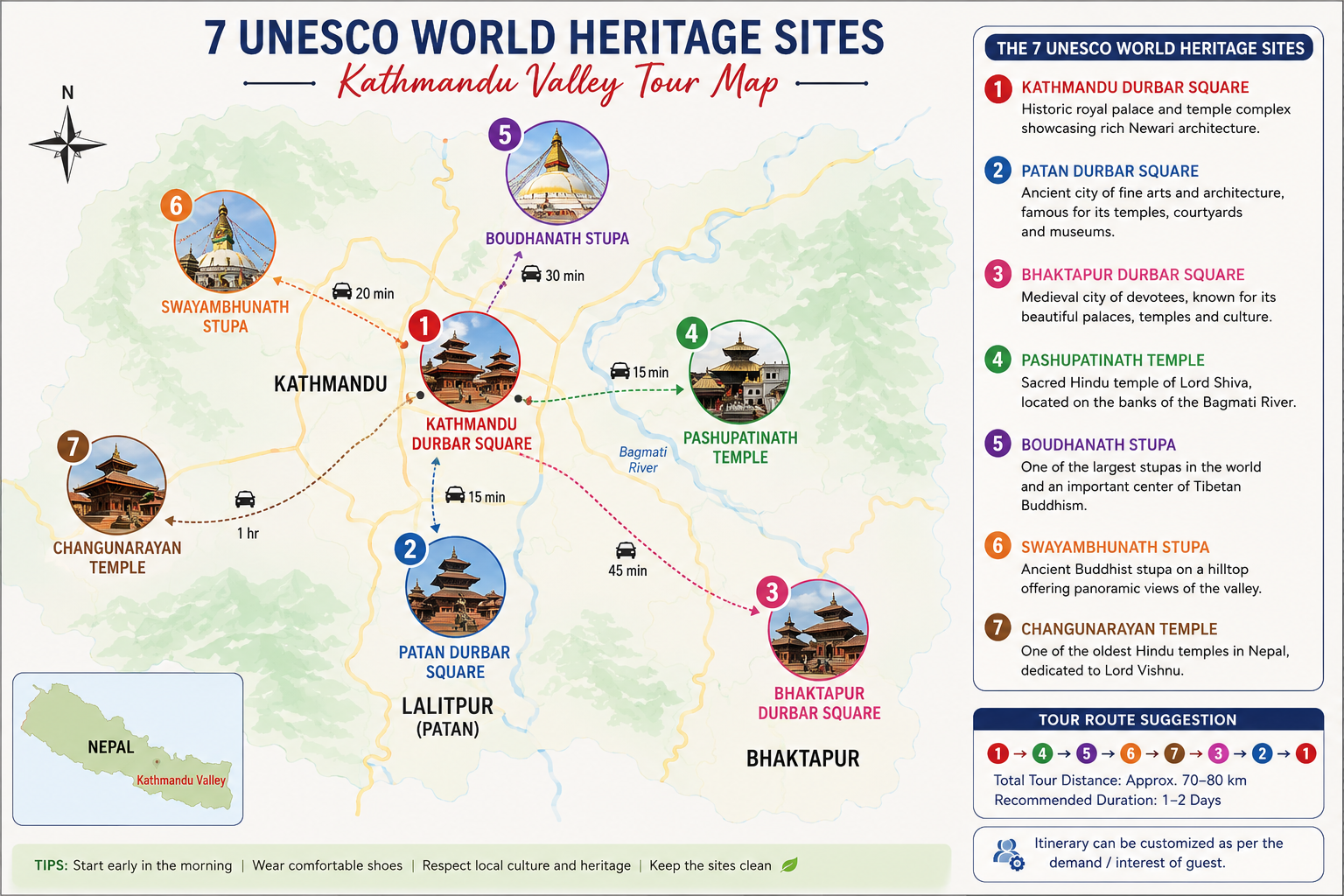
List of the 7 UNESCO World Heritage Sites of Kathmandu Valley
- Kathmandu Durbar Square
- Patan Durbar Square
- Bhaktapur Durbar Square
- Pashupatinath Temple
- Boudhanath Stupa
- Swayambhunath Stupa
- Changunarayan Temple
Additional Note
The itinerary can be fully customized according to the guest's interests, preferences, travel duration, and specific requirements to create a personalized travel experience.
Day-by-day itinerary
-
The seven UNESCO World Heritage Sites of the Kathmandu Valley represent more than 2,000 years of Nepal's history, culture, religion, and architecture. Visiting all seven sites in a single day is possible with an early start, a private vehicle, and a well-planned itinerary. The route covers approximately 45–55 km and offers an excellent introduction to Nepal's Hindu and Buddhist heritage.
Full-Day Time Schedule
Time Destination Duration 07:30 – 08:45 AM Swayambhunath Stupa 1 hr 15 min 09:00 – 10:15 AM Kathmandu Durbar Square 1 hr 15 min 10:30 – 11:30 AM Pashupatinath Temple 1 hour 11:45 AM – 12:45 PM Boudhanath Stupa 1 hour 12:45 – 01:45 PM Lunch Break 1 hour 02:10 – 03:10 PM Bhaktapur Durbar Square 1 hour 03:20 – 04:10 PM Changunarayan Temple 50 min 04:40 – 06:00 PM Patan Durbar Square 1 hr 20 min 1. Swayambhunath Stupa (Monkey Temple)
Recommended Visit: 07:30 – 08:45 AM
Perched atop a hill overlooking Kathmandu Valley, Swayambhunath is one of Nepal's oldest and most sacred Buddhist pilgrimage sites. The stupa is believed to be over 2,000 years old and is revered by both Buddhists and Hindus. Early morning offers cool weather, fewer visitors, and spectacular panoramic views over Kathmandu.
Major Attractions
- Iconic white dome and golden spire
- Buddha's all-seeing eyes
- 365 stone steps
- Prayer wheels
- Vajra (Thunderbolt)
- Harati Temple
- Numerous monasteries
- Himalayan mountain views
- Resident monkeys
2. Kathmandu Durbar Square
Recommended Visit: 09:00 – 10:15 AM
Kathmandu Durbar Square served as the royal palace complex of the Malla and Shah kings for centuries. The square contains numerous temples, courtyards, palaces, museums, and traditional Newari architecture. Despite earthquake damage, extensive restoration has preserved its historical significance.
Major Attractions
- Hanuman Dhoka Palace Museum
- Kumari Ghar (Living Goddess Residence)
- Taleju Temple
- Kal Bhairav Statue
- Jagannath Temple
- Shiva-Parvati Temple
- Basantapur Tower
- Traditional Newari courtyards
- Local handicraft markets
3. Pashupatinath Temple
Recommended Visit: 10:30 – 11:30 AM
Pashupatinath is Nepal's holiest Hindu temple dedicated to Lord Shiva and is one of the most important pilgrimage destinations in South Asia. Located along the sacred Bagmati River, the temple complex consists of hundreds of shrines, temples, ashrams, and cremation ghats.
Major Attractions
- Main Pashupatinath Temple
- Sacred Bagmati River
- Arya Ghat cremation site
- Evening Aarati location
- Numerous Shiva shrines
- Nandi Bull statue
- Ram Temple
- Deer Park
- Sadhus (Hindu holy men)
4. Boudhanath Stupa
Recommended Visit: 11:45 AM – 12:45 PM
Boudhanath is among the largest spherical stupas in the world and serves as the spiritual center of Tibetan Buddhism in Nepal. The peaceful atmosphere, fluttering prayer flags, and monasteries create an unforgettable cultural experience.
Major Attractions
- Massive white stupa
- Golden spire
- Buddha eyes
- Prayer wheels
- Tibetan monasteries
- Butter lamp offerings
- Rooftop cafés
- Tibetan handicraft shops
- Traditional Buddhist rituals
Lunch Break
12:45 – 01:45 PM
Visitors can enjoy Nepali, Tibetan, or international cuisine in one of the restaurants surrounding Boudhanath before continuing toward Bhaktapur.
5. Bhaktapur Durbar Square
Recommended Visit: 02:10 – 03:10 PM
Bhaktapur is Nepal's best-preserved medieval city, famous for its brick-paved streets, ancient temples, wood carvings, pottery traditions, and vibrant local culture. Walking through the city feels like stepping back several centuries.
Major Attractions
- 55 Window Palace
- Golden Gate
- Nyatapola Temple
- Bhairavnath Temple
- Pottery Square
- Peacock Window
- Dattatreya Square
- Traditional Newari houses
- King Bhupatindra Malla Statue
6. Changunarayan Temple
Recommended Visit: 03:20 – 04:10 PM
Situated on a peaceful hilltop east of Bhaktapur, Changunarayan is considered Nepal's oldest surviving Hindu temple. Dedicated to Lord Vishnu, it is renowned for ancient stone inscriptions and exceptional wood carvings dating back to the Licchavi period.
Major Attractions
- Ancient Vishnu Temple
- Stone inscriptions
- Garuda statue
- Licchavi sculptures
- Traditional hill village
- Historic wood carvings
- Peaceful surroundings
- Panoramic valley views
7. Patan Durbar Square
Recommended Visit: 04:40 – 06:00 PM
Patan Durbar Square is celebrated for its exquisite Newari craftsmanship and artistic heritage. The square is home to beautifully carved temples, royal courtyards, museums, and artisan workshops, making it one of Nepal's finest examples of medieval urban planning.
Major Attractions
- Patan Royal Palace
- Krishna Mandir
- Patan Museum
- Golden Temple (Hiranya Varna Mahavihar)
- Sundari Chowk
- Keshav Narayan Chowk
- Bhimsen Temple
- Mahabouddha Temple
- Traditional metal and woodcraft workshops
Tour Summary
Tour Information Details Tour Duration Approximately 10–11 hours Total Distance Around 45–55 km Starting Time 07:30 AM Ending Time Around 06:00 PM Best Transportation Private car, SUV, van, or tourist bus Walking Level Easy to Moderate Best Season September–May (possible year-round) Recommended For Families, couples, photographers, students, cultural enthusiasts, pilgrims, and first-time visitors Note: The schedule is designed to maximize sightseeing while minimizing travel time. Depending on traffic, festivals, weather, or the guest's interests, the itinerary can be customized by adjusting the visit duration at each heritage site or including additional cultural experiences, museums, local cafés, or traditional markets.
What's included
Included
- Professional Tour guide throughout the Tour
- Hotel Pick-up and Drop-off
- A Bottle of Water during the Tour
- Private Tourist vehicle for the full-day Excursion
- All local and Government Taxes
- 24/7 Emergency Support and Coordination by Organization
- Cultural Interaction with local Communities
Not included
- All the Personal Expenses as Tip, Laundry, Beverages and Bar Bill etc.
- Meals not mentioned in Itinerary
- Fees charged by Banks for International Transcation
- Entrance Fees at Sightseeing Spots
- Accommodation at Kathmandu Stay
- Any Services or Costs not clearly listed under “Package Inclusions”
- Optional Activities or Excursions not included in the Itinerary
Dates & availability
There are no fixed group departures for this trip. We run it as a private trip on your preferred dates.
Route map
 View full size
Packing list
| Category | Essential Items |
|---|---|
| Travel Documents | Passport/valid ID, Nepal visa (if required), travel insurance, cash (NPR), debit/credit card |
| Clothing | Comfortable lightweight clothing, light jacket/sweater, rain jacket/poncho (monsoon), modest attire for temples |
| Footwear | Comfortable walking shoes, breathable socks |
| Daypack | Small backpack (15–25L) |
| Hydration | Reusable water bottle (1–2L), electrolyte sachets (optional) |
| Food & Snacks | Energy bars, nuts, dried fruits, light snacks |
| Sun Protection | Sunglasses, sunscreen (SPF 30+), hat/cap, SPF lip balm |
| Electronics | Mobile phone, camera, power bank, charging cable, extra memory card (optional) |
| Health & First Aid | Personal medications, first-aid kit, hand sanitizer, wet wipes, tissues |
| Personal Items | Insect repellent (seasonal), reusable shopping bag, notebook & pen (optional) |
| Photography | Camera lens cloth, spare battery (optional), tripod (where permitted) |
| Temple Visit | Easy-to-remove footwear, shawl/scarf (optional), donation money (optional) |
| Weather Protection | Umbrella (summer/monsoon), warm layer (winter), waterproof bag cover |
| Navigation | Offline map, itinerary copy, emergency contact numbers |
| Optional Items | Binoculars, travel guidebook, reusable coffee cup, neck pillow |
Frequently asked questions
What are the 7 UNESCO World Heritage Sites of Kathmandu Valley?
The 7 UNESCO World Heritage Sites of Kathmandu Valley include Kathmandu Durbar Square, Patan Durbar Square, Bhaktapur Durbar Square, Pashupatinath Temple, Boudhanath Stupa, Swayambhunath Stupa, and Changunarayan Temple. These monuments represent Nepal's rich history, culture, religion, and architectural heritage and were recognized by UNESCO in 1979.
Why are the 7 UNESCO World Heritage Sites of Kathmandu Valley important?
The 7 UNESCO World Heritage Sites of Kathmandu Valley preserve centuries of Nepalese history, art, architecture, and religious traditions. These monuments showcase the unique cultural heritage of the Kathmandu Valley and remain active places of worship and cultural celebration.
Which UNESCO World Heritage Site in Kathmandu Valley should visitors explore first?
Most visitors begin the tour at Swayambhunath Stupa because of its peaceful morning atmosphere, panoramic views of Kathmandu Valley, and convenient location for starting a full-day heritage tour.
How many days are required to visit all 7 UNESCO World Heritage Sites of Kathmandu Valley?
A full-day guided tour is usually enough to visit all 7 UNESCO World Heritage Sites of Kathmandu Valley. Travelers who prefer a slower pace can extend the tour over two days.
Is a one-day tour enough to visit the 7 UNESCO World Heritage Sites of Kathmandu Valley?
Yes. A well-organized one-day tour with private transportation allows visitors to explore all seven UNESCO World Heritage Sites comfortably while learning about Nepal's rich cultural and historical heritage.
What is the best time to visit the 7 UNESCO World Heritage Sites of Kathmandu Valley?
Spring (March to May) and autumn (September to November) are the best seasons to visit the 7 UNESCO World Heritage Sites of Kathmandu Valley because of pleasant weather, clear skies, and excellent sightseeing conditions.
Which UNESCO World Heritage Site offers the best panoramic views of Kathmandu Valley?
Swayambhunath Stupa offers the best panoramic views of Kathmandu Valley. The hilltop location provides breathtaking city views along with beautiful sunrise and sunset photography opportunities.
Which UNESCO World Heritage Site is most suitable for families with children?
Boudhanath Stupa is one of the most family-friendly UNESCO World Heritage Sites because of its spacious walking area, peaceful environment, and nearby cafés and restaurants.
Which UNESCO World Heritage Site is ideal for senior citizens?
Boudhanath Stupa and Patan Durbar Square are ideal for senior citizens due to easy walking paths, comfortable surroundings, and convenient access by private vehicle.
Which UNESCO World Heritage Site is best for history lovers?
Kathmandu Durbar Square, Patan Durbar Square, and Bhaktapur Durbar Square are the best UNESCO World Heritage Sites for history lovers because of their ancient royal palaces, historic temples, museums, and remarkable Newari architecture.
What are the major attractions of Kathmandu Durbar Square?
Major attractions of Kathmandu Durbar Square include Hanuman Dhoka Palace, Kumari Ghar (Living Goddess), Taleju Temple, Kal Bhairav Statue, Jagannath Temple, Basantapur Tower, and beautifully carved Newari courtyards.
What are the major attractions of Patan Durbar Square?
Patan Durbar Square is famous for Krishna Mandir, Patan Museum, Hiranya Varna Mahavihar (Golden Temple), Sundari Chowk, ancient royal palaces, and exceptional Newari architecture.
What are the major attractions of Bhaktapur Durbar Square?
Top attractions of Bhaktapur Durbar Square include Nyatapola Temple, 55 Window Palace, Golden Gate, Bhairavnath Temple, Pottery Square, Peacock Window, and traditional Newari streets.
What are the major attractions of Swayambhunath Stupa?
Swayambhunath Stupa features the iconic white stupa, Buddha's all-seeing eyes, prayer wheels, monasteries, the Vajra, Harati Temple, resident monkeys, and panoramic views of Kathmandu Valley.
What are the major attractions of Boudhanath Stupa?
Boudhanath Stupa is known for its massive white dome, golden spire, colorful prayer flags, Tibetan monasteries, prayer wheels, butter lamps, rooftop cafés, and peaceful spiritual atmosphere.
What are the major attractions of Pashupatinath Temple?
Major attractions of Pashupatinath Temple include the sacred Shiva temple, Bagmati River, Arya Ghat cremation site, Nandi Bull statue, numerous shrines, and the famous evening Aarati ceremony.
What are the major attractions of Changunarayan Temple?
Changunarayan Temple is renowned for its ancient Vishnu temple, Licchavi-era stone inscriptions, intricate wood carvings, Garuda statue, traditional village, and panoramic valley views.
Are licensed tour guides recommended for the 7 UNESCO World Heritage Sites Tour?
Yes. A licensed cultural guide helps visitors understand the history, architecture, religious significance, and local traditions of each UNESCO World Heritage Site while making the tour more informative and enjoyable.
What documents are required for the 7 UNESCO World Heritage Sites Tour?
Foreign visitors should carry a valid passport and Nepal visa, while Nepali citizens can carry a government-issued photo ID. Travel insurance and tour booking confirmation are also recommended.
Are entrance tickets required for all 7 UNESCO World Heritage Sites of Kathmandu Valley?
Yes. Most of the 7 UNESCO World Heritage Sites of Kathmandu Valley require entrance tickets. Fees vary according to nationality and are collected at the official ticket counters of each heritage site.
Can the 7 UNESCO World Heritage Sites Tour itinerary be customized?
Yes. The 7 UNESCO World Heritage Sites Tour itinerary can be fully customized according to the guest's interests, available time, budget, preferred attractions, and travel style.
What type of transportation is used during the 7 UNESCO World Heritage Sites Tour?
The tour is usually conducted by private car, SUV, Hiace van, tourist van, mini bus, or tourist bus, depending on the group size. Hotel pickup and drop-off services are commonly included.
What should visitors wear while visiting the 7 UNESCO World Heritage Sites of Kathmandu Valley?
Visitors should wear comfortable walking shoes and modest clothing that covers the shoulders and knees when visiting temples and religious sites. A hat, sunglasses, and sunscreen are also recommended for daytime sightseeing.
What are the best foods to try during the 7 UNESCO World Heritage Sites Tour?
Popular foods include Nepali Dal Bhat, Momo, Chatamari, Bara, Yomari, Newari Khaja Set, Choila, Thukpa, Sel Roti, and Juju Dhau. Restaurants near the heritage sites also serve Indian, Tibetan, Chinese, and Continental cuisine.
Why should travelers choose the 7 UNESCO World Heritage Sites Tour while visiting Nepal?
The 7 UNESCO World Heritage Sites Tour offers the opportunity to explore Nepal's most important cultural and historical landmarks in a single day. The tour combines ancient palaces, sacred temples, Buddhist stupas, traditional Newari culture, and remarkable architecture for a complete cultural experience.
Which UNESCO World Heritage Site is best for learning about Newari culture?
Bhaktapur Durbar Square and Patan Durbar Square are the best places to experience traditional Newari culture through historic architecture, local festivals, artisan workshops, and authentic Newari cuisine.
Are the 7 UNESCO World Heritage Sites suitable for photography?
Yes. The 7 UNESCO World Heritage Sites of Kathmandu Valley offer excellent photography opportunities featuring ancient temples, royal courtyards, colorful prayer flags, traditional architecture, cultural festivals, and panoramic city views.
How much walking is involved during the 7 UNESCO World Heritage Sites Tour?
The tour involves approximately 4 to 7 kilometers of easy walking throughout the day on stone pathways, palace courtyards, and temple complexes, with transportation provided between each heritage site.
Is the 7 UNESCO World Heritage Sites Tour suitable for first-time visitors to Nepal?
Yes. The 7 UNESCO World Heritage Sites Tour is one of the best introductions to Nepal, allowing first-time visitors to experience the country's history, religion, architecture, art, and cultural traditions in a single day.
Can the 7 UNESCO World Heritage Sites Tour be combined with other attractions near Kathmandu?
Yes. The 7 UNESCO World Heritage Sites Tour can be combined with destinations such as Nagarkot, Chandragiri Hills, Kirtipur, Budhanilkantha Temple, Kopan Monastery, Garden of Dreams, Pharping, and Godavari Botanical Garden for a longer and more personalized Kathmandu Valley experience.
More details
 Accommodation Types During the 7 UNESCO World Heritage Sites Tour
The 7 UNESCO World Heritage Sites Tour is a full-day cultural sightseeing experience that explores the most iconic historical, religious, and architectural landmarks of the Kathmandu Valley. Since the tour begins and ends on the same day, overnight accommodation is not included in the standard itinerary. However, travelers visiting Kathmandu can choose from a wide range of accommodation options before or after the tour. Whether you prefer a budget-friendly guesthouse in Thamel, a heritage hotel in Bhaktapur, a boutique property in Patan, or a luxury five-star hotel in Kathmandu, there are accommodations available to suit every budget and travel style. Staying in Kathmandu Valley also provides easy access to the UNESCO World Heritage Sites, allowing visitors to enjoy a comfortable and convenient cultural experience.
Accommodation Overview
| Location | Accommodation Type |
|---|---|
| Kathmandu (Thamel) | Budget Hotels, Guesthouses, Boutique Hotels & 3★–5★ Hotels |
| Patan (Lalitpur) | Heritage Hotels, Boutique Hotels & Guesthouses |
| Bhaktapur | Traditional Heritage Hotels, Boutique Resorts & Guesthouses |
| Kathmandu Valley | Luxury Hotels, Business Hotels & Serviced Apartments |
Room Facilities
Most accommodations in Kathmandu Valley provide modern facilities to ensure a comfortable and relaxing stay before or after the heritage tour.
- Twin, double, triple, and family rooms
- Comfortable beds with clean linens and blankets
- Private attached bathrooms with hot and cold showers
- Complimentary Wi-Fi access
- Air-conditioned or well-ventilated rooms
- Television with satellite channels
- Tea and coffee making facilities
- Daily housekeeping service
- Wardrobe and luggage storage space
- Twenty-four-hour front desk assistance
Dining Facilities
Hotels and restaurants throughout Kathmandu Valley serve a wide variety of local and international cuisine to satisfy every traveler's preference.
Dining facilities include:
- Complimentary breakfast in most hotels
- Traditional Nepali cuisine
- Authentic Newari specialties
- Indian cuisine
- Chinese cuisine
- Tibetan cuisine
- Continental and Western dishes
- Vegetarian and vegan meal options
- Fresh coffee, tea, juices, and bakery items
- Rooftop restaurants with panoramic city views
Additional Facilities
| Facility | Availability |
|---|---|
| Free Wi-Fi | Available in most accommodations |
| Airport Transfer | Available upon request |
| Laundry Service | Available |
| Room Service | Available in selected hotels |
| Parking Facility | Available in most hotels |
| Currency Exchange | Available at major hotels and nearby banks |
| Travel Desk | Available in many hotels |
| Spa & Wellness Center | Available in luxury hotels |
| Conference & Meeting Facilities | Available in business and premium hotels |
Additional Charges
Some optional services may require an additional payment depending on the accommodation category.
| Service | Approximate Cost |
|---|---|
| Airport Transfer | Depends on vehicle type |
| Laundry Service | Charged per item |
| Spa & Massage | Hotel rates apply |
| Mini Bar | Based on consumption |
| Extra Bed | Additional nightly charge |
| Premium Room Upgrade | Subject to availability and hotel policy |
What to Expect
Accommodation during the 7 UNESCO World Heritage Sites Tour combines comfort, convenience, and traditional Nepalese hospitality. Visitors can stay in modern hotels equipped with contemporary facilities or choose charming heritage properties that showcase traditional Newari architecture. Most accommodations are conveniently located near major tourist attractions, restaurants, shopping areas, and transportation hubs, making it easy to begin the heritage tour early in the morning.
You can expect:
- Comfortable accommodation with modern amenities
- Warm Nepalese hospitality and professional service
- Easy access to all UNESCO World Heritage Sites
- Wide selection of restaurants and cafés nearby
- Safe and clean accommodation for all budgets
- Heritage-style hotels with traditional Newari architecture
- Convenient transportation connections
- Relaxing atmosphere before and after sightseeing
Accommodation Tips
To enjoy a comfortable stay during your UNESCO Heritage Tour:
- Book accommodation in advance during spring and autumn.
- Stay in Thamel for convenient access to restaurants, shopping, and nightlife.
- Choose Patan or Bhaktapur to experience traditional Newari culture.
- Carry a valid passport or government-issued identification for hotel check-in.
- Store valuable belongings in the hotel safe whenever available.
- Confirm airport transfer services before arrival.
- Select accommodations close to your preferred sightseeing locations.
- Inform the hotel in advance about dietary preferences or special requirements.
Why You'll Love Staying During the 7 UNESCO World Heritage Sites Tour
Accommodation in Kathmandu Valley is much more than simply a place to stay. It enhances the overall travel experience by allowing visitors to enjoy genuine Nepalese hospitality while remaining close to centuries-old palaces, sacred temples, vibrant local markets, and cultural landmarks. Whether spending the night in a luxurious city hotel, a charming boutique property, or a beautifully restored heritage hotel, every stay becomes part of the journey. Comfortable accommodations, excellent dining options, and easy access to the seven UNESCO World Heritage Sites make the cultural exploration of Kathmandu Valley even more enjoyable and memorable.
 What to Expect from the 7 UNESCO World Heritage Sites Tour
The 7 UNESCO World Heritage Sites Tour offers an unforgettable journey through the cultural heart of Nepal, showcasing centuries of history, religion, art, and architecture within a single day. This immersive sightseeing experience takes you to three magnificent Durbar Squares, two sacred Buddhist stupas, and two revered Hindu temples that together form the UNESCO World Heritage Site of the Kathmandu Valley. Throughout the tour, you'll witness ancient palaces, intricately carved temples, vibrant local markets, traditional Newari settlements, and living religious traditions that continue to thrive today. With a professional guide and comfortable transportation, the tour provides an excellent introduction to Nepal's rich cultural heritage and spiritual diversity.
UNESCO World Heritage Sites Overview
| UNESCO Site | Major Highlight |
|---|---|
| Swayambhunath Stupa | Ancient Buddhist Stupa & Panoramic Kathmandu Valley Views |
| Kathmandu Durbar Square | Historic Royal Palace Complex & Living Goddess Kumari |
| Pashupatinath Temple | Nepal's Holiest Hindu Temple Dedicated to Lord Shiva |
| Boudhanath Stupa | One of the Largest Buddhist Stupas in the World |
| Bhaktapur Durbar Square | Best-Preserved Medieval City & Newari Architecture |
| Changunarayan Temple | Nepal's Oldest Hindu Temple |
| Patan Durbar Square | Finest Collection of Newari Art and Architecture |
Historic Royal Palace Squares
The tour introduces visitors to three remarkable royal palace complexes that once served as the capitals of the ancient Malla Kingdoms.
You'll explore:
- Kathmandu Durbar Square
- Patan Durbar Square
- Bhaktapur Durbar Square
- Ancient royal palaces
- Traditional Newari courtyards
- Magnificent temples
- Historic museums
- Intricate wood and stone carvings
Sacred Hindu and Buddhist Pilgrimage Sites
Kathmandu Valley is renowned for its harmonious blend of Hinduism and Buddhism, both of which have flourished together for centuries.
You'll experience:
- Pashupatinath Temple
- Boudhanath Stupa
- Swayambhunath Stupa
- Changunarayan Temple
- Prayer wheels
- Buddhist monasteries
- Hindu shrines
- Sacred rituals and ceremonies
Traditional Newari Culture
The heritage tour offers an opportunity to experience the unique traditions and lifestyle of the indigenous Newar community.
Visitors can enjoy:
- Traditional Newari architecture
- Historic residential neighborhoods
- Local artisan workshops
- Pottery making
- Metal craftsmanship
- Wood carving
- Handicraft markets
- Authentic cultural atmosphere
Photography Opportunities
The seven UNESCO World Heritage Sites provide countless opportunities for photography throughout the day.
Popular photography locations include:
- Swayambhunath panoramic viewpoint
- Boudhanath Stupa
- Pashupatinath Temple complex
- Nyatapola Temple
- Golden Gate of Bhaktapur
- Krishna Mandir
- Kumari Ghar
- Traditional Newari streets
- Ancient palace courtyards
Religious Festivals and Living Heritage
Many of the UNESCO sites remain active places of worship where centuries-old festivals and traditions continue today.
Depending on your visit, you may witness:
- Daily temple rituals
- Buddhist prayer ceremonies
- Aarati at Pashupatinath
- Monastic chanting
- Local cultural celebrations
- Traditional music
- Religious processions
- Festival decorations
Ancient Art and Architecture
Each heritage site showcases remarkable craftsmanship created by Newari artisans over several centuries.
Highlights include:
- Intricate wooden windows
- Stone sculptures
- Bronze statues
- Pagoda-style temples
- Shikhara temples
- Golden roofs
- Ancient inscriptions
- Decorative courtyards
A Typical Day on the Tour
| Time | Activity |
|---|---|
| Early Morning | Hotel pickup and tour briefing |
| Morning | Visit Swayambhunath and Kathmandu Durbar Square |
| Late Morning | Explore Pashupatinath Temple and Boudhanath Stupa |
| Afternoon | Lunch followed by Bhaktapur Durbar Square and Changunarayan Temple |
| Late Afternoon | Visit Patan Durbar Square |
| Evening | Return to hotel after completing the UNESCO Heritage Tour |
What Makes the 7 UNESCO World Heritage Sites Tour Special?
The 7 UNESCO World Heritage Sites Tour is much more than a sightseeing excursion. It is a journey through Nepal's remarkable history, spiritual traditions, and architectural brilliance. From exploring ancient royal palaces and centuries-old temples to witnessing sacred Buddhist rituals and experiencing authentic Newari culture, every destination reveals a unique chapter of Kathmandu Valley's rich heritage. Whether you are interested in history, religion, photography, architecture, or cultural exploration, this carefully planned tour offers one of the most rewarding and memorable experiences in Nepal.
 Best Time / Season to Visit the 7 UNESCO World Heritage Sites Tour
The 7 UNESCO World Heritage Sites Tour can be enjoyed throughout the year, as all seven heritage monuments remain open to visitors in every season. However, each season offers a unique travel experience, from vibrant festivals and pleasant weather to peaceful sightseeing and lush green landscapes. Spring and autumn are considered the best seasons because of their comfortable temperatures, clear skies, and excellent visibility, making them ideal for photography and cultural exploration. Winter offers fewer crowds and a quieter atmosphere, while the monsoon season showcases the valley with fresh greenery despite occasional rainfall.
Best Seasons at a Glance
| Season | Months | Weather | Sightseeing Experience |
|---|---|---|---|
| 🌸 Spring | March – May | Mild & Pleasant | Best for comfortable sightseeing, blooming flowers, and clear views |
| ☀️ Summer / Monsoon | June – August | Warm & Rainy | Lush landscapes, fewer tourists, occasional rainfall |
| 🍂 Autumn | September – November | Cool & Clear | Crystal-clear skies, major festivals, and excellent photography |
| ❄️ Winter | December – February | Cool & Dry | Pleasant daytime weather, fewer crowds, peaceful sightseeing |
🌸 Spring (March – May)
Spring is one of the most popular seasons for exploring the UNESCO World Heritage Sites of Kathmandu Valley.
Highlights include:
- Pleasant daytime temperatures
- Blooming flowers in gardens and temple surroundings
- Clear mountain views on bright days
- Comfortable weather for walking tours
- Excellent photography opportunities
- Ideal conditions for cultural sightseeing
- Vibrant local markets
- Numerous cultural events and celebrations
🍂 Autumn (September – November)
Autumn is widely regarded as the best season to visit Kathmandu Valley.
Why choose autumn?
- Stable and comfortable weather
- Crystal-clear skies
- Excellent visibility for photography
- Pleasant walking conditions
- Major Nepalese festivals
- Colorful cultural celebrations
- Fresh post-monsoon atmosphere
- Best overall sightseeing experience
❄️ Winter (December – February)
Winter offers a peaceful and enjoyable cultural experience with fewer visitors.
Expect:
- Cool mornings and evenings
- Pleasant daytime temperatures
- Less crowded heritage sites
- Clear skies on most days
- Comfortable sightseeing conditions
- Ideal season for photography
- Easy access to all attractions
- Calm and relaxed atmosphere
☀️ Summer / Monsoon (June – August)
Although monsoon brings regular rainfall, it also transforms Kathmandu Valley into a lush green landscape.
During this season:
- Beautiful greenery around heritage sites
- Fewer tourists
- Peaceful sightseeing experience
- Occasional afternoon rainfall
- Cooler mornings after rain
- Excellent opportunities for cultural exploration
- Fresh and vibrant surroundings
- Lower hotel occupancy in many areas
Average Temperature
| Location | Daytime | Nighttime |
|---|---|---|
| Kathmandu | 18°C to 30°C | 8°C to 20°C |
| Patan | 18°C to 29°C | 8°C to 19°C |
| Bhaktapur | 17°C to 29°C | 7°C to 18°C |
| Changunarayan | 15°C to 27°C | 6°C to 17°C |
Weather Tips
To enjoy your UNESCO Heritage Tour comfortably:
- Wear comfortable walking shoes.
- Carry a reusable water bottle.
- Apply sunscreen during sunny days.
- Bring sunglasses and a hat for daytime sightseeing.
- Carry a light jacket during winter mornings and evenings.
- Pack a rain jacket or umbrella during the monsoon season.
- Start the tour early to avoid afternoon traffic.
- Check the local weather forecast before departure.
Major Festivals Worth Experiencing
If your visit coincides with Nepal's cultural calendar, you may witness spectacular festivals celebrated around the UNESCO Heritage Sites.
Popular festivals include:
- Indra Jatra
- Dashain
- Tihar
- Buddha Jayanti
- Maha Shivaratri
- Holi
- Gai Jatra
- Bisket Jatra
- Rato Machhindranath Jatra
These festivals feature colorful processions, traditional music, masked dances, religious ceremonies, and vibrant cultural celebrations.
Why Spring and Autumn Are Recommended
Spring and autumn provide the perfect combination of pleasant weather, comfortable temperatures, clear skies, and excellent sightseeing conditions. These seasons allow visitors to fully appreciate the magnificent temples, ancient palaces, sacred stupas, and vibrant cultural life of Kathmandu Valley without weather-related interruptions. Whether capturing stunning photographs, participating in local festivals, or exploring centuries-old monuments, visiting during spring or autumn offers the most rewarding experience for the 7 UNESCO World Heritage Sites Tour.
 Nearby Places to Explore from the 7 UNESCO World Heritage Sites Tour
The 7 UNESCO World Heritage Sites Tour introduces visitors to the rich cultural heritage of the Kathmandu Valley, but there are many fascinating destinations nearby that can further enhance the travel experience. From scenic hill stations and peaceful monasteries to traditional villages and botanical gardens, these attractions offer a perfect combination of culture, spirituality, nature, and panoramic Himalayan views. If you have extra time before or after the UNESCO Heritage Tour, exploring these nearby destinations provides a deeper understanding of Nepal's diverse landscapes and living traditions.
Popular Places to Explore
| Destination | Highlights |
|---|---|
| Nagarkot | Himalayan Sunrise & Mountain Views |
| Chandragiri Hills | Cable Car Ride & Panoramic Himalayan Views |
| Kirtipur | Ancient Newari Town & Cultural Heritage |
| Budhanilkantha Temple | Sacred Sleeping Vishnu Statue |
| Garden of Dreams | Historic Neo-Classical Garden |
| Kopan Monastery | Tibetan Buddhist Monastery & Meditation Center |
| Pharping | Sacred Buddhist Caves & Monasteries |
| Godavari Botanical Garden | Nature Walks & Botanical Collection |
| Bungamati | Traditional Newari Heritage Village |
| Khokana | Historic Farming Village & Mustard Oil Production |
| Dhulikhel | Himalayan Viewpoint & Cultural Town |
| Shivapuri National Park | Hiking, Nature & Wildlife |
Nagarkot
Nagarkot is one of Nepal's most popular hill stations, offering spectacular sunrise and Himalayan mountain views.
Highlights include:
- Panoramic Himalayan mountain range
- Sunrise and sunset viewpoints
- Peaceful hilltop resorts
- Nature walks
- Fresh mountain air
- Photography opportunities
- Scenic countryside
- Short hiking trails
Chandragiri Hills
Located southwest of Kathmandu, Chandragiri Hills offers breathtaking mountain scenery and one of Nepal's best cable car experiences.
Visitors can enjoy:
- Scenic cable car ride
- Panoramic Himalayan views
- Bhaleshwor Mahadev Temple
- Beautiful gardens
- Family-friendly attractions
- Restaurants and cafés
- Photography viewpoints
- Adventure activities
Kirtipur
Kirtipur is a historic Newari town known for its traditional culture and beautifully preserved architecture.
Things to enjoy:
- Ancient temples
- Traditional Newari settlements
- Bagh Bhairab Temple
- Uma Maheshwor Temple
- Local markets
- Historic streets
- Authentic Newari cuisine
- Cultural walking tours
Budhanilkantha Temple
One of Nepal's most important Hindu pilgrimage sites, Budhanilkantha Temple is famous for its massive reclining statue of Lord Vishnu.
Highlights include:
- Sleeping Vishnu statue
- Sacred pond
- Hindu religious ceremonies
- Peaceful surroundings
- Beautiful temple complex
- Traditional architecture
- Local pilgrimage experience
- Photography opportunities
Garden of Dreams
A beautifully restored historic garden in central Kathmandu offering a peaceful retreat from the city's busy streets.
Visitors can enjoy:
- European-style landscaped gardens
- Historic pavilions
- Decorative fountains
- Quiet reading areas
- Café and restaurant
- Beautiful flower gardens
- Photography spots
- Relaxing atmosphere
Kopan Monastery
Kopan Monastery is an internationally renowned Buddhist monastery located on a hill overlooking Kathmandu Valley.
Visitors can experience:
- Peaceful meditation environment
- Buddhist prayer ceremonies
- Monastery architecture
- Panoramic valley views
- Spiritual teachings
- Beautiful gardens
- Tibetan Buddhist culture
- Quiet surroundings
Pharping
Pharping is one of Nepal's most sacred Buddhist destinations, attracting pilgrims from around the world.
Highlights include:
- Asura Cave
- Guru Rinpoche Meditation Cave
- Ancient monasteries
- Prayer flags
- Meditation centers
- Traditional villages
- Religious pilgrimage sites
- Mountain scenery
Adventure & Cultural Experiences
Beyond the UNESCO Heritage Sites, visitors can also enjoy:
- Heritage walking tours
- Local handicraft shopping
- Traditional Newari cuisine
- Buddhist monastery visits
- Meditation retreats
- Nature walks
- Mountain viewpoints
- Cultural performances
- Photography tours
- Village excursions
Why Extend Your Trip?
Adding one or two extra days to your Kathmandu Valley itinerary allows you to experience much more than the seven UNESCO World Heritage Sites. Scenic hill stations, ancient Newari towns, sacred monasteries, peaceful gardens, and traditional villages reveal another side of Nepal that perfectly complements the cultural heritage tour. Whether watching the sunrise over the Himalayas in Nagarkot, riding the cable car to Chandragiri Hills, exploring historic Kirtipur, or enjoying the tranquility of Kopan Monastery, these nearby attractions create a richer, more memorable travel experience while showcasing the remarkable diversity of the Kathmandu Valley.
 Foods Available During the 7 UNESCO World Heritage Sites Tour
The 7 UNESCO World Heritage Sites Tour takes visitors through the cultural heart of Kathmandu Valley, where food is an essential part of the travel experience. Throughout the tour, travelers can enjoy a wide variety of traditional Nepali, authentic Newari, Tibetan, Indian, Chinese, and Continental cuisine at restaurants, cafés, and local eateries located near each UNESCO World Heritage Site. Whether tasting traditional Newari delicacies in Bhaktapur, enjoying Tibetan cuisine near Boudhanath, or dining in modern restaurants around Kathmandu Durbar Square, the tour offers something to satisfy every palate. Vegetarian, vegan, and international dining options are also widely available, making the tour suitable for all types of travelers.
Breakfast Options
Start your day with a delicious breakfast before beginning your cultural sightseeing tour.
Common breakfast choices include:
- Traditional Nepali breakfast
- Toast with butter and jam
- Pancakes
- Omelets
- Boiled or fried eggs
- Porridge
- Muesli with yogurt
- Fresh seasonal fruits
- Tea or coffee
- Fresh fruit juice
Lunch & Dinner Options
Kathmandu Valley offers an extensive variety of local and international cuisine.
Popular dishes include:
- Nepali Dal Bhat (Rice, Lentil Soup & Seasonal Vegetables)
- Newari Khaja Set
- Momo (Steamed or Fried Dumplings)
- Chowmein
- Thukpa (Tibetan Noodle Soup)
- Chatamari (Newari Rice Pizza)
- Bara (Lentil Pancake)
- Choila (Spiced Grilled Meat)
- Yomari (Traditional Newari Sweet)
- Sel Roti
- Fried Rice
- Vegetable Curry
- Butter Chicken
- Pasta
- Pizza
- Sandwiches
- Burgers
Traditional Newari Foods to Try
Kathmandu Valley is the homeland of the Newar community, renowned for its rich culinary heritage.
Recommended local specialties include:
- Newari Khaja Set
- Chatamari
- Bara
- Choila
- Yomari
- Samay Baji
- Aloo Tama
- Wo
- Kachila
- Juju Dhau (King Curd)
Drinks Available
Visitors can enjoy a wide range of refreshing beverages throughout the tour.
Available drinks include:
- Nepali Milk Tea
- Black Tea
- Masala Tea
- Ginger Tea
- Lemon Honey Tea
- Fresh Coffee
- Espresso
- Cappuccino
- Fresh Fruit Juice
- Lassi
- Soft Drinks
- Mineral Water
- Fresh Coconut Water (seasonal)
Vegetarian & Vegan Options
Most restaurants and cafés offer excellent vegetarian and vegan meals.
Popular choices include:
- Vegetable Dal Bhat
- Vegetable Momo
- Vegetable Chowmein
- Fried Rice
- Mixed Vegetable Curry
- Mushroom Dishes
- Fresh Salads
- Vegan Soups
- Fruit Platters
- Fresh Juices
Popular Dining Areas
Excellent restaurants and cafés can be found near every UNESCO World Heritage Site.
Popular dining locations include:
- Thamel
- Kathmandu Durbar Square
- Patan Durbar Square
- Bhaktapur Durbar Square
- Boudhanath Stupa Area
- Pashupatinath Area
- Jhamsikhel
- Lazimpat
- Durbar Marg
- Basantapur
Food Safety Tips
Following simple food safety practices helps ensure a comfortable sightseeing experience.
- Drink bottled or filtered drinking water.
- Choose freshly prepared meals.
- Wash or sanitize your hands before eating.
- Eat at clean and reputable restaurants.
- Inform the restaurant about food allergies or dietary restrictions.
- Avoid consuming uncooked food from street vendors if you have a sensitive stomach.
- Stay hydrated throughout the tour.
- Carry light snacks for longer sightseeing days.
Dining Experience
Dining during the 7 UNESCO World Heritage Sites Tour is much more than simply enjoying a meal. Every stop introduces visitors to Nepal's diverse culinary traditions and warm hospitality. From authentic Newari restaurants hidden within medieval courtyards to modern rooftop cafés overlooking ancient temples and bustling city streets, every dining experience adds another memorable layer to the cultural journey. Travelers have the opportunity to enjoy freshly prepared local specialties while immersing themselves in the vibrant atmosphere of Kathmandu Valley.
Why Food Makes the 7 UNESCO World Heritage Sites Tour Special
Food is an integral part of Nepal's cultural identity, and the 7 UNESCO World Heritage Sites Tour provides the perfect opportunity to experience its remarkable culinary diversity. Sampling authentic Newari delicacies, enjoying traditional Nepali Dal Bhat, tasting Tibetan Momos, or relaxing with a cup of freshly brewed Himalayan tea allows visitors to connect with the local culture beyond the monuments themselves. Combined with centuries-old heritage sites, lively markets, and welcoming hospitality, the culinary experiences make the UNESCO Heritage Tour an even more enjoyable and unforgettable journey through the Kathmandu Valley.
 Culture and Etiquette During the 7 UNESCO World Heritage Sites Tour
The 7 UNESCO World Heritage Sites Tour offers much more than an opportunity to admire Nepal's remarkable architecture and ancient monuments. It is also a chance to experience the country's rich cultural traditions, religious harmony, and centuries-old customs that continue to thrive today. The Kathmandu Valley has long been a meeting place of Hinduism and Buddhism, where temples, stupas, monasteries, shrines, and traditional Newari communities coexist peacefully. Respecting local culture and etiquette not only enhances your travel experience but also helps preserve the sacred atmosphere and living heritage of these UNESCO World Heritage Sites.
Local Communities
The Kathmandu Valley is home to several ethnic communities, each contributing to the region's rich cultural diversity.
You'll experience:
- Traditional Newar culture
- Hindu and Buddhist communities
- Warm Nepalese hospitality
- Traditional family businesses
- Local artisans and craftsmen
- Cultural festivals and celebrations
- Historic neighborhoods
- Living heritage traditions
Cultural Highlights
As you visit the UNESCO World Heritage Sites, you'll encounter many remarkable cultural landmarks and traditions.
These include:
- Ancient Hindu temples
- Sacred Buddhist stupas
- Historic royal palaces
- Buddhist monasteries
- Traditional courtyards
- Prayer wheels
- Stone sculptures
- Intricate wood carvings
- Religious festivals
- Traditional Newari architecture
Famous Religious Sites
Several of Nepal's most important religious monuments are included in the UNESCO Heritage Tour.
| Religious Site | Highlights |
|---|---|
| Pashupatinath Temple | Nepal's Holiest Hindu Temple Dedicated to Lord Shiva |
| Boudhanath Stupa | One of the Largest Buddhist Stupas in the World |
| Swayambhunath Stupa | Ancient Buddhist Shrine with Panoramic Views |
| Changunarayan Temple | Nepal's Oldest Hindu Temple |
| Krishna Mandir | Iconic Stone Temple at Patan Durbar Square |
| Taleju Temple | Historic Royal Temple at Kathmandu Durbar Square |
Local Etiquette
Respecting local customs allows visitors to enjoy meaningful cultural interactions throughout the tour.
Follow these simple guidelines:
- Greet local people with "Namaste."
- Dress modestly while visiting temples and monasteries.
- Remove shoes before entering designated religious areas.
- Walk clockwise around Buddhist stupas and prayer wheels.
- Ask permission before photographing local people.
- Speak quietly inside temples and monasteries.
- Respect religious ceremonies and rituals.
- Avoid touching sacred statues or religious objects.
- Follow the instructions of your guide at heritage sites.
- Maintain cleanliness at all cultural and religious monuments.
Responsible Tourism
Help preserve Kathmandu Valley's cultural and historical heritage by practicing responsible tourism.
You can contribute by:
- Respecting local customs and traditions.
- Avoiding littering at heritage sites.
- Carrying a reusable water bottle.
- Supporting local businesses and artisans.
- Purchasing authentic handmade souvenirs.
- Following designated walking paths.
- Respecting wildlife around temple areas.
- Avoiding damage to historic monuments.
- Conserving water and energy during your stay.
Major Cultural Festivals
Depending on your travel dates, you may witness some of Nepal's most colorful cultural celebrations.
Popular festivals include:
- Indra Jatra
- Dashain
- Tihar
- Buddha Jayanti
- Maha Shivaratri
- Bisket Jatra
- Gai Jatra
- Rato Machhindranath Jatra
- Holi
- Losar
These festivals feature traditional music, masked dances, religious processions, cultural performances, and community celebrations throughout Kathmandu Valley.
Traditional Newari Lifestyle
The indigenous Newar community has shaped the cultural identity of Kathmandu Valley for centuries.
You'll notice:
- Beautifully carved wooden windows
- Traditional brick houses
- Ancient courtyards
- Local pottery workshops
- Metal and woodcraft artisans
- Traditional Newari cuisine
- Historic marketplaces
- Religious shrines in every neighborhood
- Family-operated businesses
- Rich artistic heritage
Cultural Tips for Visitors
To make the most of your cultural experience:
- Learn a few basic Nepali greetings.
- Respect local religious beliefs and traditions.
- Wear comfortable yet modest clothing.
- Support local handicraft shops and family-owned businesses.
- Be patient during religious ceremonies and festivals.
- Follow photography rules at each heritage site.
- Listen carefully to your licensed tour guide.
- Help preserve Nepal's cultural heritage by treating every monument with care.
Why Culture Makes the 7 UNESCO World Heritage Sites Tour Special
The 7 UNESCO World Heritage Sites Tour is much more than a journey through historic monuments. It is an opportunity to experience Nepal's living culture, where ancient traditions, sacred rituals, remarkable craftsmanship, and warm hospitality continue to flourish every day. Walking through centuries-old palace squares, observing devotees at sacred temples, spinning prayer wheels at Buddhist stupas, and interacting with local communities create unforgettable cultural experiences that extend far beyond sightseeing. Together, the extraordinary heritage, vibrant traditions, and welcoming people make this tour one of the most enriching cultural experiences in Nepal.
 Safety and Security During the 7 UNESCO World Heritage Sites Tour
The 7 UNESCO World Heritage Sites Tour is one of the safest and most enjoyable cultural sightseeing experiences in Nepal. The heritage sites are well-maintained, regularly visited by both domestic and international travelers, and supported by tourism authorities, local communities, and security personnel. Although the tour involves walking through busy streets, temple complexes, and historic courtyards, following basic safety precautions will help ensure a comfortable and worry-free experience. Respecting local customs, protecting personal belongings, and following your guide's instructions will allow you to fully enjoy the remarkable history and culture of Kathmandu Valley.
General Safety Tips
Following these simple precautions will help you enjoy a safe and memorable heritage tour.
- Travel with a licensed guide or reputable tour operator.
- Stay with your group throughout the sightseeing tour.
- Keep your passport and valuables secure.
- Carry only the cash you need for the day.
- Wear comfortable walking shoes with good grip.
- Drink bottled or filtered water.
- Follow the instructions provided by your guide.
- Remain alert in crowded market areas.
- Respect barriers and restricted areas around monuments.
- Be mindful of uneven stone pathways and staircases.
Personal Safety
While Kathmandu Valley is generally safe for visitors, it is always advisable to take sensible precautions.
Protect yourself by:
- Keeping valuables in a secure bag.
- Using anti-theft backpacks or money belts.
- Avoiding displaying expensive jewelry.
- Keeping mobile phones and cameras secure.
- Staying aware of your surroundings.
- Avoiding isolated areas after dark.
- Using authorized transportation services.
- Keeping emergency contact numbers readily available.
Temple and Heritage Site Safety
The UNESCO World Heritage Sites are active religious and cultural monuments that require respectful behavior.
Visitors should:
- Follow designated visitor pathways.
- Remove shoes where required.
- Avoid climbing on historic structures.
- Respect restricted worship areas.
- Watch your step on ancient stone staircases.
- Keep children supervised at all times.
- Avoid touching fragile carvings and sculptures.
- Follow all posted safety instructions.
Weather Safety
Kathmandu Valley experiences changing weather conditions throughout the year.
Carry:
- Comfortable walking shoes
- Sunscreen
- Sunglasses
- Hat or cap
- Reusable water bottle
- Light jacket during winter
- Umbrella or rain jacket during monsoon
- Small daypack for personal belongings
Always check the weather forecast before beginning your tour.
Health & Hygiene
Maintaining good hygiene contributes to a comfortable sightseeing experience.
- Drink bottled or purified water.
- Wash or sanitize your hands before meals.
- Eat at clean and reputable restaurants.
- Carry personal medications if required.
- Wear comfortable clothing suitable for the season.
- Stay hydrated throughout the day.
- Take short breaks when needed.
- Inform your guide if you feel unwell.
Emergency Services
In case of an emergency during the tour:
- Inform your tour guide immediately.
- Contact local emergency services if necessary.
- Hospitals and medical clinics are available throughout Kathmandu Valley.
- Tourist Police provide assistance to international visitors.
- Most heritage sites have security personnel on duty.
- Keep your travel insurance information easily accessible.
- Save emergency contact numbers on your mobile phone.
- Follow the guidance of local authorities during any emergency.
Essential Items for a Safe Tour
Carry these essential items during your sightseeing tour:
- Passport or identification copy
- Mobile phone
- Portable power bank
- Reusable water bottle
- Sunscreen
- Sunglasses
- Hat or cap
- Personal medications
- Hand sanitizer
- Small first-aid kit
- Emergency contact information
- Cash for personal expenses
Safety Tips for Visitors
To make your UNESCO Heritage Tour safe and enjoyable:
- Start the tour early to avoid traffic and crowds.
- Dress appropriately for religious sites.
- Respect local customs and traditions.
- Follow your guide throughout the tour.
- Stay hydrated, especially during warmer months.
- Watch your footing on uneven pathways.
- Keep cameras and electronic devices secure.
- Be cautious when crossing busy streets.
- Respect photography restrictions inside temples.
- Leave enough time to enjoy each site without rushing.
Why Safety Matters
The 7 UNESCO World Heritage Sites Tour is designed to provide a safe, comfortable, and enriching cultural experience for travelers of all ages. By taking simple precautions, respecting local traditions, and following the guidance of experienced tour professionals, visitors can fully appreciate the extraordinary history, architecture, and spiritual significance of Kathmandu Valley's UNESCO World Heritage Sites. A well-prepared traveler can focus on creating unforgettable memories while exploring one of the world's most remarkable collections of living cultural heritage.
 Transportation Facilities for the 7 UNESCO World Heritage Sites Tour
The 7 UNESCO World Heritage Sites Tour is designed to provide a comfortable, convenient, and hassle-free sightseeing experience throughout the Kathmandu Valley. Since the seven UNESCO World Heritage Sites are spread across Kathmandu, Patan, Bhaktapur, and Changunarayan, private transportation is the most efficient way to complete the tour in a single day. Travelers can choose from a variety of vehicle options depending on their group size, budget, and travel preferences. Professional drivers, well-maintained vehicles, and hotel pickup and drop-off services ensure a smooth and enjoyable journey between each heritage site.
Transportation Overview
| Route | Transportation | Approximate Duration |
|---|---|---|
| Hotel → Swayambhunath Stupa | Private Car / Van / Tourist Bus | 15–30 Minutes |
| Swayambhunath → Kathmandu Durbar Square | Private Vehicle | 15 Minutes |
| Kathmandu Durbar Square → Pashupatinath Temple | Private Vehicle | 25–35 Minutes |
| Pashupatinath → Boudhanath Stupa | Private Vehicle | 10–15 Minutes |
| Boudhanath → Bhaktapur Durbar Square | Private Vehicle | 35–45 Minutes |
| Bhaktapur → Changunarayan Temple | Private Vehicle | 20 Minutes |
| Changunarayan → Patan Durbar Square | Private Vehicle | 45–60 Minutes |
| Patan → Hotel | Private Vehicle | 20–30 Minutes |
Transportation Options
Depending on your group size and travel preferences, several transportation options are available.
Available transportation includes:
- Private Car
- SUV or Jeep
- Hiace Van
- Tourist Van
- Mini Bus
- Deluxe Tourist Bus
- Luxury Coach (for large groups)
- Private Customized Transportation
Private Vehicle Services
Private transportation is the most recommended option for completing all seven UNESCO World Heritage Sites comfortably within one day.
Private vehicle services offer:
- Hotel pickup and drop-off
- Air-conditioned vehicles
- Comfortable seating
- Flexible sightseeing schedule
- Professional and experienced driver
- Safe and reliable transportation
- Suitable for couples, families, and private groups
- Convenient travel between all heritage sites
Group Transportation
For larger groups, spacious tourist vehicles provide a comfortable sightseeing experience.
Group transportation features include:
- Tourist buses with comfortable seating
- Mini buses for medium-sized groups
- Hiace vans for small groups
- Professional licensed driver
- Luggage storage space
- Air-conditioned interiors (selected vehicles)
- Suitable for educational groups and corporate tours
Walking Experience
Although transportation is used between destinations, each UNESCO World Heritage Site is explored on foot.
During the walking tours, visitors will experience:
- Ancient palace courtyards
- Traditional Newari streets
- Historic temples
- Sacred stupas
- Local markets
- Monasteries
- Stone-paved pathways
- Cultural neighborhoods
Comfortable walking shoes are highly recommended.
Hotel Pickup and Drop-off
Most UNESCO Heritage Tour packages include convenient hotel transfers.
Typical services include:
| Service | Details |
|---|---|
| Hotel Pickup | Available from hotels within Kathmandu Valley |
| Hotel Drop-off | Return to the original hotel after the tour |
| Pickup Time | Usually between 7:00 AM and 8:00 AM |
| Tour Completion | Approximately 5:30 PM to 6:30 PM |
| Professional Driver | Included throughout the tour |
Transportation Tips
To ensure a smooth and enjoyable sightseeing experience:
- Begin the tour early to avoid heavy traffic.
- Keep your personal belongings with you at all times.
- Carry a reusable water bottle during the journey.
- Wear comfortable clothing suitable for walking.
- Keep your camera easily accessible for photography stops.
- Allow extra travel time during weekends and festivals.
- Follow your guide's instructions while boarding and leaving the vehicle.
- Choose a private vehicle for greater flexibility and comfort.
Why Transportation is Part of the Experience
Transportation during the 7 UNESCO World Heritage Sites Tour is much more than simply traveling between destinations. The scenic drives through the historic neighborhoods of Kathmandu Valley provide fascinating glimpses of everyday Nepalese life, traditional architecture, bustling local markets, ancient temples, and vibrant city streets. Traveling comfortably between each UNESCO monument allows visitors to maximize sightseeing time while enjoying the diverse cultural landscapes that connect these extraordinary heritage sites. A well-organized transportation system ensures a relaxing, efficient, and memorable cultural journey through one of the world's richest collections of living heritage.
 Tour Difficulty and Physical Fitness Required for the 7 UNESCO World Heritage Sites Tour
The 7 UNESCO World Heritage Sites Tour is considered an easy sightseeing tour suitable for travelers of all ages and fitness levels. Unlike trekking or adventure tours, this cultural excursion involves short walks through palace squares, temple complexes, monasteries, and traditional streets connected by comfortable vehicle transportation. Although visitors will walk across ancient stone pavements, climb a few staircases, and spend several hours exploring historical monuments, no special trekking skills or previous hiking experience are required. The tour is designed to provide a relaxed and enjoyable cultural experience while allowing visitors to discover the remarkable heritage of the Kathmandu Valley.
Tour Overview
| Category | Details |
|---|---|
| Difficulty Level | Easy |
| Tour Duration | Approximately 9–10 Hours |
| Maximum Elevation | Around 1,550 m (Swayambhunath Stupa) |
| Walking Duration | 3–5 Hours (Spread Throughout the Day) |
| Walking Distance | Approximately 4–7 km |
| Trail Type | Stone Pathways, Temple Staircases, Courtyards & Historic Streets |
Physical Fitness Required
The tour is suitable for:
- Families with children
- Senior citizens
- Couples
- Solo travelers
- Students
- Pilgrims
- Cultural enthusiasts
- Photographers
- First-time visitors to Nepal
- Travelers with average physical fitness
Walking Conditions
Visitors should be prepared for moderate walking throughout the day while exploring the heritage sites.
You can expect:
- Walking on ancient stone pavements
- Climbing short staircases
- Exploring palace courtyards
- Walking through temple complexes
- Visiting traditional Newari streets
- Standing during guided explanations
- Short uphill walks at Swayambhunath and Changunarayan
- Frequent opportunities to rest during the tour
Tour Challenges
Although the tour is relatively easy, visitors may encounter:
- Uneven stone pathways
- Short flights of stairs
- Crowded areas during festivals
- Warm temperatures during summer
- Moderate walking throughout the day
- Busy city traffic between destinations
- Long sightseeing hours
- Occasional waiting times at popular monuments
Accessibility Considerations
Some UNESCO World Heritage Sites contain historic structures that may present minor accessibility challenges.
Visitors should note:
- Swayambhunath features several stone staircases.
- Changunarayan Temple is reached by a short uphill walk.
- Ancient courtyards may have uneven stone surfaces.
- Wheelchair accessibility is limited at certain heritage sites.
- Private vehicles can minimize unnecessary walking between destinations.
- Rest stops are available throughout the itinerary.
Tips for a Comfortable Tour
To enjoy your sightseeing experience comfortably:
- Wear comfortable walking shoes.
- Dress according to the season.
- Carry a reusable water bottle.
- Wear a hat and sunglasses during sunny weather.
- Apply sunscreen before starting the tour.
- Take short breaks whenever needed.
- Follow your guide's recommended walking pace.
- Stay hydrated throughout the day.
Who Is This Tour Suitable For?
The 7 UNESCO World Heritage Sites Tour is ideal for travelers who wish to explore Nepal's history, religion, architecture, and living culture without undertaking physically demanding activities. The tour is perfect for visitors seeking a relaxed yet enriching sightseeing experience with comfortable transportation and professionally guided visits to Kathmandu Valley's most celebrated cultural landmarks.
Why Physical Fitness Matters
Although the 7 UNESCO World Heritage Sites Tour is one of Nepal's easiest sightseeing experiences, a basic level of physical fitness allows visitors to explore each monument comfortably and fully appreciate the cultural and historical significance of every destination. Comfortable walking, climbing a few staircases, and spending several hours outdoors become much more enjoyable with appropriate footwear, light preparation, and regular hydration. With minimal physical effort required, the tour remains accessible to almost every traveler while delivering one of the most rewarding cultural experiences in Nepal.
 Cost Breakdown of the 7 UNESCO World Heritage Sites Tour
The cost of the 7 UNESCO World Heritage Sites Tour depends on several factors, including the group size, type of transportation, guide services, and optional inclusions. Most tour packages include private transportation, a professional licensed guide, hotel pickup and drop-off, and driver expenses. However, entrance fees to the UNESCO World Heritage Sites, meals, personal expenses, and optional activities are generally charged separately unless otherwise specified. Planning your budget in advance allows you to enjoy a smooth and hassle-free cultural sightseeing experience throughout the Kathmandu Valley.
Estimated Cost Breakdown
| Expense | Estimated Cost |
|---|---|
| UNESCO Heritage Tour Package | Varies according to group size and services |
| Private Transportation | Usually Included |
| Professional Licensed Guide | Usually Included |
| Hotel Pickup & Drop-off | Usually Included |
| Driver Allowance & Fuel | Usually Included |
| UNESCO Entrance Fees | Usually Excluded (or Included depending on package) |
| Lunch & Beverages | Usually Excluded |
| Personal Expenses | Depends on individual spending |
| Tips for Guide & Driver | Optional |
| Travel Insurance | Recommended |
What's Usually Included?
Most 7 UNESCO World Heritage Sites Tour packages include:
- Hotel pickup and drop-off within Kathmandu
- Private tourist vehicle
- Professional licensed cultural tour guide
- Experienced driver
- Fuel and parking charges
- Government taxes
- Sightseeing according to the itinerary
- Tour coordination and assistance
What's Usually Excluded?
The following expenses are generally not included in the standard package price:
- Entrance fees to UNESCO World Heritage Sites
- Lunch and beverages
- Personal shopping expenses
- Camera or video fees (where applicable)
- Travel insurance
- Personal donations at temples and monasteries
- Tips for guide and driver
- Additional sightseeing outside the itinerary
UNESCO Heritage Entrance Fees
Visitors are generally required to purchase entrance tickets at each UNESCO World Heritage Site.
| UNESCO Site | Entrance Fee |
|---|---|
| Swayambhunath Stupa | As per current government regulations |
| Kathmandu Durbar Square | As per current government regulations |
| Pashupatinath Temple | As per current government regulations (Non-Hindus have restricted access to the main temple) |
| Boudhanath Stupa | As per current government regulations |
| Bhaktapur Durbar Square | As per current government regulations |
| Changunarayan Temple | As per current government regulations |
| Patan Durbar Square | As per current government regulations |
Note: Entrance fees are subject to revision by the Government of Nepal and the respective heritage management authorities.
Payment Methods
Most travel companies offer convenient payment options.
Available payment methods include:
- Cash (Nepalese Rupees)
- Credit Card
- Debit Card
- Bank Transfer
- Online Payment Gateway
- International Wire Transfer
- Mobile Wallets (selected operators)
Money-Saving Tips
To make the most of your travel budget:
- Book directly with a licensed local tour operator.
- Travel with family or friends to reduce transportation costs.
- Choose a private group tour for better value.
- Carry reusable water bottles to minimize beverage expenses.
- Book accommodation and sightseeing together for package discounts.
- Confirm all inclusions before booking.
- Carry sufficient Nepalese Rupees for entrance tickets and personal purchases.
- Visit during the regular tourist season for the best service availability.
Additional Expenses to Consider
You may also wish to budget for the following:
| Optional Expense | Estimated Cost |
|---|---|
| Lunch & Refreshments | Depends on restaurant choice |
| Coffee & Snacks | Personal expense |
| Souvenirs & Handicrafts | Depends on purchases |
| Photography Charges (if applicable) | Varies by location |
| Donations at Temples | Optional |
| Guide & Driver Tips | Optional but appreciated |
Budgeting Tips
Before beginning your UNESCO Heritage Tour:
- Carry enough cash for entrance fees.
- Keep small denomination notes for local purchases.
- Inform your bank before using international cards in Nepal.
- Store emergency cash separately.
- Purchase travel insurance before your trip.
- Confirm whether entrance fees are included in your package.
- Keep payment receipts for future reference.
- Allocate extra funds for shopping and local handicrafts.
Why Budget Planning is Important
Proper budget planning allows you to enjoy the 7 UNESCO World Heritage Sites Tour without unexpected expenses or financial concerns. While most tour packages include transportation and guide services, additional costs such as entrance tickets, meals, shopping, and personal expenses should be considered before departure. Planning ahead ensures a comfortable and enjoyable cultural journey, allowing you to focus on exploring Nepal's magnificent temples, royal palaces, sacred stupas, and centuries-old heritage while creating unforgettable memories in the Kathmandu Valley.
 Tips for Your 7 UNESCO World Heritage Sites Tour
Proper planning can make your 7 UNESCO World Heritage Sites Tour more enjoyable, comfortable, and rewarding. Since the tour covers seven culturally and historically significant landmarks across the Kathmandu Valley in a single day, it is important to prepare appropriately. Wearing comfortable clothing, carrying essential travel items, respecting local customs, and following your guide's instructions will help you make the most of this unforgettable cultural journey. A little preparation ensures you can fully appreciate Nepal's magnificent temples, royal palaces, sacred stupas, and living heritage without unnecessary inconvenience.
Before the Tour
Prepare yourself before beginning your cultural sightseeing experience.
- Book your tour in advance, especially during the peak tourist seasons.
- Confirm your hotel pickup time.
- Check the local weather forecast.
- Wear comfortable walking shoes.
- Dress modestly for temple visits.
- Carry sufficient Nepalese Rupees for entrance fees and personal expenses.
- Charge your mobile phone and camera batteries.
- Pack only essential items in a lightweight daypack.
During the Tour
Following these practical tips will help you enjoy a smooth and memorable experience.
- Follow your licensed tour guide throughout the day.
- Carry a reusable water bottle and stay hydrated.
- Walk carefully on uneven stone pathways.
- Respect local customs and religious traditions.
- Remove shoes where required.
- Keep your entrance tickets safely until the tour is completed.
- Take regular short breaks during sightseeing.
- Allow enough time to appreciate each heritage site without rushing.
Packing Essentials
Make sure you carry the following items during the tour:
- Passport or identification copy
- Mobile phone
- Camera
- Portable power bank
- Reusable water bottle
- Sunglasses
- Sunscreen
- Hat or cap
- Light jacket (during winter)
- Umbrella or rain jacket (during monsoon)
- Personal medications
- Hand sanitizer
- Small notebook and pen (optional)
- Cash for entrance fees and shopping
Photography Tips
The UNESCO World Heritage Sites offer countless opportunities for photography.
For the best photographs:
- Start early to capture soft morning light.
- Respect photography restrictions inside temples.
- Ask permission before photographing local people.
- Capture architectural details and traditional carvings.
- Photograph cultural activities respectfully.
- Keep camera batteries fully charged.
- Carry extra memory cards if needed.
- Avoid using flash inside religious buildings where prohibited.
Health & Comfort Tips
Maintaining your comfort throughout the day will enhance your sightseeing experience.
- Drink plenty of water.
- Wear breathable clothing during summer.
- Carry light snacks if needed.
- Apply sunscreen regularly.
- Rest whenever necessary.
- Inform your guide of any medical conditions.
- Avoid overexertion while climbing staircases.
- Use hand sanitizer before meals.
Responsible Tourism Tips
Help preserve Kathmandu Valley's priceless cultural heritage.
- Respect religious customs and local traditions.
- Do not litter around heritage monuments.
- Avoid touching ancient sculptures and carvings.
- Support local artisans by purchasing authentic handicrafts.
- Carry reusable shopping bags and water bottles.
- Stay on designated visitor pathways.
- Follow all instructions provided by heritage site authorities.
- Leave every monument exactly as you found it.
Shopping Tips
Kathmandu Valley is an excellent destination for traditional handicrafts and souvenirs.
Popular items include:
- Thangka paintings
- Singing bowls
- Prayer flags
- Handmade paper products
- Pashmina shawls
- Wood carvings
- Metal statues
- Lokta paper crafts
- Traditional Newari artwork
- Handmade jewelry
Helpful Advice
To make your UNESCO Heritage Tour even more enjoyable:
- Begin the tour early in the morning.
- Keep your valuables secure.
- Respect temple dress codes.
- Carry enough cash for entrance fees.
- Listen carefully to your guide's historical explanations.
- Visit local cafés to experience authentic Nepalese hospitality.
- Be patient during festivals and busy tourist periods.
- Take time to appreciate both the monuments and the living culture surrounding them.
Why These Tips Matter
The 7 UNESCO World Heritage Sites Tour is much more than a sightseeing excursion. It is an opportunity to experience Nepal's extraordinary history, architecture, spirituality, and living traditions. By preparing well, respecting local customs, carrying the right essentials, and traveling responsibly, visitors can enjoy a comfortable, safe, and enriching cultural experience. Following these practical tips will help you make the most of every destination while creating unforgettable memories in one of the world's most remarkable UNESCO World Heritage Sites.
 Documents Required for the 7 UNESCO World Heritage Sites Tour
Before joining the 7 UNESCO World Heritage Sites Tour, visitors should carry the necessary travel documents to ensure a smooth and hassle-free sightseeing experience. While the tour does not require special trekking permits or extensive documentation, carrying valid identification is recommended for hotel check-ins, transportation services, entrance ticket verification, and emergency situations. International travelers should also keep copies of their passport, visa, and travel insurance throughout the tour. Keeping both printed and digital copies of important documents will help make your cultural journey through the Kathmandu Valley safe and convenient.
Essential Documents
| Document | Required |
|---|---|
| Valid Passport (Minimum 6 Months Validity) | ✅ Required (Foreign Nationals) |
| Nepal Tourist Visa | ✅ Required (Foreign Nationals) |
| Passport-sized Photographs | Recommended |
| Valid Government-issued Photo ID | ✅ Required (Nepali Citizens) |
| Travel Insurance Certificate | Highly Recommended |
| Hotel Booking Confirmation | Recommended |
| Tour Booking Confirmation | Recommended |
| Emergency Contact Details | Recommended |
For Indian Citizens
Indian nationals can travel to Nepal using either of the following documents:
- Valid Passport
- Original Voter Identity Card (Issued by the Election Commission of India)
A Nepal Tourist Visa is not required for Indian citizens.
Nepal Tourist Visa
Most foreign nationals can obtain a Visa on Arrival at Tribhuvan International Airport, Kathmandu, or at designated land border entry points.
| Visa Duration | Visa Fee (USD) |
|---|---|
| 15 Days | $30 |
| 30 Days | $50 |
| 90 Days | $125 |
Required for Visa on Arrival:
- Valid Passport
- Completed Visa Application Form
- Passport-sized Photograph (recommended)
- Visa Fee (USD or other accepted currencies)
Travel Insurance
Although not mandatory for a city sightseeing tour, comprehensive travel insurance is strongly recommended.
Your travel insurance should ideally cover:
- Medical treatment and hospitalization
- Personal accident coverage
- Trip cancellation or interruption
- Lost or delayed baggage
- Emergency medical assistance
- Personal liability coverage
Tour Documents
Before starting the UNESCO Heritage Tour, keep the following documents readily accessible:
- Passport or Government-issued ID
- Tour booking confirmation
- Hotel reservation details
- Emergency contact information
- Travel insurance copy (if available)
- Digital copies stored on your mobile phone
Recommended Additional Documents
It is useful to carry:
- Passport photocopies
- Digital copies of important documents
- Hotel address and contact details
- Flight itinerary
- Medical prescriptions (if applicable)
- Vaccination records (if required)
- Credit or debit cards
- Local emergency contact numbers
Document Safety Tips
To keep your important documents safe during the tour:
- Carry original documents in a secure travel pouch.
- Keep photocopies separate from the originals.
- Save digital copies on your phone or cloud storage.
- Carry only the documents required for the day's sightseeing.
- Keep passports and valuables in your hotel safe whenever possible.
- Avoid displaying important documents unnecessarily in crowded places.
- Store emergency contact information separately.
- Protect documents from rain using a waterproof pouch during the monsoon season.
Before You Start Your Tour
Before leaving your hotel, make sure you have:
✔️ Valid Passport or Government-issued Identification
✔️ Nepal Tourist Visa (if applicable)
✔️ Tour Booking Confirmation
✔️ Hotel Information
✔️ Travel Insurance Copy (Recommended)
✔️ Emergency Contact Details
✔️ Sufficient Nepalese Currency for Entrance Fees and Personal Expenses
✔️ Mobile Phone with Emergency Contacts Saved
Why Having the Right Documents is Important
Having the correct travel documents ensures a smooth, safe, and enjoyable 7 UNESCO World Heritage Sites Tour. From hotel check-ins and transportation arrangements to purchasing entrance tickets and handling unexpected situations, these documents play an important role throughout your journey. Proper preparation allows you to focus entirely on discovering the magnificent temples, royal palaces, sacred stupas, and living cultural heritage that make the Kathmandu Valley one of the world's most remarkable UNESCO World Heritage destinations.
 Entrance Fees and Tickets for the 7 UNESCO World Heritage Sites Tour
Before beginning the 7 UNESCO World Heritage Sites Tour, visitors are required to purchase entrance tickets for most of the UNESCO World Heritage Sites included in the itinerary. These entrance fees contribute to the conservation, restoration, maintenance, and management of Nepal's invaluable cultural heritage. Tickets are generally purchased at the entrance gate of each monument, although some tour operators may include the entrance fees within the package price. It is advisable to carry sufficient Nepalese Rupees, as payment methods may vary between heritage sites. Please note that entrance fees are subject to change according to the regulations of the Government of Nepal and the respective heritage management authorities.
UNESCO World Heritage Sites Requiring Entrance Tickets
| UNESCO World Heritage Site | Entrance Ticket Required | Remarks |
|---|---|---|
| Swayambhunath Stupa | ✅ Yes | Entry ticket required for foreign visitors |
| Kathmandu Durbar Square | ✅ Yes | Entry ticket required |
| Pashupatinath Temple | ✅ Yes | Non-Hindus may enter designated temple areas only |
| Boudhanath Stupa | ✅ Yes | Entry ticket required |
| Bhaktapur Durbar Square | ✅ Yes | Entry ticket required |
| Changunarayan Temple | ✅ Yes | Entry ticket required |
| Patan Durbar Square | ✅ Yes | Entry ticket required |
Entrance Fee Information
Entrance fees vary according to visitor nationality and heritage site regulations.
Typical visitor categories include:
- Nepalese Citizens
- SAARC Nationals
- Chinese Nationals (where applicable)
- International Visitors
- Children (according to local regulations)
- Students (with valid identification where applicable)
Note: Entrance fees are revised periodically by the Government of Nepal. Please check the latest rates before your visit.
What's Usually Included in the Tour Package?
Depending on the travel company and selected package, the following services may be included:
- Private transportation
- Professional licensed cultural tour guide
- Hotel pickup and drop-off
- Driver allowance
- Fuel charges
- Parking fees
- Government taxes
- Tour coordination
Some premium packages may also include:
- UNESCO entrance fees
- Lunch at a local restaurant
- Bottled drinking water
- Private guide services
- Customized sightseeing itinerary
What's Usually Excluded?
The following expenses are generally excluded unless specifically mentioned in the package.
- UNESCO World Heritage Site entrance fees
- Meals and beverages
- Personal shopping
- Camera or video charges (where applicable)
- Travel insurance
- Personal donations at temples and monasteries
- Tips for guide and driver
- Optional sightseeing activities
Documents Required for Ticket Purchase
Visitors should keep the following documents available when purchasing entrance tickets.
- Valid Passport (Foreign Nationals)
- Government-issued Photo Identification
- Student Identification Card (if eligible)
- Tour Booking Confirmation (if applicable)
- Nepal Tourist Visa (for foreign visitors)
Payment Methods
Most heritage sites accept payment at the entrance counter.
Available payment methods may include:
- Nepalese Rupees (Cash)
- Credit Card (Selected Sites)
- Debit Card (Selected Sites)
- Mobile Payment (Limited Locations)
Carrying cash is recommended, particularly for smaller ticket counters.
Ticket Purchase Tips
To make your sightseeing experience smooth and efficient:
- Carry sufficient Nepalese Rupees.
- Keep your entrance tickets until you leave each site.
- Purchase tickets only from official ticket counters.
- Carry your passport for identity verification if required.
- Visit early in the morning to avoid long queues.
- Confirm whether entrance fees are already included in your tour package.
- Follow all instructions provided by ticketing staff.
- Keep receipts for reference throughout the tour.
Important Visitor Information
Before entering each UNESCO World Heritage Site:
- Follow the rules and regulations of the heritage site.
- Respect religious customs and local traditions.
- Photography restrictions may apply inside certain temples and museums.
- Shoes must be removed before entering designated religious areas.
- Some areas of Pashupatinath Temple are accessible only to practicing Hindus.
- Help preserve the monuments by avoiding contact with ancient sculptures and carvings.
- Dispose of waste responsibly and maintain cleanliness throughout the sites.
Why Entrance Fees Matter
Entrance fees play an important role in preserving the 7 UNESCO World Heritage Sites of Kathmandu Valley for future generations. Revenue collected from visitors supports monument conservation, restoration projects, archaeological research, cultural preservation, site maintenance, visitor facilities, and sustainable tourism initiatives. By purchasing official entrance tickets, visitors directly contribute to protecting Nepal's extraordinary cultural heritage while helping ensure that these remarkable temples, stupas, palaces, and historic monuments continue to inspire travelers from around the world.
 Booking and Payment Procedures for the 7 UNESCO World Heritage Sites Tour
Booking the 7 UNESCO World Heritage Sites Tour is simple and convenient. The tour can be reserved through a licensed travel agency, tour operator, hotel, or online booking platform. Most operators offer both private and group departures, allowing travelers to choose an itinerary that best matches their interests, budget, and travel schedule. Booking in advance is highly recommended, especially during the peak tourist seasons of spring and autumn, when hotels, guides, and transportation are in high demand. Early reservations also provide greater flexibility for customizing the itinerary and arranging additional sightseeing activities.
Booking Process
| Step | Description |
|---|---|
| 1 | Choose your preferred UNESCO World Heritage Sites Tour itinerary |
| 2 | Select your preferred travel date |
| 3 | Confirm the package inclusions and exclusions |
| 4 | Provide your personal and travel details |
| 5 | Confirm the vehicle type and group size |
| 6 | Pay the booking deposit (if applicable) |
| 7 | Receive your booking confirmation and final itinerary |
Information Required for Booking
To confirm your booking, you will usually need to provide:
- Full Name
- Nationality
- Passport Copy (Foreign Nationals)
- Government-issued Photo ID (Domestic Travelers)
- Preferred Travel Date
- Number of Participants
- Hotel Name and Pickup Location
- Contact Number
- Email Address
- Special Requests (if any)
Payment Methods
Most travel companies offer secure and convenient payment options.
Available payment methods include:
- Cash (Nepalese Rupees)
- Credit Card
- Debit Card
- Bank Transfer
- Online Payment Gateway
- International Wire Transfer
- Mobile Wallets (Selected Operators)
Booking Deposit
Some travel companies may request an advance deposit to confirm your reservation.
The booking deposit is generally used to:
- Reserve your preferred tour date
- Confirm vehicle availability
- Arrange a licensed tour guide
- Organize hotel pickup and drop-off
- Secure additional requested services
- Prepare customized itineraries
Before Confirming Your Booking
Before making your payment, carefully review:
- Tour itinerary
- Package inclusions and exclusions
- Transportation details
- Guide services
- Entrance fee policy
- Pickup and drop-off arrangements
- Cancellation and refund policy
- Payment terms and conditions
- Tour duration
- Customization options
Last-Minute Bookings
Last-minute bookings may be available depending on guide and vehicle availability.
Keep in mind:
- Private tours are subject to vehicle availability.
- Licensed guides may have limited availability during peak seasons.
- Hotel pickup arrangements require advance confirmation.
- Customized itineraries may require additional preparation.
- Booking early provides greater flexibility and better service options.
Booking Tips
To make your booking process simple and hassle-free:
- Book your tour several days in advance during peak seasons.
- Confirm your hotel pickup location.
- Review the complete itinerary before payment.
- Verify whether entrance fees are included.
- Inform your travel company about dietary preferences or mobility requirements.
- Keep copies of all booking confirmations and payment receipts.
- Save the emergency contact details of your tour operator.
- Reconfirm your pickup time one day before the tour.
Cancellation & Refund Policy
Cancellation policies may vary depending on the travel company.
Generally:
- Free cancellation may be available within the specified cancellation period.
- Cancellation charges may apply for late cancellations.
- Refund eligibility depends on the company's booking policy.
- Customized private tours may have separate cancellation terms.
- Bank transfer or payment gateway charges may be non-refundable.
- Refunds, where applicable, are processed according to the company's terms and conditions.
Why Book with a Licensed Tour Operator?
Choosing a licensed and experienced travel company ensures a safe, comfortable, and well-organized cultural experience.
Benefits include:
- Professional licensed cultural tour guides
- Comfortable private transportation
- Reliable hotel pickup and drop-off
- Transparent pricing
- Flexible and customized itineraries
- Local destination expertise
- Professional customer support
- Safe and hassle-free travel arrangements
Final Booking Advice
Booking your 7 UNESCO World Heritage Sites Tour with a trusted and licensed tour operator ensures a seamless and memorable cultural experience from beginning to end. Planning ahead, understanding the package details, reviewing the itinerary carefully, and confirming all travel arrangements before departure will help you avoid unexpected issues during the tour. Since every traveler has different interests, the itinerary can also be fully customized according to the guest's preferences, available time, budget, and sightseeing interests, allowing for a personalized exploration of Kathmandu Valley's extraordinary UNESCO World Heritage Sites.
 Factors to Consider Before Choosing the 7 UNESCO World Heritage Sites Tour
The 7 UNESCO World Heritage Sites Tour is one of Nepal's most rewarding cultural experiences, offering an opportunity to explore ancient royal palaces, sacred temples, magnificent stupas, and centuries-old architectural masterpieces within a single day. Before booking the tour, it is important to consider factors such as your available time, travel interests, group size, transportation preference, walking ability, and budget. Choosing the right tour operator and itinerary will ensure a comfortable, informative, and memorable journey through the cultural heart of the Kathmandu Valley.
Tour Overview
| Factor | Details |
|---|---|
| Tour Duration | Approximately 9–10 Hours |
| Difficulty Level | Easy |
| Maximum Elevation | Around 1,550 m (Swayambhunath Stupa) |
| Best Seasons | Spring (March–May) & Autumn (September–November) |
| Transportation | Private Car, SUV, Hiace Van, Tourist Van, Mini Bus or Tourist Bus |
| Accommodation | Not Included (Full-Day Tour) |
Available Time
Before selecting the tour, consider the amount of time available for sightseeing.
Choose the itinerary based on:
- Full-day cultural sightseeing
- Half-day customized tour (selected sites)
- Private flexible itinerary
- Family-friendly schedule
- Photography-focused tour
- Spiritual and pilgrimage-focused tour
- Educational and historical tour
- Combination with nearby attractions
Travel Interests
The tour can be customized according to your personal interests.
Consider whether you are interested in:
- Nepalese history
- UNESCO World Heritage Sites
- Hindu temples
- Buddhist monasteries
- Traditional Newari culture
- Photography
- Architecture
- Art and sculpture
- Local cuisine
- Cultural festivals
Walking Ability
Although the tour is easy, visitors should be comfortable with moderate walking.
You should be prepared for:
- Walking through palace courtyards
- Exploring temple complexes
- Climbing short staircases
- Walking on uneven stone pathways
- Standing during guided explanations
- Short uphill walks at selected sites
- Exploring local markets
- Spending several hours outdoors
Best Time to Travel
Choosing the right season can enhance your overall experience.
Consider:
- Spring for pleasant weather and blooming gardens.
- Autumn for crystal-clear skies and major festivals.
- Winter for peaceful sightseeing with fewer crowds.
- Monsoon for lush greenery and quieter attractions.
- Early morning departures for comfortable sightseeing.
- Festival periods for vibrant cultural experiences.
Budget Planning
Before booking your tour, estimate your overall travel expenses.
Your budget should include:
- Tour package cost
- UNESCO entrance fees
- Meals and refreshments
- Personal shopping
- Transportation upgrades (if preferred)
- Travel insurance
- Tips for guide and driver
- Emergency cash
Transportation Preference
Select the transportation option that best suits your group size and comfort level.
Available options include:
- Private Car
- SUV
- Hiace Van
- Tourist Van
- Mini Bus
- Deluxe Tourist Bus
- Luxury Coach (for large groups)
Private transportation provides greater flexibility and a more personalized sightseeing experience.
Choosing the Right Tour Operator
A reliable and licensed tour operator will greatly improve your travel experience.
Look for a company that offers:
- Government registration and licensing
- Experienced licensed cultural guides
- Comfortable and well-maintained vehicles
- Transparent pricing
- Flexible itineraries
- Professional customer support
- Positive customer reviews
- Hotel pickup and drop-off services
Essential Questions Before Booking
Ask yourself:
- Does the itinerary include all seven UNESCO World Heritage Sites?
- Are entrance fees included in the package price?
- Is a licensed cultural guide provided?
- What type of transportation will be used?
- Can the itinerary be customized?
- Is hotel pickup and drop-off included?
- Are meals included?
- What is the cancellation policy?
- Is the tour suitable for children and senior citizens?
- Does the operator provide emergency assistance if required?
Why Careful Planning Matters
The 7 UNESCO World Heritage Sites Tour is one of the finest cultural experiences in Nepal, bringing together ancient history, sacred spirituality, remarkable architecture, and vibrant local traditions within a single journey. Taking time to choose the right itinerary, transportation, tour operator, and travel season ensures a smooth and enjoyable experience. Since every traveler has unique interests and preferences, the itinerary can be fully customized according to the guest's available time, budget, travel style, and sightseeing interests, allowing for a personalized exploration of the magnificent UNESCO World Heritage Sites of the Kathmandu Valley.
You might also like

Luxury Casino Tour Package: Experience Nepal's Finest 5-Star Casinos and Luxury Hospitality

Kathmandu Valley Tour Package: Explore Nepal's UNESCO World Heritage Sites

Panauti Cultural Tour Package: Discover Nepal's Timeless Newari Heritage and Ancient Temples

Pashupatinath Spiritual Tour

Cultural And Historical Exploration Tour Of Bhaktapur Durbar Square

Panauti, Namobuddha & Dhulikhel Cultural Hike: Explore Nepal's Heritage, Monasteries and Himalayan Landscapes
We are associated with