

Red Panda Photography Tour in Langtang National Park - 5 Days
Trip Snapshot
Everything you need to know at a glance
Trip Overview
The Red Panda Photography Tour in Langtang National Park is a 5-day wildlife photography adventure designed for travelers who want to explore the natural habitat of Nepal's elusive red panda. Located in the Himalayan region north of Kathmandu, Langtang National Park offers beautiful forests, mountain landscapes, and diverse wildlife, making it an excellent destination for nature and wildlife photography.
This tour takes you through peaceful forest trails where you can search for red pandas with the support of experienced local guides and wildlife trackers. The journey also provides opportunities to photograph other Himalayan wildlife, birds, dense rhododendron and bamboo forests, and spectacular mountain scenery.
The 5-day itinerary combines red panda tracking, wildlife photography, trekking, and Himalayan scenery without requiring a long expedition. You will stay in local teahouses and lodges along the route and experience the natural environment and traditional hospitality of the Langtang region.
Whether you are a professional wildlife photographer or an enthusiast looking for a unique wildlife experience in Nepal, this tour offers a memorable opportunity to explore Langtang National Park and photograph one of Nepal's most fascinating and endangered mammals, the red panda.
Key Highlights
- Search for rare red pandas in their natural habitat
- Wildlife photography in Langtang National Park
- Explore bamboo and rhododendron forests
- Capture Himalayan landscapes and wildlife
- Guided red panda tracking and spotting
- Opportunity for bird and wildlife photography
- Experience the peaceful Langtang Himalayan environment
- Stay in local teahouses and mountain lodges
- Enjoy short trekking and nature walks
- Explore one of Nepal's best destinations for red panda encounters
Additional Note: This tour can be customized according to your interests, photography goals, preferred pace, and travel requirements for a more personalized experience.
Departure Dates & Availability
No guaranteed departures available for this tour.
Detailed Day-by-Day Itinerary
Inclusions / Exclusions
Included
Excluded
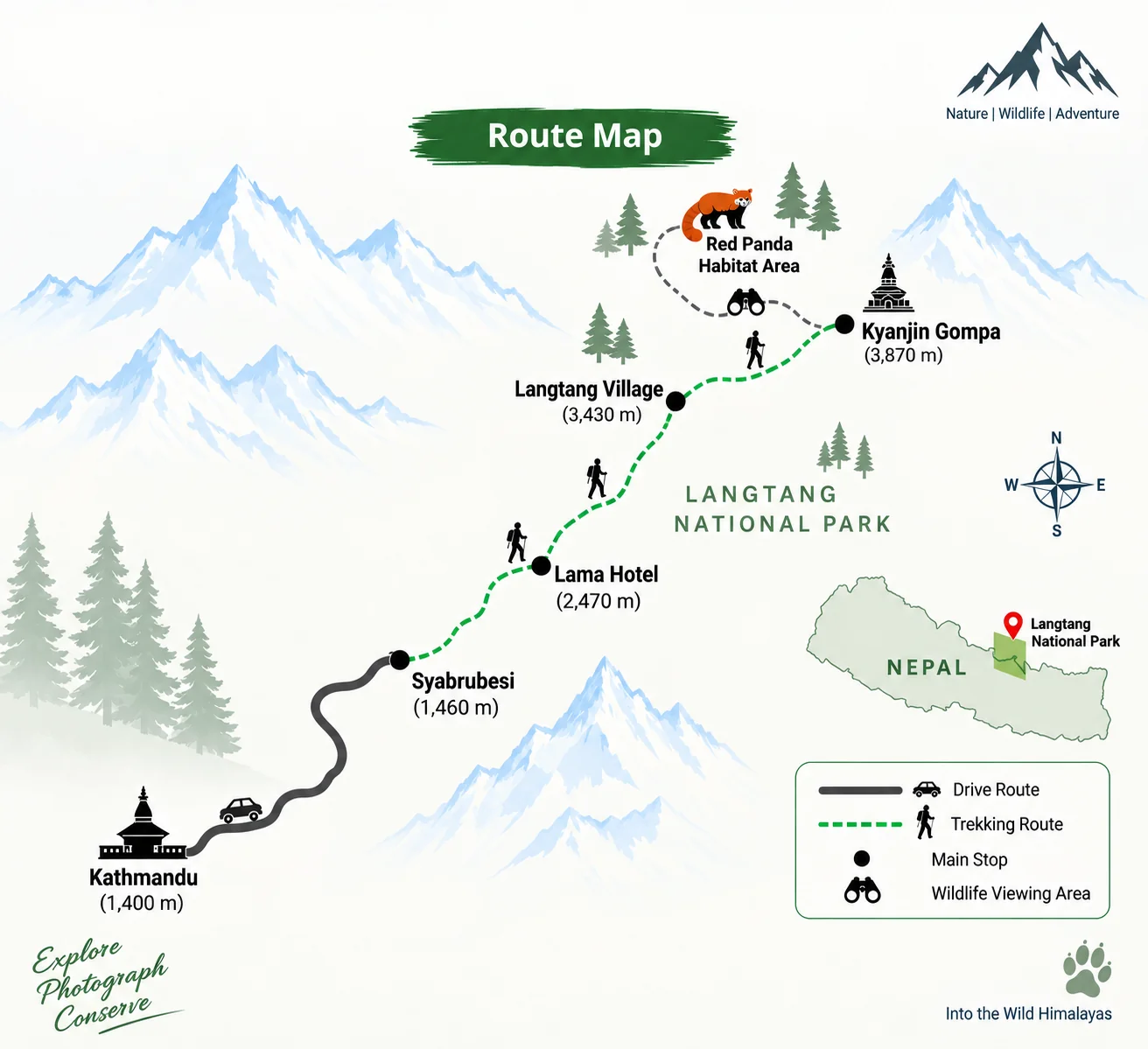
Route Map
Gear List / Packing Guide
| Category | Recommended Gear |
|---|---|
| Photography | Camera body, telephoto lens, wide-angle lens, extra batteries, memory cards |
| Camera Protection | Rain cover, camera bag, lens cleaning kit, dry bags |
| Clothing | Thermal layers, fleece jacket, down jacket, waterproof jacket and pants |
| Footwear | Waterproof trekking boots, warm socks, camp shoes |
| Trekking Gear | Daypack, trekking poles, headlamp, water bottle |
| Warmth & Comfort | Gloves, warm hat, neck gaiter, sunglasses |
| Personal Items | Sunscreen, lip balm, toiletries, personal medication |
| Navigation & Safety | Headlamp, power bank, first-aid kit, reusable water bottle |
| Photography Accessories | Tripod or monopod, binoculars, spare batteries, lens cloth |
| Optional | Camera bean bag, extra telephoto lens, portable charger, notebook |
FAQ
Red pandas can be found in the forested areas of Langtang National Park, particularly in suitable bamboo and temperate forest habitats. The Lapchi area is one of the locations explored during this photography tour.
The best seasons are generally spring (March to May) and autumn (September to November), when the weather is favorable for trekking and wildlife observation.
A 5-day itinerary provides a good balance of travel, trekking, red panda tracking, photography, and return travel from Kathmandu.
Langtang National Park, Panchthar-Ilam, and Kanchenjunga Conservation Area are among the notable areas in Nepal for red panda habitat and wildlife photography.
Yes. Langtang National Park offers diverse forests, mountain landscapes, birds, and other wildlife, making it an excellent destination for nature and wildlife photography.
The park offers opportunities to photograph red pandas, birds, Himalayan landscapes, forests, and other wildlife in their natural surroundings.
Depending on the season and location, you may encounter Himalayan black bears, musk deer, Himalayan tahr, monkeys, birds, and other forest wildlife.
Langtang's diverse forest environments support many bird species, making the park suitable for birdwatching and bird photography during the tour.
Spring and autumn are generally the most comfortable seasons for trekking and photography, with favorable weather and good visibility.
The trek involves several hours of walking through forest trails and hilly terrain. A reasonable level of fitness and preparation is recommended.
It can be suitable for travelers with basic trekking experience and good physical fitness. The walking pace can be managed according to the group's ability.
A camera with a telephoto lens, extra batteries, memory cards, tripod or monopod, rain protection, and lens-cleaning equipment is recommended.
Pack comfortable trekking clothes, waterproof layers, trekking boots, warm clothing, a daypack, water bottle, personal medicines, and photography equipment.
Yes, traveling with an experienced guide is highly recommended. A knowledgeable guide can help with trail navigation, wildlife tracking, safety, and local information.
Travelers generally need a Langtang National Park Entry Permit and the applicable trekking registration or TIMS requirements for the route.
The tour begins with a private or arranged road journey from Kathmandu to Maghu Village, followed by trekking toward Lapchi.
The road journey generally takes several hours, depending on road conditions, traffic, and weather.
Accommodation is generally provided in local teahouses or lodges, offering basic facilities and a comfortable place to rest after trekking.
Yes. Along with wildlife and forests, the journey offers opportunities to photograph Himalayan peaks, valleys, rivers, and mountain landscapes.
Langtang combines rich biodiversity, Himalayan scenery, forests, mountain villages, and peaceful trekking trails, making it an attractive destination for nature lovers.
Yes. Red panda tracking can be combined with birdwatching and bird photography, allowing you to enjoy a wider range of wildlife experiences.
Popular nature experiences include Langtang National Park, Shivapuri Nagarjun National Park, Nagarkot, Dhulikhel, and Phulchowki, depending on your available time and interests.
Langtang National Park is an excellent choice for travelers looking for a peaceful escape into forests, mountains, and wildlife habitats away from Kathmandu's busy city environment.
Lapchi offers a combination of quiet forest trails, Himalayan scenery, natural wildlife habitat, and fewer urban distractions, creating a rewarding environment for wildlife photography.
The tour can be suitable for families with older children and members who are comfortable with several hours of trekking. The itinerary can also be adjusted according to the group's needs.
Yes. The itinerary can be customized according to your photography goals, preferred pace, travel dates, group size, and other requirements.
A 5-day tour is a practical option for travelers who want to combine red panda tracking and photography with trekking without committing to a long expedition.
The tour is ideal for wildlife photographers, nature lovers, birdwatchers, adventure travelers, and anyone interested in seeing red pandas in their natural environment.
Yes. Khushi Travels and Consulting Group can customize the tour according to your photography interests, preferred pace, group size, travel dates, and specific travel requirements.
Khushi Travels and Consulting Group provides local travel planning, experienced guides, transportation, accommodation, permits, and personalized arrangements, helping you enjoy a smooth and well-organized red panda photography experience in Langtang National Park.
More Details
 Red Panda Photography Tour Accommodation Types
The Red Panda Photography Tour offers a combination of comfortable city accommodation and authentic mountain lodges in the Langtang region. Before and after the tour, you'll stay in hotels in Kathmandu, while during the journey you'll experience the warm hospitality of family-run lodges and teahouses. As you travel deeper into the forests and remote areas of Langtang National Park, accommodation becomes more basic, but each lodge provides a comfortable place to rest, enjoy freshly prepared meals, and prepare for another day of wildlife photography. Staying in these local mountain lodges is an important part of the red panda photography experience.
Accommodation Overview
| Location | Accommodation Type |
|---|---|
| Kathmandu | 3★–5★ Hotels, Boutique Hotels & Guesthouses |
| Langtang Region | Traditional Teahouses & Mountain Lodges |
| Maghu Village | Local Teahouses & Mountain Guesthouses |
| Lapchi | Basic Mountain Lodges & Local Guesthouses |
Room Facilities
Most teahouses and lodges provide simple yet comfortable accommodation designed for trekkers and wildlife photographers.
- Twin-sharing rooms with comfortable beds
- Blankets and pillows provided
- Basic wooden furniture
- Shared bathrooms in most trekking areas
- Attached bathrooms available in selected lower-altitude accommodations
- Bedrooms are generally not heated, so warm clothing and a suitable sleeping bag are highly recommended
Dining Facilities
The dining hall is an important part of every mountain lodge, where travelers gather to eat, relax, and stay warm after a day of trekking and wildlife photography.
Dining facilities include:
- Heated dining room with a wood-burning or similar local heating stove where available
- Freshly prepared breakfast, lunch, and dinner
- Nepali, Tibetan, Indian, Chinese, and Continental-style dishes depending on the lodge
- Tea, coffee, hot chocolate, and other hot beverages
- Comfortable communal seating where travelers can relax and share their experiences
Additional Facilities
| Facility | Availability |
|---|---|
| Hot Shower | Available at selected lodges (additional charge) |
| Wi-Fi | Available at selected locations (paid) |
| Mobile Charging | Available at selected lodges (additional charge) |
| Drinking Water | Boiled, filtered, or bottled water |
| Laundry Service | Available in selected lower areas |
| Heating | Mainly available in dining areas |
Additional Charges
Some services require an additional payment depending on the accommodation and location.
| Service | Approximate Cost |
|---|---|
| Hot Shower | Varies by location |
| Mobile Charging | Varies by location |
| Wi-Fi | Varies by location |
| Boiled Drinking Water | Small additional charge |
What to Expect
As you travel deeper into the Langtang region, accommodation becomes more traditional because of the remote Himalayan environment. Modern hotels are replaced by cozy locally operated teahouses and mountain lodges that provide clean rooms, simple meals, and genuine Himalayan hospitality. Even with basic facilities, the peaceful forest surroundings, mountain scenery, and proximity to red panda habitat make every overnight stay a memorable part of the photography tour.
You can expect:
- Comfortable mountain lodges with basic facilities
- Warm hospitality from local families
- Freshly prepared home-style meals
- Peaceful Himalayan forest surroundings
- Comfortable communal dining areas
- Opportunities to meet local residents and fellow travelers
- Convenient access to areas suitable for wildlife photography
Accommodation Tips
To enjoy a more comfortable stay during your photography tour:
- Carry a warm sleeping bag for cold nights.
- Bring a power bank to keep your camera and mobile devices charged.
- Carry enough Nepalese Rupees for personal expenses and additional services.
- Pack warm and comfortable clothing for evenings and early mornings.
- Carry extra camera batteries because charging facilities may be limited.
- Protect cameras, lenses, and other electronic equipment from moisture and cold.
- Book your tour early during the popular spring and autumn seasons.
- Keep valuables and photography equipment safely with you.
- Respect local customs and keep shared facilities clean.
- Spend your evenings in the dining hall, where you can stay warm and socialize with other travelers.
Why You'll Love Staying on the Red Panda Photography Tour
Accommodation on the Red Panda Photography Tour is far more than simply a place to sleep. It gives you the opportunity to experience authentic Himalayan hospitality, enjoy freshly prepared local meals, and stay close to the forests and landscapes of Langtang National Park. Although the facilities become simpler in remote areas, the peaceful surroundings, welcoming atmosphere, and opportunity to experience local mountain life make every overnight stay a memorable part of your red panda photography adventure.
sub tittle bold and one line between each major section other same
Red Panda Photography Tour Accommodation TypesRed Panda Photography Tour Accommodation Types
The Red Panda Photography Tour offers a combination of comfortable city accommodation and authentic mountain lodges in the Langtang region. Before and after the tour, you'll stay in hotels in Kathmandu, while during the journey you'll experience the warm hospitality of family-run lodges and teahouses. As you travel deeper into the forests and remote areas of Langtang National Park, accommodation becomes more basic, but each lodge provides a comfortable place to rest, enjoy freshly prepared meals, and prepare for another day of wildlife photography. Staying in these local mountain lodges is an important part of the red panda photography experience.
Accommodation Overview
| Location | Accommodation Type |
|---|---|
| Kathmandu | 3★–5★ Hotels, Boutique Hotels & Guesthouses |
| Langtang Region | Traditional Teahouses & Mountain Lodges |
| Maghu Village | Local Teahouses & Mountain Guesthouses |
| Lapchi | Basic Mountain Lodges & Local Guesthouses |
Room Facilities
Most teahouses and lodges provide simple yet comfortable accommodation designed for trekkers and wildlife photographers.
- Twin-sharing rooms with comfortable beds
- Blankets and pillows provided
- Basic wooden furniture
- Shared bathrooms in most trekking areas
- Attached bathrooms available in selected lower-altitude accommodations
- Bedrooms are generally not heated, so warm clothing and a suitable sleeping bag are highly recommended
Dining Facilities
The dining hall is an important part of every mountain lodge, where travelers gather to eat, relax, and stay warm after a day of trekking and wildlife photography.
Dining facilities include:
- Heated dining room with a wood-burning or similar local heating stove where available
- Freshly prepared breakfast, lunch, and dinner
- Nepali, Tibetan, Indian, Chinese, and Continental-style dishes depending on the lodge
- Tea, coffee, hot chocolate, and other hot beverages
- Comfortable communal seating where travelers can relax and share their experiences
Additional Facilities
| Facility | Availability |
|---|---|
| Hot Shower | Available at selected lodges (additional charge) |
| Wi-Fi | Available at selected locations (paid) |
| Mobile Charging | Available at selected lodges (additional charge) |
| Drinking Water | Boiled, filtered, or bottled water |
| Laundry Service | Available in selected lower areas |
| Heating | Mainly available in dining areas |
Additional Charges
Some services require an additional payment depending on the accommodation and location.
| Service | Approximate Cost |
|---|---|
| Hot Shower | Varies by location |
| Mobile Charging | Varies by location |
| Wi-Fi | Varies by location |
| Boiled Drinking Water | Small additional charge |
What to Expect
As you travel deeper into the Langtang region, accommodation becomes more traditional because of the remote Himalayan environment. Modern hotels are replaced by cozy locally operated teahouses and mountain lodges that provide clean rooms, simple meals, and genuine Himalayan hospitality. Even with basic facilities, the peaceful forest surroundings, mountain scenery, and proximity to red panda habitat make every overnight stay a memorable part of the photography tour.
You can expect:
- Comfortable mountain lodges with basic facilities
- Warm hospitality from local families
- Freshly prepared home-style meals
- Peaceful Himalayan forest surroundings
- Comfortable communal dining areas
- Opportunities to meet local residents and fellow travelers
- Convenient access to areas suitable for wildlife photography
Accommodation Tips
To enjoy a more comfortable stay during your photography tour:
- Carry a warm sleeping bag for cold nights.
- Bring a power bank to keep your camera and mobile devices charged.
- Carry enough Nepalese Rupees for personal expenses and additional services.
- Pack warm and comfortable clothing for evenings and early mornings.
- Carry extra camera batteries because charging facilities may be limited.
- Protect cameras, lenses, and other electronic equipment from moisture and cold.
- Book your tour early during the popular spring and autumn seasons.
- Keep valuables and photography equipment safely with you.
- Respect local customs and keep shared facilities clean.
- Spend your evenings in the dining hall, where you can stay warm and socialize with other travelers.
Why You'll Love Staying on the Red Panda Photography Tour
Accommodation on the Red Panda Photography Tour is far more than simply a place to sleep. It gives you the opportunity to experience authentic Himalayan hospitality, enjoy freshly prepared local meals, and stay close to the forests and landscapes of Langtang National Park. Although the facilities become simpler in remote areas, the peaceful surroundings, welcoming atmosphere, and opportunity to experience local mountain life make every overnight stay a memorable part of your red panda photography adventure.
 What to Expect from the Red Panda Photography Tour
The Red Panda Photography Tour in Langtang National Park offers a unique opportunity to explore Himalayan forests in search of one of Nepal's most elusive mammals. The tour combines wildlife tracking, nature exploration, trekking, and photography in a peaceful mountain environment. Along the journey, you'll walk through forested landscapes, observe the natural habitat of red pandas, and have opportunities to capture wildlife and Himalayan scenery with the support of experienced local guides.
Red Panda Wildlife Photography Experience
The main highlight of the tour is the opportunity to search for red pandas in their natural forest habitat. Red pandas are shy and elusive animals, so sightings cannot be guaranteed. Careful tracking, patience, and spending time in suitable forest areas can provide rewarding wildlife photography opportunities.
You can expect:
- Searching for red pandas in their natural habitat
- Exploring peaceful Himalayan forests
- Wildlife photography opportunities
- Observing birds and other Himalayan wildlife
- Learning about red panda behavior and habitat
- Enjoying beautiful mountain landscapes
- Experiencing the natural environment of Langtang National Park
Walking Through Red Panda Habitat
The tour involves walking through forested areas where red pandas are found. The landscape can include dense forests, natural trails, mountain slopes, and quiet areas suitable for wildlife observation. Moving slowly and quietly is important when looking for these shy animals.
Wildlife Tracking and Observation
Red panda photography requires patience because these animals can be difficult to spot in the wild. Your guide can help identify suitable habitats, tracks, signs, feeding areas, and other indications of wildlife activity.
The experience may include:
- Wildlife tracking through forest trails
- Searching suitable red panda habitat
- Observing signs of animal activity
- Quiet waiting at potential sighting locations
- Learning about local wildlife
- Photographing birds and other wildlife when opportunities arise
Photography Opportunities
The tour is designed for travelers who want to combine wildlife exploration with photography. Depending on wildlife activity and conditions, you may have opportunities to photograph red pandas, birds, forest landscapes, Himalayan scenery, and other natural subjects.
Photography opportunities include:
- Red panda wildlife photography
- Bird photography
- Himalayan landscape photography
- Forest and nature photography
- Wildlife habitat photography
- Sunrise and sunset landscape photography
- Local village and cultural photography
Forest and Himalayan Landscapes
Beyond red pandas, the journey provides opportunities to experience the natural beauty of the Langtang region. Forests, mountain landscapes, traditional settlements, and changing scenery make the tour suitable for wildlife photographers, nature lovers, and landscape photographers.
Local Village Experience
The Red Panda Photography Tour also provides an opportunity to experience local Himalayan communities. Staying in local lodges and traveling through villages allows you to observe traditional lifestyles and interact respectfully with local people.
You can expect:
- Traditional Himalayan villages
- Local hospitality
- Simple mountain lodges
- Opportunities to interact with local communities
- Traditional food and lifestyle
- Beautiful village and mountain surroundings
Role of the Guide
An experienced licensed trekking guide plays an important role during the tour. The guide helps with trekking logistics, route navigation, safety, accommodation, and coordination during wildlife-search activities. Local knowledge can also be valuable when identifying suitable areas for wildlife observation.
Daily Walking and Photography Routine
A typical day combines walking, wildlife observation, photography, rest, and meals. Early mornings can be particularly valuable for wildlife photography because the forest environment is generally quieter and provides opportunities to observe animals in natural surroundings.
Weather and Wildlife Conditions
Wildlife sightings and photography opportunities depend on several natural factors, including weather, season, animal movement, forest conditions, and luck. Red pandas are wild animals, so no tour can guarantee a sighting or a specific photograph.
What to Bring for the Experience
A suitable camera setup, extra batteries, memory cards, comfortable walking shoes, warm clothing, rain protection, and a small daypack can make the photography experience more comfortable. A telephoto lens is particularly useful for photographing wildlife from a respectful distance.
Why You'll Love the Red Panda Photography Tour
The Red Panda Photography Tour is more than a search for a rare Himalayan animal. It combines wildlife photography, forest exploration, mountain scenery, local culture, and adventure in one experience. The peaceful surroundings and opportunity to explore the natural habitat of the red panda make this tour an exciting choice for wildlife photographers, nature lovers, and travelers looking for an authentic Himalayan experience.
 Best Time / Season to Visit Langtang for Red Panda Photography
The best time for a Red Panda Photography Tour in Langtang National Park is generally during the spring and autumn seasons, when the weather is more favorable for trekking and wildlife observation. These periods offer relatively stable conditions, clearer mountain views, and comfortable temperatures for spending time in the forest. However, red pandas are wild animals, so sightings depend on natural conditions, animal movement, and patience.
Best Seasons for Red Panda Photography
| Season | Months | Photography Conditions |
|---|---|---|
| Spring | March–May | Pleasant temperatures, active wildlife, and good forest conditions |
| Summer / Monsoon | June–September | Rainy conditions, cloudy skies, and wet forest trails |
| Autumn | October–November | Clear weather, comfortable trekking conditions, and good visibility |
| Winter | December–February | Cold conditions, possible snow, and shorter comfortable photography periods |
Spring Season for Red Panda Photography
Spring is one of the most favorable periods for exploring the forests of Langtang National Park. The weather gradually becomes warmer, vegetation becomes greener, and the forest environment provides attractive conditions for nature and wildlife photography.
You can expect:
- Pleasant daytime temperatures
- Green and vibrant forest surroundings
- Good opportunities for nature photography
- Comfortable conditions for walking and wildlife observation
- Clearer mountain scenery on suitable days
- Beautiful seasonal landscapes
Autumn Season for Red Panda Photography
Autumn is another excellent period for the Red Panda Photography Tour. The monsoon season has generally ended, leaving clearer skies and relatively dry trails. The combination of pleasant weather, forest landscapes, and mountain views makes autumn particularly attractive for photographers.
You can expect:
- Clearer skies
- Better mountain visibility
- Relatively dry trekking trails
- Comfortable daytime temperatures
- Excellent landscape photography opportunities
- Favorable conditions for longer wildlife-search sessions
Summer and Monsoon Season
The summer and monsoon months bring increased rainfall to the Langtang region. Forests become lush and green, but rain, slippery trails, clouds, and reduced visibility can make trekking and photography more challenging.
Winter Season
Winter brings colder temperatures to the Langtang region, particularly during mornings and evenings. Higher areas can experience snow and freezing conditions. Photographers visiting during this period should be prepared with appropriate warm clothing and equipment protection.
Weather Conditions and Photography
Weather can have a direct impact on wildlife photography. Clear and stable conditions can make it easier to spend extended periods in the forest, while rain, fog, or strong winds may reduce visibility and comfort. Wildlife photography should therefore remain flexible according to daily conditions.
Best Time of Day for Wildlife Photography
Early morning and quieter periods of the day can be productive for wildlife observation. Starting early allows photographers to spend more time searching suitable forest areas before returning to the lodge for meals and rest.
Wildlife Activity and Red Panda Sightings
The presence of red pandas cannot be predicted precisely because they are wild and elusive animals. Even during the most favorable seasons, a sighting is never guaranteed. Patience, quiet movement, careful observation, and sufficient time in suitable habitat can improve the overall wildlife photography experience.
Seasonal Photography Opportunities
Each season provides a different photographic experience in Langtang National Park. Spring offers fresh vegetation and colorful landscapes, autumn provides clearer mountain views, monsoon creates lush forest scenery, and winter can provide dramatic cold-weather landscapes.
Choosing the Best Season for Your Tour
For travelers prioritizing a combination of red panda photography, comfortable trekking, forest exploration, and Himalayan scenery, spring and autumn are generally the most suitable seasons. Your preferred travel dates should also consider weather conditions, trekking comfort, photography goals, and accommodation availability.
Why Spring and Autumn Are Popular
Spring and autumn are popular because they generally provide a good balance between trekking conditions and photography opportunities. More stable weather allows photographers to spend longer periods outdoors while exploring the forests and waiting patiently for wildlife activity.
Seasonal Planning Tips
To make the most of your Red Panda Photography Tour:
- Choose spring or autumn for generally favorable trekking conditions.
- Check weather conditions before beginning the journey.
- Carry rain protection even during the drier seasons.
- Pack warm layers for early mornings and evenings.
- Protect cameras and lenses from rain, moisture, and cold.
- Carry extra camera batteries and memory cards.
- Allow enough time for patient wildlife observation.
- Be prepared for changing Himalayan weather.
- Maintain a respectful distance from wildlife at all times.
Why You'll Love Red Panda Photography in the Best Seasons
Choosing the right season can make your Red Panda Photography Tour more comfortable and enjoyable. Spring and autumn provide favorable conditions for exploring the forests of Langtang National Park, while every season offers its own unique landscapes and photography opportunities. Regardless of when you travel, the experience combines wildlife exploration, Himalayan scenery, and the opportunity to search for one of Nepal's most elusive mammals in its natural environment.
 Nearby Places to Explore from the Red Panda Photography Tour
The Red Panda Photography Tour in Langtang National Park provides more than an opportunity to search for red pandas. The journey takes you through beautiful Himalayan forests, traditional villages, peaceful mountain landscapes, and wildlife-rich areas. Depending on your itinerary, available time, and local conditions, you can explore several nearby places and natural attractions during the photography adventure.
Langtang National Park
Langtang National Park is the main destination for the Red Panda Photography Tour. The park is known for its diverse forests, Himalayan landscapes, and rich wildlife. Exploring the park provides opportunities to observe the natural environment of red pandas and other wildlife species.
You can enjoy:
- Dense Himalayan forests
- Wildlife observation
- Red panda habitat exploration
- Birdwatching opportunities
- Mountain scenery
- Nature and landscape photography
Maghu Village
Maghu Village provides an opportunity to experience local Himalayan life during the photography journey. The village surroundings offer peaceful landscapes and access to natural areas where travelers can experience the traditional lifestyle of mountain communities.
You can expect:
- Traditional village surroundings
- Local Himalayan culture
- Mountain views
- Local hospitality
- Photography opportunities
- Access to nearby forest areas
Lapchi
Lapchi is another area associated with the Red Panda Photography Tour and provides a peaceful environment for wildlife exploration and photography. The surrounding forests and mountain landscapes offer opportunities to observe nature away from busy tourist areas.
Himalayan Forests
The forests surrounding the red panda habitat are themselves an important attraction. Walking through these quiet forests allows you to experience the biodiversity of Langtang National Park while searching for wildlife.
Photography opportunities include:
- Forest landscapes
- Wildlife habitat
- Birds and other animals
- Trees and vegetation
- Natural trails
- Atmospheric Himalayan scenery
Traditional Mountain Villages
The journey through the Langtang region allows travelers to experience traditional mountain settlements and the daily lifestyle of local communities. Villages along the route provide opportunities for cultural photography and interaction with local people.
Mountain Viewpoints
The tour also provides opportunities to enjoy scenic viewpoints along the route. Depending on the weather and location, you can photograph surrounding mountains, valleys, forests, and changing Himalayan landscapes.
Birdwatching Areas
Langtang National Park supports a wide variety of birdlife, making the tour interesting for bird photographers as well as red panda enthusiasts. While searching for red pandas, you may also encounter different Himalayan birds in the surrounding forests.
Wildlife Observation Areas
The forests of Langtang provide habitat for various Himalayan wildlife species. Besides red pandas, travelers may have opportunities to observe or photograph birds and other wildlife depending on season, location, and natural activity.
Nature Photography Locations
The entire journey provides opportunities for nature photography. Forests, mountain slopes, villages, trails, vegetation, wildlife habitats, and Himalayan scenery create a diverse range of subjects for photographers.
Cultural Experiences Along the Route
Traveling through local settlements allows you to experience the culture and lifestyle of Himalayan communities. Respectful interaction with local residents can add an important cultural dimension to the wildlife photography journey.
Nearby Natural Attractions
Depending on the route and conditions, travelers can enjoy the natural surroundings beyond specific wildlife-search locations. The combination of forests, mountains, valleys, streams, and traditional settlements creates a varied Himalayan landscape throughout the journey.
Photography Opportunities Around Nearby Places
Nearby attractions provide additional subjects when red pandas are not visible. Photographers can use the time to capture:
- Himalayan landscapes
- Forest scenery
- Local villages
- Birds
- Wildlife habitat
- Mountain trails
- Local culture and daily life
Planning Your Nearby Exploration
The amount of time available for exploring nearby places depends on the tour itinerary, walking conditions, weather, wildlife-search activities, and accommodation arrangements. The primary focus remains red panda observation and photography, while nearby attractions provide additional experiences along the journey.
Why You'll Love Exploring Nearby Places
The nearby places around the Red Panda Photography Tour add variety to the overall experience. From the forests of Langtang National Park and peaceful mountain villages to scenic viewpoints and wildlife-rich landscapes, the journey provides plenty of opportunities for photography, nature exploration, and cultural experiences. Even when red pandas remain hidden, the surrounding Himalayan environment offers memorable subjects to explore and photograph.
 Foods Available on the Red Panda Photography Tour
The Red Panda Photography Tour provides a variety of nutritious and freshly prepared meals to keep you energized during trekking, wildlife observation, and photography. In Kathmandu, you can enjoy a wider selection of meals at hotels and restaurants, while the trekking areas of Langtang offer traditional Nepali, Tibetan, Indian, Chinese, and Continental-style dishes depending on the available lodge. Meals are generally simple, filling, and suitable for the demands of walking in the Himalayan environment.
Breakfast During the Tour
Breakfast provides the energy needed for early morning walking and wildlife photography. Since photographers may begin their day early to search for red pandas, having a nutritious breakfast is particularly important.
Breakfast options may include:
- Tibetan or Nepali bread
- Toast with butter, jam, or honey
- Eggs prepared in different styles
- Porridge
- Pancakes
- Oatmeal
- Muesli or cereal
- Tea and coffee
- Hot chocolate
- Fresh or seasonal fruit where available
Lunch During the Tour
Lunch is generally served during the trekking day or at a local lodge depending on the day's itinerary. Meals are designed to provide enough energy for continued walking and wildlife observation.
Lunch options may include:
- Dal Bhat
- Vegetable rice
- Fried rice
- Noodles
- Pasta
- Soups
- Momos
- Tibetan-style dishes
- Vegetable curry
- Egg or meat dishes where available
- Tea and other hot beverages
Dinner During the Tour
Dinner is usually served at the lodge after completing the day's trekking and photography activities. A warm and filling dinner provides an opportunity to recover and prepare for the following day.
Dinner options may include:
- Traditional Nepali Dal Bhat
- Rice and vegetable curry
- Noodles
- Pasta
- Soups
- Momos
- Potatoes and seasonal vegetables
- Egg dishes
- Meat dishes where available
- Tea, coffee, or other hot beverages
Traditional Nepali Food
Dal Bhat is one of the most common and practical meals available in the Himalayan trekking regions. It normally consists of rice, lentil soup, vegetables, curry, and accompanying side dishes. It is filling and provides a good source of carbohydrates and protein for travelers spending long hours walking.
Tibetan and Himalayan Food
Local lodges may also serve Tibetan-influenced dishes that are popular throughout the Himalayan region.
Common options include:
- Momos
- Thukpa
- Tibetan bread
- Potato dishes
- Noodle-based meals
- Vegetable soups
Vegetarian Food Options
Vegetarian meals are commonly available along the trekking route. Travelers can choose from vegetable curries, rice, noodles, pasta, soups, potatoes, and other plant-based dishes depending on the lodge.
Meat and Egg Options
Eggs and meat dishes may be available at selected lodges, but choices can become more limited in remote areas. Travelers who prefer specific protein sources should communicate their preferences when arranging meals.
Snacks and Energy Foods
Carrying personal snacks can be useful during long photography and trekking sessions. Small energy-rich foods can provide quick nourishment when you are away from the lodge.
Recommended options include:
- Energy bars
- Chocolate
- Biscuits
- Nuts
- Dried fruits
- Granola
- Trail mix
Tea, Coffee, and Hot Beverages
Hot beverages are widely enjoyed in the Himalayan region, especially during cold mornings and evenings. Tea and coffee are commonly available, while some lodges may also offer hot chocolate and other warm drinks.
Drinking Water
Safe drinking water is important throughout the tour. Travelers can use boiled, filtered, or bottled water depending on availability. Carrying a reusable water bottle can help reduce single-use plastic waste.
Food Availability in Remote Areas
As the tour moves into more remote parts of the Langtang region, food choices can become more limited. Meals are generally prepared using locally available ingredients, so travelers should maintain realistic expectations about the variety available in mountain lodges.
Food for Wildlife Photographers
Wildlife photographers may spend long periods outdoors waiting quietly for possible red panda sightings. Eating a nutritious breakfast and carrying small snacks can help maintain energy throughout the day. Staying hydrated is equally important during trekking and photography activities.
Dietary Requirements
If you have specific dietary preferences or restrictions, inform the tour organizer in advance. This allows suitable meals to be planned where possible. Vegetarian meals are generally easier to arrange, while highly specific dietary requirements may require additional preparation.
Why You'll Enjoy the Food Experience
Food on the Red Panda Photography Tour is an important part of the Himalayan experience. From traditional Dal Bhat and momos to warm soups, noodles, tea, and other lodge meals, the available food provides nourishment during your adventure while allowing you to experience the simple and authentic flavors of the Langtang region.
 Culture and Etiquette During the Red Panda Photography Tour
The Red Panda Photography Tour provides an opportunity to experience the natural environment and local communities of the Langtang region. Along the journey, travelers pass through traditional mountain settlements and interact with local people while exploring the forests of Langtang National Park. Respecting local customs, communities, wildlife, and the natural environment helps make the photography experience responsible and enjoyable.
Respect for Local Communities
The Langtang region is home to diverse Himalayan communities with their own traditions and ways of life. Travelers should interact with local residents politely and respectfully throughout the journey.
You should:
- Greet local people politely.
- Respect local traditions and customs.
- Ask permission before photographing people.
- Avoid disturbing people's daily activities.
- Dress appropriately when visiting villages and cultural places.
- Treat local homes, lodges, and community spaces with respect.
Photography Etiquette
Photography is a major part of the tour, but responsible photography is essential. Travelers should avoid disturbing wildlife or local communities simply to obtain a photograph.
Good photography practices include:
- Ask permission before photographing local people.
- Maintain a respectful distance from wildlife.
- Never chase or corner a red panda for a photograph.
- Avoid making loud noises near wildlife.
- Do not use photography as a reason to disturb animals.
- Follow your guide's instructions during wildlife observation.
Wildlife Observation Etiquette
Red pandas are shy and sensitive to disturbance. Wildlife observation should always prioritize the animal's welfare over getting a close photograph.
Travelers should:
- Observe wildlife quietly.
- Maintain a safe and respectful distance.
- Avoid sudden movements and loud conversations.
- Never feed or touch wild animals.
- Never attempt to attract wildlife for photographs.
- Follow designated trails and local wildlife guidelines.
Respect for Buddhist and Cultural Sites
The Langtang region contains Buddhist cultural traditions and religious sites. When visiting monasteries, shrines, prayer areas, or other cultural places, travelers should behave respectfully.
You should:
- Follow local instructions.
- Dress respectfully.
- Avoid unnecessary noise.
- Ask before taking photographs inside religious areas.
- Avoid touching religious objects without permission.
- Respect people who are praying or participating in religious activities.
Dress and Personal Behavior
Comfortable trekking clothing is appropriate for the journey, but travelers should remain respectful of local customs. Modest clothing is recommended when visiting villages, monasteries, and cultural sites.
Environmental Responsibility
Protecting the natural environment is especially important during a wildlife photography tour. Langtang National Park provides habitat for red pandas and many other species, so travelers should minimize their environmental impact.
You should:
- Avoid littering.
- Carry rubbish until it can be properly disposed of.
- Avoid damaging plants and vegetation.
- Stay on established trails where required.
- Avoid disturbing wildlife habitats.
- Reduce unnecessary plastic use.
- Use water responsibly.
Respect for Local Accommodation
Mountain lodges and teahouses are often locally operated. Respecting the property and other guests helps maintain a pleasant environment for everyone.
Travelers should:
- Keep rooms and shared areas clean.
- Respect quiet hours.
- Use water and electricity responsibly.
- Follow lodge rules.
- Treat local staff respectfully.
- Keep shared bathrooms and dining areas clean.
Responsible Travel Practices
Responsible tourism helps support local communities while protecting the environment and wildlife. Choosing local accommodation, eating locally prepared meals, and using local services can contribute to the communities along the route.
Why Culture and Etiquette Matter
Following local customs and responsible wildlife practices makes the Red Panda Photography Tour more meaningful. Respect for local people, cultural traditions, wildlife, and the environment helps preserve the unique character of the Langtang region while allowing travelers to enjoy a memorable and responsible Himalayan photography experience.
 Safety and Security on the Red Panda Photography Tour
The Red Panda Photography Tour takes place in the natural and remote environment of Langtang National Park, where careful planning and responsible travel are important. The journey involves walking through forest trails, spending time in wildlife habitat, and staying in mountain lodges. Following your guide's instructions, preparing properly, and respecting wildlife and the environment can help ensure a safe and enjoyable photography experience.
Guide and Group Safety
An experienced licensed trekking guide helps travelers navigate the route, manage daily trekking activities, and respond to changing conditions. Staying with the group and following the guide's instructions is particularly important when exploring remote forest areas.
You should:
- Follow your guide's instructions throughout the tour.
- Stay with your group during forest walks.
- Avoid leaving the designated route without informing your guide.
- Inform your guide if you feel unwell or tired.
- Keep important personal belongings safely with you.
Wildlife Safety
Red pandas and other wildlife encountered during the tour are wild animals and should always be observed from a respectful distance. Wildlife should never be approached, touched, fed, chased, or intentionally disturbed for photography.
Important practices include:
- Maintain a safe distance from wildlife.
- Never feed wild animals.
- Do not attempt to touch or catch animals.
- Avoid loud noises near wildlife.
- Never block an animal's movement.
- Follow responsible wildlife photography practices.
Forest Trail Safety
The tour involves walking through natural forest trails, which can include uneven ground, steep sections, roots, rocks, and slippery surfaces, particularly after rainfall. Proper footwear and careful walking are important.
Travelers should:
- Wear comfortable trekking shoes with good grip.
- Walk carefully on uneven and wet trails.
- Use trekking poles if needed.
- Follow established trails.
- Avoid rushing while photographing wildlife.
- Be particularly careful during early morning and evening walks.
Weather and Environmental Conditions
Mountain weather can change quickly. Rain, fog, cold temperatures, and slippery trails may affect walking and wildlife photography conditions. Your itinerary may need to remain flexible according to local weather and trail conditions.
Altitude and Physical Wellbeing
Although the tour does not require technical climbing, walking in the Himalayan environment can be physically demanding. Travelers should maintain a comfortable pace, stay hydrated, eat properly, and allow sufficient rest during the journey.
If you experience unusual symptoms or feel unwell, inform your guide immediately.
Photography Equipment Safety
Photography equipment should be protected carefully because the tour takes place in a mountain environment. Moisture, dust, cold temperatures, and accidental drops can damage cameras and lenses.
You should:
- Carry a protective camera bag.
- Keep lenses and cameras protected from rain.
- Carry extra batteries and memory cards.
- Use waterproof protection when necessary.
- Keep equipment securely stored when not in use.
- Avoid changing lenses unnecessarily in dusty or wet conditions.
Personal Belongings and Valuables
Keep passports, money, cameras, lenses, mobile phones, and other valuable items secure. A small daypack is useful for carrying essential equipment during daily wildlife photography walks.
Food and Drinking Water Safety
Drink safe water throughout the journey and maintain good personal hygiene. Boiled, filtered, or bottled water can be used depending on availability. Travelers should also eat properly to maintain energy during long walking and photography sessions.
Emergency Preparedness
Because parts of the route are remote, travelers should be prepared for unexpected situations. Carry essential personal medication, basic first-aid supplies, a charged mobile phone, and emergency contact information. Your guide can assist with local arrangements if an emergency occurs.
Communication and Connectivity
Mobile network and internet connectivity can be limited in remote areas. Travelers should not depend entirely on continuous connectivity and should inform family or friends about the possibility of limited communication during parts of the journey.
Environmental Safety
Protecting the environment is part of responsible wildlife tourism. Avoid leaving waste in the forest, damaging vegetation, or disturbing natural habitats.
You should:
- Carry your waste with you until proper disposal is available.
- Avoid single-use plastics where possible.
- Do not damage trees or plants.
- Do not disturb wildlife habitats.
- Follow park regulations and local instructions.
Responsible Wildlife Photography
The most important safety principle is to prioritize wildlife welfare over photography. A good photograph should never require disturbing an animal or entering a sensitive habitat.
Why Safety Matters
Safety and responsible behavior allow you to enjoy the Red Panda Photography Tour while protecting yourself, the wildlife, local communities, and the natural environment. With proper preparation, suitable equipment, responsible wildlife practices, and guidance from an experienced trekking guide, you can explore the forests of Langtang National Park with greater confidence and enjoy a rewarding Himalayan photography experience.
 Transportation Facilities for the Red Panda Photography Tour
Transportation for the Red Panda Photography Tour is arranged to provide convenient access between Kathmandu and the Langtang region. The journey combines private or tourist vehicle transportation with trekking through forest trails and mountain areas. Since the photography locations are situated in remote parts of Langtang National Park, some sections can only be reached on foot.
Transportation Overview
| Transportation | Purpose |
|---|---|
| Private Vehicle | Kathmandu and road-accessible areas |
| Tourist Vehicle | Group transportation where applicable |
| Local Transportation | Short transfers in the trekking region |
| Walking / Trekking | Access to forest and red panda habitat |
| Porter Support | Carrying trekking and photography equipment |
Kathmandu to Langtang Region
The journey from Kathmandu toward the Langtang region is generally made by road. Depending on the tour itinerary, transportation can be arranged by private vehicle or other suitable road transportation.
The road journey provides opportunities to experience:
- Scenic Himalayan landscapes
- Traditional villages
- Mountain valleys
- Rural settlements
- Changing landscapes from Kathmandu toward Langtang
Private Vehicle Transportation
A private vehicle provides greater flexibility for the Red Panda Photography Tour. It allows the group to travel according to the planned itinerary and can provide additional convenience when carrying photography equipment and personal luggage.
Private transportation can offer:
- Comfortable road travel
- Flexible departure arrangements
- Space for photography equipment
- Convenient luggage handling
- Direct transportation between selected locations
Road Conditions
Road conditions in the Himalayan region can vary depending on weather, season, and local conditions. Some sections can be uneven or winding, particularly as the journey moves closer to mountainous areas. Travelers should be prepared for changing road conditions and possible delays.
Trekking and Walking
Once the tour reaches areas without road access, travelers continue on foot. Walking is an essential part of the Red Panda Photography Tour because the animals' natural habitat is located within forested and remote areas.
Walking allows you to:
- Explore natural forest trails
- Search suitable red panda habitat
- Observe birds and other wildlife
- Photograph landscapes and forests
- Experience the Himalayan environment closely
Transportation for Photography Equipment
Wildlife photographers may carry cameras, lenses, tripods, batteries, and other equipment. A suitable backpack or protective camera bag is recommended for carrying valuable equipment during walking sections.
Porter Service
Porter support can be arranged where appropriate to help carry larger luggage and trekking equipment. Travelers can then carry only the photography equipment and personal items they need during daily walks.
Local Transportation
Depending on the itinerary, local transportation may be used for short transfers between road-accessible locations. Availability depends on local conditions, road access, and the specific tour arrangement.
Weather-Related Delays
Mountain weather can affect transportation schedules, particularly during periods of heavy rainfall or other difficult conditions. Road travel may sometimes take longer than expected because of traffic, road conditions, or weather.
Transportation and Daily Photography Schedule
The daily transportation and walking schedule is planned around the photography activities and wildlife-search locations. Early starts may be necessary when traveling to suitable forest areas for wildlife observation.
Traveling with a Photography Group
For photography groups, transportation is generally organized to accommodate travelers and their equipment. Group members can travel together between road-accessible locations before continuing on foot where necessary.
Transportation Tips
For a smoother journey:
- Keep important photography equipment in your daypack.
- Use a protective bag for cameras and lenses.
- Carry essential personal items during walking sections.
- Be prepared for winding and uneven mountain roads.
- Allow extra time for possible road delays.
- Keep valuables with you during transportation.
- Carry rain protection for yourself and your equipment.
- Follow your guide's instructions during road and trekking sections.
Why You'll Enjoy the Transportation Experience
Transportation on the Red Panda Photography Tour is part of the Himalayan adventure. The journey combines scenic road travel with walking through peaceful forests and mountain landscapes. Although some areas are remote and require trekking on foot, this combination provides direct access to the natural environment where red pandas and other Himalayan wildlife can be observed and photographed.
 Red Panda Photography Tour Difficulty and Physical Fitness Required
The Red Panda Photography Tour is a moderate wildlife and trekking adventure that involves walking through forest trails, mountain paths, and remote areas of Langtang National Park. The tour does not require technical climbing skills, but travelers should have a reasonable level of physical fitness because the journey includes regular walking, uneven trails, uphill and downhill sections, and extended periods of wildlife observation. Good preparation helps you enjoy both the trekking and photography aspects of the experience.
Overall Tour Difficulty
The Red Panda Photography Tour is generally suitable for travelers with a moderate level of fitness. The difficulty depends on the walking distance, trail conditions, weather, altitude, and time spent searching for wildlife.
You can expect:
- Moderate daily walking
- Forest trails and uneven paths
- Uphill and downhill sections
- Remote mountain environments
- Variable weather conditions
- Long periods of standing or waiting during wildlife photography
Walking Requirements
Walking is an important part of the tour because red panda habitat is located in forested and relatively remote areas. Travelers should be comfortable walking for several hours at a time on natural mountain trails.
Trail Conditions
The trails can include rocky, uneven, muddy, narrow, or slippery sections depending on the season and weather. Proper trekking footwear with good grip is recommended for maintaining stability and comfort.
Physical Fitness Required
You do not need to be an experienced mountaineer to participate, but a reasonable level of cardiovascular fitness and leg strength is beneficial.
You should be comfortable with:
- Walking for several hours
- Walking on uneven terrain
- Climbing gradual uphill sections
- Descending mountain trails
- Carrying a daypack
- Spending extended periods outdoors
- Walking slowly and quietly during wildlife observation
Fitness Preparation
Preparing before the tour can make the journey considerably more comfortable. Regular walking, hiking, stair climbing, and basic cardiovascular exercises can help build the endurance required for mountain trails.
A useful preparation routine can include:
- Regular walking
- Weekend hikes
- Stair or hill walking
- Light strength exercises
- Leg and core exercises
- Gradually increasing walking distance
Photography and Physical Endurance
Wildlife photography requires a different type of endurance from ordinary trekking. Photographers may need to walk to suitable habitat, remain quiet for extended periods, stand or sit while waiting, and carry camera equipment throughout the day.
Carrying Photography Equipment
Camera bodies, telephoto lenses, tripods, batteries, and other accessories can add weight to your daypack. Travelers should avoid carrying unnecessary equipment and choose a practical photography setup that matches their physical ability.
Altitude and Mountain Environment
The tour takes place in the Himalayan environment, where altitude, cold temperatures, and changing weather can affect physical performance. Travelers should maintain a steady pace, drink enough water, eat properly, and take sufficient rest.
Age and Experience
There is no requirement to be an experienced trekker or professional photographer. The tour can be suitable for nature lovers and wildlife enthusiasts who are physically prepared for walking in a mountain environment.
Rest and Recovery
Regular breaks are important during long walking and wildlife-search sessions. Your guide can help manage the walking pace and arrange appropriate rest periods according to the group's condition and the day's activities.
Fitness Tips Before the Tour
To prepare for the Red Panda Photography Tour:
- Start regular walking several weeks before departure.
- Include uphill and downhill walking in your training.
- Practice walking with the daypack you plan to use.
- Wear your trekking shoes before the tour.
- Build your endurance gradually.
- Practice carrying your camera equipment comfortably.
- Stay hydrated and maintain a balanced diet.
- Get sufficient rest before beginning the journey.
Who Can Enjoy This Tour
The Red Panda Photography Tour is well suited to:
- Wildlife photographers
- Nature photographers
- Birdwatchers
- Wildlife enthusiasts
- Nature lovers
- Adventure travelers
- Travelers interested in Himalayan forests
- Photographers looking for rare wildlife subjects
Why You'll Enjoy the Challenge
The physical effort involved in the Red Panda Photography Tour is balanced by the opportunity to explore peaceful Himalayan forests and search for one of Nepal's most elusive mammals. With reasonable fitness, appropriate preparation, comfortable trekking equipment, and a steady pace, travelers can enjoy the walking, wildlife observation, and photography experience while discovering the natural beauty of Langtang National Park.
 Red Panda Photography Tour Cost Breakdown
The cost of the Red Panda Photography Tour depends on the duration of the tour, accommodation, transportation, meals, permits, guide services, porter support, and the level of photography assistance required. A well-organized package generally combines the essential trekking and wildlife-tour services into one price, while personal expenses and optional services are paid separately. Understanding what is included and excluded helps you plan your budget clearly before joining the tour.
Cost Overview
| Cost Category | Typical Inclusions |
|---|---|
| Transportation | Kathmandu to the Langtang region and return |
| Accommodation | Hotels in Kathmandu and mountain lodges during the tour |
| Meals | Breakfast, lunch, and dinner during the trekking period |
| Guide Service | Licensed trekking guide |
| Porter Service | Porter support where included in the package |
| National Park Permit | Langtang National Park entry permit |
| Trekking Permits | Required trekking documentation and permits |
| Photography Support | Wildlife and photography assistance according to the package |
| Drinking Water | Available according to the package arrangement |
What the Tour Cost Usually Includes
The main package cost can cover the essential services required for the Red Panda Photography Tour.
- Accommodation in Kathmandu as specified in the package
- Mountain lodge or teahouse accommodation
- Breakfast, lunch, and dinner during the trekking portion
- Transportation according to the itinerary
- Licensed trekking guide
- Porter service where included
- Langtang National Park entry permit
- Required trekking permits
- Basic trekking and wildlife-tour coordination
- Photography and wildlife-search support according to the selected package
Accommodation Costs
Accommodation forms an important part of the overall tour price. The cost can include hotel accommodation in Kathmandu and local lodge or teahouse accommodation during the trekking and wildlife photography sections.
The final cost may vary depending on:
- Hotel category in Kathmandu
- Room type
- Twin-sharing or private accommodation
- Lodge availability
- Travel season
- Group size
Transportation Costs
Transportation costs depend on the selected vehicle and itinerary. Road transportation between Kathmandu and the Langtang region is generally included according to the package arrangement. Private transportation can cost more than shared transportation but provides greater flexibility and convenience for photography equipment.
Guide and Porter Costs
A licensed trekking guide is an important part of the tour because the journey involves mountain trails and wildlife-search activities. Porter service can also be arranged to help carry luggage and equipment, allowing photographers to carry a lighter daypack.
Permit and Entry Fees
Required permits and national park entry fees are an important part of the tour budget. These costs may be included in the package price when booking through a tour operator. Travelers should confirm which permits and government fees are included before making a reservation.
Photography Equipment Costs
Photography equipment is generally a personal expense. Travelers are responsible for bringing their own cameras, lenses, memory cards, batteries, tripods, and other photography accessories unless specific equipment is included in their package.
Personal Expenses
Some expenses are normally paid separately from the main tour cost.
These may include:
- Personal snacks
- Bottled or additional drinking water
- Hot showers
- Wi-Fi
- Mobile charging
- Laundry
- Personal shopping
- Additional beverages
- Travel insurance
- Personal medical expenses
- Tips for guides and porters
- Personal photography equipment
Additional Services
Optional services can increase the total cost of the tour. These may include private rooms, additional transportation, extra accommodation nights, porter services beyond the package arrangement, or other personalized travel requirements.
Payment Methods
Depending on the tour operator, travelers may be able to pay through several methods.
Common payment options include:
- Credit or debit card
- Bank transfer
- Online payment gateway
- Cash payment
- Other approved payment methods
How to Save on Tour Costs
Travelers can manage their budget by booking early and selecting services according to their actual requirements.
Useful ways to control costs include:
- Book the tour in advance.
- Travel as part of a group when possible.
- Choose shared accommodation.
- Confirm package inclusions before booking.
- Carry reusable water bottles.
- Bring necessary photography equipment from home.
- Carry sufficient Nepalese Rupees for remote-area expenses.
- Avoid unnecessary last-minute services.
Factors That Affect the Tour Price
The final cost of the Red Panda Photography Tour can vary according to several factors.
| Factor | Possible Impact on Cost |
|---|---|
| Group Size | Larger groups may reduce the per-person cost |
| Accommodation | Higher hotel or room categories increase cost |
| Transportation | Private vehicles can increase the overall price |
| Season | Peak seasons may have higher demand |
| Porter Service | Additional porter support increases cost |
| Tour Duration | Longer tours require additional accommodation and meals |
| Personal Services | Extra services increase the final budget |
Budget Planning Tips
Before booking your Red Panda Photography Tour, ask for a clear breakdown of included and excluded services. Keep additional money available for personal expenses, optional facilities, emergencies, and services that may not be included in the package.
Why Understanding the Cost Matters
Understanding the Red Panda Photography Tour cost breakdown helps you prepare a realistic travel budget and avoid unexpected expenses. A properly organized package should clearly explain accommodation, transportation, meals, permits, guide services, and other inclusions. By comparing the package details carefully, you can choose a Red Panda Photography Tour that provides good value while meeting your wildlife photography and trekking requirements.
 Tips for Your Red Panda Photography Tour
The Red Panda Photography Tour in Langtang National Park requires thoughtful preparation because the journey combines trekking, wildlife observation, photography, and time in a remote Himalayan environment. Packing the right equipment, preparing physically, respecting wildlife, and planning for changing mountain conditions can make your experience more comfortable and productive.
Prepare Your Photography Equipment
Red panda photography requires patience and suitable equipment. A telephoto lens is particularly useful because red pandas should be photographed from a respectful distance.
Recommended equipment includes:
- Camera body with a suitable telephoto lens
- Extra camera batteries
- Multiple memory cards
- Camera cleaning kit
- Lens cloth
- Protective camera bag
- Tripod or monopod if required
- Rain cover for camera equipment
- Extra batteries or power bank
Carry Extra Camera Batteries
Charging facilities can be limited in remote mountain lodges. Carrying extra batteries allows you to continue photographing wildlife without depending entirely on lodge electricity.
Protect Your Photography Equipment
Mountain weather can change quickly, and rain or moisture can affect sensitive electronic equipment. Use waterproof bags or rain covers to protect your camera, lenses, memory cards, and batteries.
Pack Suitable Trekking Clothing
Temperatures can change considerably between daytime and early morning or evening. Layered clothing allows you to adjust comfortably according to the weather.
You should consider carrying:
- Warm fleece or jacket
- Waterproof jacket
- Comfortable trekking trousers
- Thermal layers
- Warm socks
- Gloves
- Warm hat
- Comfortable trekking shoes
Choose Comfortable Trekking Shoes
The tour involves walking through natural forest trails and mountain paths. Good-quality trekking shoes with suitable grip can provide better comfort and stability on uneven or slippery surfaces.
Carry a Comfortable Daypack
A lightweight daypack is useful for carrying your camera, lenses, water, snacks, rain protection, and other essential items during daily photography walks. Avoid carrying unnecessary equipment that adds weight.
Stay Hydrated
Walking and spending extended periods outdoors can increase your need for water. Carry a reusable water bottle and maintain regular hydration throughout the day.
Carry Personal Snacks
Wildlife photography may involve waiting quietly in the forest for extended periods. Carrying lightweight snacks can provide additional energy between meals.
Useful options include:
- Energy bars
- Nuts
- Dried fruits
- Chocolate
- Biscuits
- Granola
- Trail mix
Start Early for Wildlife Photography
Early mornings can provide peaceful conditions for wildlife observation and photography. Starting early also gives you more time to explore suitable habitat and wait patiently for possible red panda activity.
Be Patient During Wildlife Searches
Red pandas are shy and elusive animals, so sightings cannot be guaranteed. Avoid becoming discouraged if you do not see one immediately. Spending more time quietly observing suitable habitat can make the experience more rewarding.
Follow Your Guide's Instructions
Your licensed trekking guide can assist with route navigation, trekking logistics, safety, and wildlife-search activities. Follow the guide's instructions, particularly when walking through unfamiliar forest areas.
Maintain a Respectful Distance from Wildlife
Never chase, touch, feed, or intentionally disturb a red panda for photography. Use a suitable telephoto lens to photograph wildlife without getting unnecessarily close.
Respect Local Communities
The tour passes through local settlements where you may interact with residents. Ask permission before photographing people, respect local customs, and avoid disturbing daily activities.
Book Accommodation and Services Early
Spring and autumn are popular periods for traveling in the Langtang region. Booking your tour and accommodation in advance can help secure suitable lodging and transportation arrangements.
Carry Enough Cash
Some remote areas may have limited payment facilities. Carry sufficient Nepalese Rupees for personal expenses, additional lodge services, charging, hot showers, snacks, and other necessities.
Protect Yourself from Changing Weather
Himalayan weather can change quickly. Carry rain protection even when the forecast appears favorable, and keep an additional warm layer available for unexpected temperature changes.
Keep Your Equipment Organized
Organize batteries, memory cards, lenses, and cleaning accessories so they can be accessed easily during photography sessions. Keeping equipment organized also reduces the risk of losing small accessories along the trail.
Respect the Natural Environment
Langtang National Park is an important wildlife habitat. Avoid littering, damaging vegetation, making unnecessary noise, or disturbing animals and their habitats.
Why These Tips Matter
Good preparation can significantly improve your Red Panda Photography Tour experience. With suitable photography equipment, comfortable trekking gear, sufficient food and water, physical preparation, responsible wildlife practices, and patience, you can explore the forests of Langtang National Park more comfortably while making the most of your opportunity to photograph red pandas and other Himalayan wildlife.
 Documents Required for the Red Panda Photography Tour
The Red Panda Photography Tour in Langtang National Park requires travelers to carry the necessary identification and travel documents before starting the journey. Having your documents prepared in advance helps make permit processing, accommodation arrangements, transportation, and other travel procedures smoother. International travelers should also ensure that their passport and Nepal travel documents remain valid throughout the tour.
Passport
International travelers should carry a valid passport throughout their stay in Nepal. Your passport may be required for travel arrangements, accommodation registration, permit processing, and other official procedures.
Nepal Visa
International travelers generally need a valid Nepal visa or appropriate permission to stay in Nepal. Travelers should make sure that their visa remains valid for the entire duration of their stay.
Passport Copies
It is recommended to carry photocopies or digital copies of important passport pages. Keeping backup copies can be helpful if the original document is lost or damaged.
You can keep copies of:
- Passport identification page
- Nepal visa
- Travel insurance documents
- Emergency contact information
- Other important travel documents
Travel Insurance
Travel insurance is strongly recommended for the Red Panda Photography Tour because the journey takes place in a remote Himalayan environment. Your insurance should provide suitable coverage for trekking and emergency assistance according to your travel plans.
Travel Insurance Details
Keep your insurance information easily accessible during the tour. It is useful to carry both a printed copy and a digital copy of your policy details.
Important information may include:
- Insurance policy number
- Insurance company contact details
- Emergency assistance information
- Coverage details
- Claim procedure
National Park and Trekking Permit Documents
The tour requires the appropriate permits and entry documentation for Langtang National Park and the trekking route. When these are arranged by the tour operator, the necessary documentation is generally handled as part of the tour preparation.
Emergency Contact Information
Travelers should keep important emergency contacts available throughout the journey.
These can include:
- Tour operator contact details
- Guide's contact information
- Travel insurance emergency number
- Family or emergency contact
- Local emergency services information
Booking Confirmation
Keep your Red Panda Photography Tour booking confirmation or voucher accessible. It can contain important information about your itinerary, accommodation, transportation, included services, and contact details.
Accommodation and Transportation Details
Keep copies of your hotel and transportation information, particularly when traveling between Kathmandu and the Langtang region. Having these details readily available can make the journey easier to manage.
Medical and Personal Documents
Travelers who regularly use prescription medication should carry the necessary medication and relevant personal information. It is also useful to keep important medical or allergy information available for emergencies.
Digital Backup of Documents
Store digital copies of important documents on your phone or another secure device. A backup stored online can also be useful if your physical documents are lost.
Documents Checklist
| Document | Requirement |
|---|---|
| Valid Passport | Required for international travelers |
| Nepal Visa | Required according to nationality and immigration requirements |
| Passport Copy | Recommended |
| Travel Insurance | Strongly recommended |
| Permit Documents | Required for applicable protected areas and trekking routes |
| Tour Booking Confirmation | Recommended |
| Accommodation Details | Recommended |
| Transportation Details | Recommended |
| Emergency Contacts | Recommended |
| Medical Information | Recommended where applicable |
Before Leaving Kathmandu
Before beginning the trekking and wildlife photography portion of the tour, confirm that you have your passport, permits, insurance information, booking details, emergency contacts, and other essential documents. Your tour operator or guide can help confirm the required documentation before departure.
Why Proper Documentation Matters
Having the correct documents prepared before the Red Panda Photography Tour helps prevent unnecessary delays and makes travel arrangements easier. Keeping original documents secure while carrying accessible copies and digital backups provides additional convenience during your journey through the Langtang region.
 Permits Needed for the Red Panda Photography Tour
The Red Panda Photography Tour in Langtang National Park requires the appropriate permits and entry documents before entering the protected area and trekking through the Langtang region. These permits help regulate tourism, protect the natural environment, and support conservation activities within the national park. For organized tours, the necessary permits are generally arranged by the tour operator before the journey begins.
Langtang National Park Entry Permit
The Langtang National Park Entry Permit is the main permit required for entering Langtang National Park. Since the Red Panda Photography Tour takes place within the national park, travelers must obtain the appropriate entry permit before entering the protected area.
Trekking Information Management System (TIMS)
Depending on the trekking route and current regulations, travelers may also require a TIMS card for trekking in the Langtang region. The applicable requirements can depend on the route, nationality, and current regulations.
Permit Requirements for Foreign Travelers
International travelers should carry their valid passport and follow the applicable permit requirements for Langtang National Park and the trekking route. The tour operator can assist with the necessary documentation and permit arrangements.
Permit Requirements for SAARC Travelers
Travelers from SAARC countries may have different entry-fee arrangements from other international visitors. The applicable fee and documentation should be confirmed when arranging the tour.
Permit Requirements for Nepali Travelers
Nepali citizens may have different national park entry requirements and fees. A valid form of identification may be required when completing the necessary formalities.
Permit Arrangement by the Tour Operator
When you book the Red Panda Photography Tour through an organized travel company, the tour operator can arrange the required permits before the trek. This makes the preparation process easier and helps ensure that the necessary documentation is ready before entering the national park.
Documents Required for Permit Processing
The following documents or information may be required when arranging permits:
- Valid passport for international travelers
- Passport-size photographs where applicable
- Personal traveler information
- Visa information where applicable
- Trekking itinerary
- Required permit fees
Permit Fees
Permit fees depend on the traveler's nationality and the specific permit required. Government fees can also change, so travelers should confirm the current applicable fees when booking their Red Panda Photography Tour.
Where Permits Are Checked
Permits may be checked at designated entry points and checkpoints along the trekking route. Travelers should keep their permits and identification documents accessible throughout the journey.
Why These Permits Are Important
Permits help authorities manage visitors and support the conservation and management of Langtang National Park. They also help regulate trekking activities and protect important wildlife habitats, including areas where red pandas live.
Permit Checklist
| Permit / Document | Requirement |
|---|---|
| Langtang National Park Entry Permit | Required |
| TIMS | Required according to applicable trekking regulations |
| Valid Passport | Required for international travelers |
| Nepal Visa | Required according to applicable immigration requirements |
| Trekking Information | Required for permit processing where applicable |
Before Starting the Tour
Before leaving Kathmandu, confirm that all required permits and documents have been arranged. Your tour operator or licensed trekking guide can help verify the necessary requirements according to your route and nationality.
Why Permit Preparation Matters
Having the correct permits before starting the Red Panda Photography Tour helps ensure a smooth journey through Langtang National Park. Proper documentation allows you to explore the protected area legally and responsibly while supporting the conservation and management of the Himalayan environment.
 Booking and Payment Procedures for the Red Panda Photography Tour
Booking the Red Panda Photography Tour in advance helps ensure that transportation, accommodation, permits, guide services, and other arrangements are properly organized before your journey begins. The booking process can be completed according to your preferred travel dates, group size, accommodation requirements, and photography needs. Once the booking is confirmed, the necessary arrangements can be made for your wildlife photography adventure in Langtang National Park.
Tour Inquiry
The first step is to contact the tour operator with your preferred travel dates, number of travelers, and any specific requirements. You can also provide information about your photography experience, equipment, accommodation preferences, and other services you may need.
Booking Confirmation
After discussing your requirements, the tour operator provides the relevant itinerary, services, cost, and booking conditions. Review the details carefully before confirming your reservation.
The booking confirmation generally includes:
- Tour itinerary
- Travel dates
- Number of travelers
- Accommodation arrangements
- Transportation details
- Guide and porter services
- Meal arrangements
- Permit information
- Tour cost
- Payment terms
Advance Booking
Advance booking is recommended, particularly during popular travel seasons. Early booking allows sufficient time to arrange accommodation, transportation, permits, guides, and other services required for the photography tour.
Information Required for Booking
Travelers may need to provide basic information during the booking process.
This can include:
- Full name
- Nationality
- Passport details for international travelers
- Contact information
- Preferred travel dates
- Number of travelers
- Accommodation preferences
- Special dietary requirements
- Emergency contact information
Payment Procedures
Payment can be made according to the payment options provided by the tour operator. The required deposit or advance payment may depend on the booking terms and services included in the package.
Payment Methods
Common payment methods may include:
- Credit card
- Debit card
- Bank transfer
- Online payment gateway
- Cash payment
- Other approved payment methods
Payment Confirmation
After making a payment, travelers should keep the payment receipt or transaction confirmation. The tour operator can confirm the booking once the required payment has been received.
Balance Payment
If the tour requires an advance payment, the remaining balance should be paid according to the agreed booking terms. Travelers should confirm the deadline and accepted payment method before beginning the journey.
Booking for Photography Groups
Photography groups can provide their group size, preferred travel dates, equipment requirements, and accommodation preferences when making the booking. The tour can then be organized according to the group's specific photography and trekking requirements.
Accommodation Arrangements
Accommodation is arranged according to the selected package. Travelers should communicate whether they prefer twin-sharing rooms or other available accommodation arrangements when confirming the booking.
Transportation Arrangements
Transportation between Kathmandu and the Langtang region is arranged according to the agreed itinerary. Private transportation may be requested by travelers who prefer additional flexibility or require more space for photography equipment.
Permit Arrangements
The necessary national park and trekking permits can be arranged as part of the tour preparation according to the applicable requirements. Travelers should provide accurate personal information to help ensure that documentation is prepared correctly.
Cancellation and Changes
Travelers should carefully review the cancellation, refund, and itinerary-change policies before making a payment. Policies may vary depending on the services booked, accommodation arrangements, transportation, and other suppliers involved in the tour.
Before Departure
Before traveling to Langtang, confirm all major arrangements with the tour operator.
You should confirm:
- Travel dates
- Meeting point
- Transportation
- Accommodation
- Meals
- Guide arrangements
- Required permits
- Payment status
- Emergency contact details
- Special requests
Booking Checklist
| Booking Item | Status to Confirm |
|---|---|
| Travel Dates | Confirmed |
| Group Size | Confirmed |
| Accommodation | Confirmed |
| Transportation | Confirmed |
| Guide | Confirmed |
| Porter | Confirmed if required |
| Meals | Confirmed |
| Permits | Arranged |
| Payment | Confirmed |
| Emergency Contact | Provided |
Why Book Your Red Panda Photography Tour in Advance
Booking in advance gives you more time to prepare your photography equipment, arrange travel documents, secure suitable accommodation, and organize transportation and permits. A properly confirmed booking also allows the tour operator to prepare the necessary services according to your travel dates and photography requirements, helping you enjoy a smoother and more organized Red Panda Photography Tour in Langtang National Park.
 Factors to Consider Before Choosing a Red Panda Photography Tour
Choosing the right Red Panda Photography Tour in Langtang National Park is important for having a comfortable, safe, and rewarding wildlife photography experience. Since the tour combines trekking, wildlife observation, photography, mountain accommodation, and travel through remote areas, you should carefully compare the itinerary, services, photography opportunities, and overall tour arrangements before making your booking.
Tour Itinerary
Review the complete itinerary before choosing a tour. Check the destinations, walking days, overnight locations, wildlife-search areas, and amount of time available for photography.
You should consider:
- Tour duration
- Daily walking schedule
- Overnight locations
- Wildlife-search locations
- Photography time
- Rest periods
- Return transportation arrangements
Red Panda Photography Opportunities
The main purpose of the tour is to search for and photograph red pandas in their natural habitat. Choose a tour that provides sufficient time for wildlife observation rather than focusing only on moving quickly between destinations.
Wildlife Guide and Trekking Guide
A knowledgeable and experienced guide can make the journey more organized and enjoyable. For a wildlife photography tour, it is useful to choose a tour supported by a licensed trekking guide with local knowledge of wildlife and the Langtang region.
Group Size
Group size can affect the overall photography experience. Smaller groups can make it easier to move quietly through the forest and coordinate wildlife observation while also providing a more personalized experience.
Accommodation
Check the accommodation included in the package before booking. Mountain lodges and teahouses can have more basic facilities than city hotels.
Consider:
- Room type
- Twin-sharing arrangements
- Bathroom facilities
- Hot shower availability
- Electricity and charging
- Wi-Fi availability
- Dining facilities
Transportation
Confirm how transportation is arranged between Kathmandu and the Langtang region. Private transportation can provide additional convenience, particularly for photographers traveling with valuable camera equipment.
Tour Cost and Inclusions
Do not compare tours based only on the advertised price. Check exactly what is included in the package.
Important inclusions may include:
- Accommodation
- Transportation
- Meals
- Guide service
- Porter service
- National park permit
- Trekking permits
- Wildlife photography support
Excluded Expenses
You should also check which expenses are not included in the advertised price.
These may include:
- Personal expenses
- Travel insurance
- Hot showers
- Wi-Fi
- Charging fees
- Additional beverages
- Snacks
- Personal photography equipment
- Tips
Best Travel Season
Consider the season before selecting your tour dates. Spring and autumn are generally favorable periods for trekking and wildlife photography in Langtang, while summer monsoon and winter conditions can provide different challenges.
Physical Difficulty
Choose a tour that matches your fitness level. The journey involves walking through forest trails and mountain terrain, so you should be comfortable with regular walking and uneven paths.
Photography Equipment Requirements
Consider what photography equipment you need for the tour. A suitable telephoto lens, extra batteries, memory cards, protective equipment, and a comfortable camera bag can be particularly useful for wildlife photography.
Wildlife Viewing Expectations
Red pandas are wild and elusive animals. No responsible tour operator can guarantee a red panda sighting or a particular photograph. Choose a tour that emphasizes responsible wildlife observation and realistic expectations.
Safety and Responsible Tourism
Safety should be an important consideration when selecting a Red Panda Photography Tour. Check whether the tour includes an experienced guide and whether the itinerary follows responsible wildlife and environmental practices.
Permits and Legal Requirements
Confirm that the tour operator arranges the necessary permits and follows the regulations applicable to Langtang National Park and the selected trekking route. Proper permits are essential for legally entering and traveling through protected areas.
Local Community Support
Choosing a tour that uses local accommodation, guides, porters, transportation, and other services can help support communities in the Langtang region. It also gives travelers an opportunity to experience local hospitality and culture.
Weather and Itinerary Flexibility
Mountain weather can change quickly and may affect transportation, trekking, and wildlife photography. A good itinerary should allow reasonable flexibility when conditions require adjustments.
Travel Insurance
Travel insurance is an important consideration for a Himalayan wildlife and trekking tour. Make sure your insurance provides appropriate coverage for the activities and travel conditions included in your trip.
Booking and Customer Support
Choose a tour operator that provides clear communication before and during the journey. The company should clearly explain the itinerary, cost, inclusions, exclusions, payment procedures, cancellation policies, and emergency contact arrangements.
Factors to Compare
| Factor | What to Check |
|---|---|
| Itinerary | Destinations, walking schedule, and photography time |
| Wildlife Experience | Red panda-search opportunities |
| Guide | Licensed trekking guide with local knowledge |
| Group Size | Number of travelers |
| Accommodation | Lodges, teahouses, and room arrangements |
| Transportation | Road transportation and luggage arrangements |
| Cost | Total package price and inclusions |
| Permits | Required national park and trekking permits |
| Safety | Guide support and emergency arrangements |
| Season | Weather and trekking conditions |
| Photography | Equipment requirements and photography opportunities |
| Responsible Tourism | Wildlife and environmental practices |
Questions to Ask Before Booking
Before confirming your Red Panda Photography Tour, ask the tour operator about the itinerary, accommodation, transportation, guide, permits, meals, photography arrangements, group size, and additional expenses. Clear communication before departure can help prevent misunderstandings during the journey.
Why Choosing the Right Tour Matters
The right Red Panda Photography Tour should provide a good balance of wildlife photography, trekking, comfort, safety, and responsible travel. By carefully considering the itinerary, accommodation, transportation, guide experience, photography opportunities, cost, permits, and wildlife practices, you can select a tour that matches your expectations and enjoy a more rewarding experience exploring the red panda habitat of Langtang National Park.
Tour You Might Also Like



We are associated with