


Chisapani, Nagarkot & Dhulikhel Scenic Trek – 4 Days
Trip Snapshot
Everything you need to know at a glance
Trip Overview
The Chisapani, Nagarkot & Dhulikhel Trek is a scenic 4-day short trek through the beautiful hills and villages surrounding Kathmandu Valley. The journey begins with a drive to Sundarijal, followed by a hike through lush forests to Chisapani, a peaceful hill station known for its panoramic Himalayan views. From Chisapani, the trail continues to Nagarkot, one of Nepal’s most popular viewpoints for sunrise, sunset, and mountain scenery. The final trekking section leads to Dhulikhel, where you can enjoy beautiful Himalayan views and experience the traditional atmosphere of the surrounding countryside. The trek concludes with a scenic drive back to Kathmandu.
This short trek is an excellent choice for travelers who want to experience nature, mountain views, local villages, forests, and Himalayan landscapes without going on a high-altitude trek.
Trip Highlights
- Scenic 4-day trek around the beautiful Kathmandu Valley
- Trek through peaceful forests and green hills
- Enjoy panoramic views of the Himalayan mountain range
- Experience the natural beauty and traditional lifestyle of local villages
- Sunrise and sunset views from Nagarkot
- Explore the charming hill town of Dhulikhel
- Beautiful views of terraced fields, valleys, and surrounding hills
- Comfortable short trek suitable for travelers with limited time
- Perfect combination of hiking, nature, culture, and mountain scenery
- Convenient access from Kathmandu with no long domestic flights required
Important Note: We can extend or customize this trek according to your interests, available time, fitness level, and travel preferences. The itinerary can be adjusted by adding extra nights, additional hiking destinations, sightseeing, cultural experiences, or other nearby attractions. Please contact us to create a personalized itinerary that best suits your travel plans.
Departure Dates & Availability
No guaranteed departures available for this tour.
Detailed Day-by-Day Itinerary
Inclusions / Exclusions
Included
Excluded
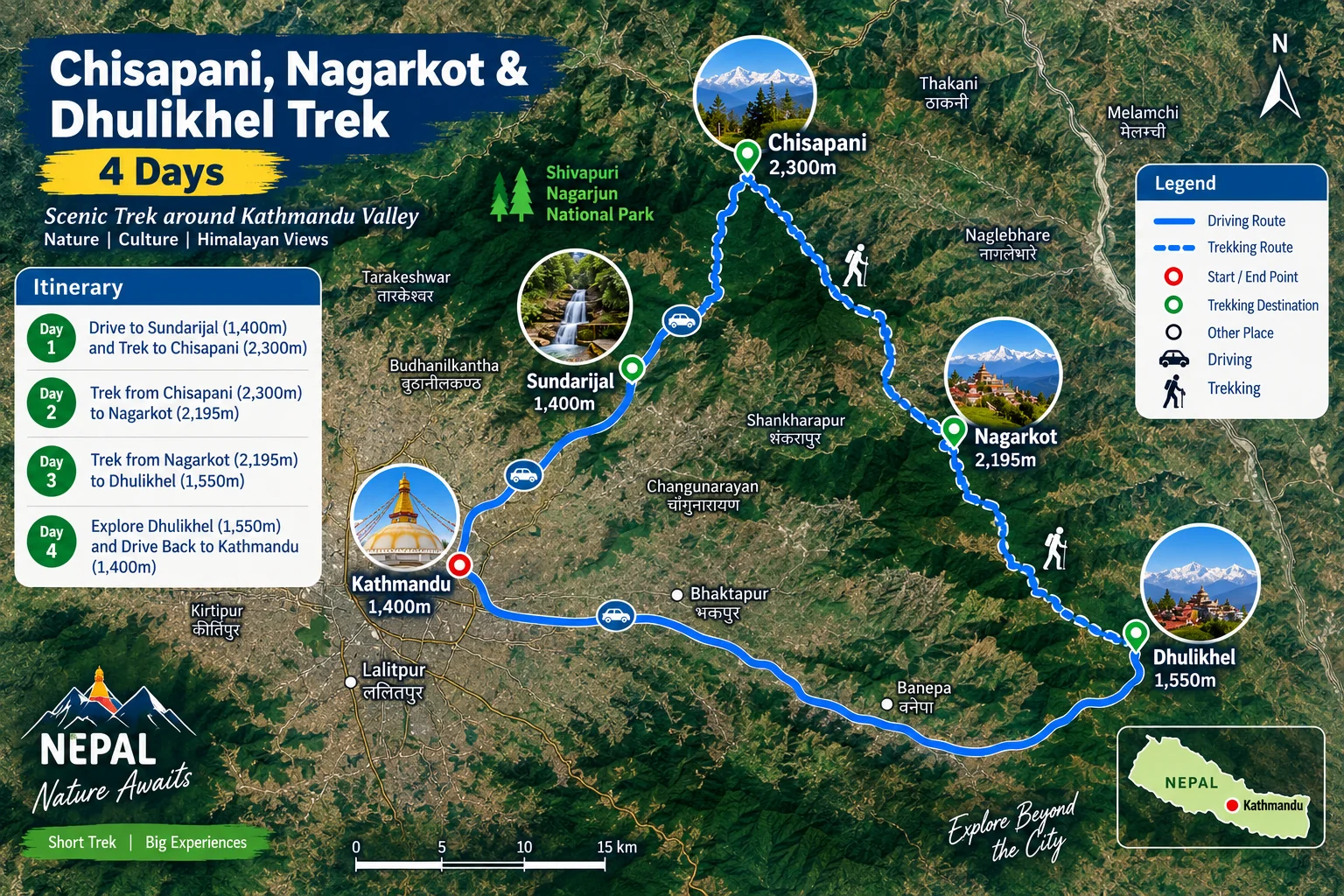
Route Map
Gear List / Packing Guide
| Gear | Recommended |
|---|---|
| Daypack | 20–30 L |
| Trekking Shoes | Comfortable & sturdy |
| Clothing | Light layers & warm jacket |
| Rain Gear | Rain jacket / poncho |
| Headwear | Sun hat & warm cap |
| Water Bottle | 1–2 L |
| Sunglasses | UV-protected |
| Trekking Poles | Optional |
| Sunscreen | SPF 30+ |
| Personal Items | First-aid & toiletries |
| Documents | Passport & permits |
FAQ
The Chisapani, Nagarkot & Dhulikhel Trek is a scenic 4-day short trek around Kathmandu Valley. It combines peaceful forest trails, traditional villages, terraced farmland, hilltop viewpoints, and beautiful Himalayan scenery. The trek is ideal for travelers who want a short hiking experience in Nepal without traveling to a remote high-altitude region.
Four days are ideal for completing the Chisapani, Nagarkot and Dhulikhel route at a comfortable pace. The itinerary includes trekking from Sundarijal to Chisapani, Chisapani to Nagarkot, Nagarkot to Dhulikhel, and a return drive to Kathmandu.
Yes, this short trek can be suitable for beginners who have a reasonable level of fitness and are comfortable walking for several hours each day. The route does not reach extreme high altitudes, but some sections include uphill and downhill walking.
The Chisapani, Nagarkot & Dhulikhel Trek is one of the scenic short trekking options near Kathmandu. It offers a combination of forests, villages, mountain views, sunrise and sunset scenery, and countryside landscapes within a few days.
The trek is generally considered a moderate short trek. You will walk for around 4–7 hours on trekking days, with a mixture of forest paths, stone steps, gradual climbs, descents, and village trails. Regular walking or basic fitness will help make the trek more comfortable.
The best seasons are generally spring, from March to May, and autumn, from September to November. These months usually offer pleasant trekking conditions and better chances of clear mountain views.
The highest point of this itinerary is Chisapani at approximately 2,300m / 7,546ft. The relatively moderate altitude makes this route a convenient option for travelers looking for Himalayan scenery without a high-altitude trek.
On clear days, the trek offers views of the Himalayan ranges from viewpoints around Chisapani, Nagarkot, and Dhulikhel. The scenery also includes green hills, valleys, forests, terraced fields, and traditional villages.
Yes. Chisapani and Nagarkot are particularly well known for scenic sunrise and sunset views. The visibility of the mountains and sunrise or sunset depends on weather and cloud conditions.
Major highlights include trekking through Shivapuri-area forests, staying in scenic hill settlements, experiencing traditional villages, enjoying Himalayan views, watching sunrise and sunset from Nagarkot, and exploring the charming town of Dhulikhel.
The main places included in the itinerary are Kathmandu, Sundarijal, Chisapani, Nagarkot, and Dhulikhel. The route combines short drives with scenic trekking through forests, villages, and countryside.
The trekking section starts at Sundarijal, after a drive from Kathmandu. The route continues through Chisapani and Nagarkot to Dhulikhel, and the journey ends with a drive back to Kathmandu.
Chisapani is reached by driving from Kathmandu to Sundarijal, followed by a scenic hike through forests and local settlements. The exact driving distance and trekking duration can vary depending on the selected route and road conditions.
Yes. The entire trek can be accessed by road from Kathmandu, so no domestic flight is required. This makes it a convenient short trekking option for travelers with limited time in Nepal.
Essential items include comfortable trekking shoes, a 20–30 liter daypack, layered clothing, a warm jacket, rain protection, sun hat, sunglasses, sunscreen, water bottle, personal toiletries, basic first-aid supplies, and necessary travel documents.
Accommodation is generally provided in teahouses, lodges, or hotels along the route. Facilities are comfortable but can vary between destinations. Private rooms may be available depending on the accommodation and availability.
Breakfast, lunch, and dinner are included on the trekking days according to the itinerary. Local lodges and teahouses generally provide a selection of simple, freshly prepared meals suitable for trekkers.
Yes, the trek can be a good option for families who enjoy walking and outdoor experiences. However, the daily walking duration and uneven trails should be considered when traveling with young children or older family members.
Permit and entry requirements can depend on the final route and current regulations, particularly for areas within or around Shivapuri Nagarjun National Park. Your trekking agency can confirm and arrange the applicable permits or entrance fees before the trek.
Yes. We can extend or customize this trek according to your interests, available time, fitness level, and travel preferences. Extra nights, sightseeing, additional hiking destinations, cultural experiences, or nearby attractions can be added to create a personalized itinerary.
More Details
 Chisapani, Nagarkot & Dhulikhel Trek Accommodation Types
The Chisapani, Nagarkot & Dhulikhel Trek offers a combination of comfortable lodges, teahouses, and hotels along the 4-day route. Accommodation is arranged in scenic locations, allowing you to relax after each day of trekking while enjoying peaceful surroundings and mountain views.
Accommodation Overview
| Location | Accommodation Type |
|---|---|
| Chisapani | Local Teahouses & Mountain Lodges |
| Nagarkot | Hotels & Scenic Lodges |
| Dhulikhel | Hotels & Local Lodges |
Chisapani Accommodation
Accommodation in Chisapani is generally provided in local teahouses or mountain lodges. Rooms are simple and comfortable, usually with basic beds and shared bathroom facilities. The peaceful surroundings and mountain views make Chisapani a pleasant overnight stop.
Nagarkot Accommodation
In Nagarkot, you will stay at a comfortable hotel or lodge. Many accommodations offer scenic views of the surrounding hills and Himalayan ranges. Nagarkot is also an excellent place to enjoy sunset and, weather permitting, sunrise views.
Dhulikhel Accommodation
Accommodation in Dhulikhel is generally provided in a hotel or local lodge. The town offers a comfortable setting after the trekking section, with opportunities to relax and enjoy panoramic views of the surrounding hills and mountains.
Room Facilities
Most accommodations along the route generally provide:
- Comfortable beds
- Blankets and pillows
- Private or shared rooms
- Shared or attached bathrooms depending on the property
- Basic furniture
- Dining facilities
- Hot shower facilities at selected accommodations
- Wi-Fi and charging facilities where available
What to Expect
Accommodation on this short trek is comfortable but varies by destination. Chisapani provides a traditional teahouse experience, while Nagarkot and Dhulikhel offer a wider choice of hotels and lodges. Facilities may vary depending on availability and the selected package.
 What to Expect from the Chisapani, Nagarkot & Dhulikhel Trek
The Chisapani, Nagarkot & Dhulikhel Trek is a scenic 4-day short trek combining forest trails, traditional villages, terraced farmland, hilltop viewpoints, and Himalayan scenery. The route is accessible from Kathmandu and provides a peaceful escape from the city without requiring a long journey into the high mountains.
Scenic Mountain Landscapes
Throughout the trek, you can enjoy changing landscapes as you walk through the hills surrounding Kathmandu Valley.
You can expect:
- Panoramic Himalayan views on clear days
- Green hills and mountain valleys
- Forest trails and countryside landscapes
- Terraced farmland
- Peaceful hilltop viewpoints
- Beautiful sunrise and sunset opportunities
Traditional Villages and Local Life
The trail passes through local settlements where you can observe traditional lifestyles and rural communities. Walking through these villages provides an opportunity to experience the peaceful countryside and interact with local people.
You can expect:
- Traditional village surroundings
- Local farming communities
- Terraced fields
- Traditional houses
- Family-run teahouses and lodges
- Friendly local hospitality
Trekking Through Forest Trails
The route includes beautiful forest sections, particularly around the Sundarijal and Chisapani areas. The peaceful trails provide a refreshing walking experience surrounded by nature.
You can expect:
- Forest paths
- Stone steps
- Gradual ascents and descents
- Green vegetation
- Scenic viewpoints
- Quiet trails away from busy city areas
Sunrise and Sunset Views
Chisapani and Nagarkot are particularly attractive for sunrise and sunset views. On clear days, you may enjoy beautiful colors across the hills and distant Himalayan peaks.
Dhulikhel Experience
Dhulikhel provides a relaxing end to the trekking section. The town is known for its scenic surroundings, traditional atmosphere, and Himalayan views, making it an enjoyable place to explore before returning to Kathmandu.
Daily Trekking Conditions
The trek involves several hours of walking each day with a mixture of uphill and downhill sections, forest paths, stone steps, and village trails. A comfortable and steady pace is recommended so you can enjoy the scenery and complete each day's journey comfortably.
 Best Time / Season to Visit the Chisapani, Nagarkot & Dhulikhel Trek
The best time for the Chisapani, Nagarkot & Dhulikhel Trek is generally during spring from March to May and autumn from September to November. These seasons usually offer pleasant temperatures, clearer skies, and better opportunities to enjoy Himalayan views, making them ideal for trekking around Kathmandu Valley.
Spring Season: March to May
Spring is a beautiful season for this trek, with pleasant weather and fresh green landscapes. The surrounding hills and forests become especially attractive during this period.
You can expect:
- Pleasant daytime temperatures
- Clear or mostly clear mountain views
- Green hills and forests
- Comfortable trekking conditions
- Beautiful countryside scenery
- Good opportunities for sunrise and sunset views
Autumn Season: September to November
Autumn is another excellent season for the trek. After the monsoon, the atmosphere is generally cleaner, providing better visibility of the surrounding hills and Himalayan ranges.
You can expect:
- Clear Himalayan views
- Stable and comfortable weather
- Pleasant daytime temperatures
- Fresh mountain landscapes
- Excellent sunrise and sunset opportunities
- Good trekking conditions
Winter Season: December to February
Winter trekking is possible, and the lower elevations can offer clear mountain views. However, mornings and evenings can be cold, so warm clothing is recommended.
You should prepare for:
- Cold mornings and evenings
- Warm jacket and layers
- Gloves and warm hat
- Clear but colder conditions
- Possible chilly winds at viewpoints
Monsoon Season: June to August
The monsoon season is generally less favorable because of frequent rainfall, cloudy conditions, and slippery trails. Mountain visibility can also be reduced during this period.
Possible challenges include:
- Rain and wet trails
- Slippery sections
- Cloudy mountain views
- Muddy paths
- Leeches in some forest areas
Best Months to Visit
For a combination of comfortable weather, clear mountain views, and enjoyable trekking conditions, March to May and September to November are the recommended months. However, actual weather conditions can vary from year to year.
 Nearby Places to Explore from the Chisapani, Nagarkot & Dhulikhel Trek
The Chisapani, Nagarkot & Dhulikhel Trek passes through several scenic destinations around Kathmandu Valley. Along the route, you can enjoy peaceful hill settlements, forest trails, mountain viewpoints, terraced farmland, and traditional countryside landscapes.
Sundarijal
Sundarijal is the starting point of the trekking section after driving from Kathmandu. Surrounded by forest and hills, it is an important gateway to the Shivapuri area.
Highlights include:
- Scenic forest surroundings
- Mountain streams and waterfalls
- Stone steps and hiking trails
- Gateway to the trekking route
- Peaceful natural environment
Chisapani
Chisapani is a scenic hilltop settlement and one of the major highlights of the trek. It is known for peaceful surroundings and panoramic views of the hills and Himalayan ranges.
Highlights include:
- Himalayan mountain views
- Sunrise and sunset scenery
- Forest trails
- Traditional village atmosphere
- Peaceful overnight experience
Nagarkot
Nagarkot is one of the most popular hill stations near Kathmandu and is famous for its panoramic views and sunrise and sunset scenery. It provides a beautiful stop between Chisapani and Dhulikhel.
Highlights include:
- Himalayan panorama
- Sunrise and sunset views
- Green hills and valleys
- Scenic walking trails
- Comfortable hilltop accommodation
Dhulikhel
Dhulikhel is a charming hill town and the final major destination of the trekking route. It is known for its traditional atmosphere, beautiful landscapes, and views toward the Himalayan range.
Highlights include:
- Panoramic mountain views
- Traditional town atmosphere
- Scenic viewpoints
- Local culture and lifestyle
- Peaceful surroundings
Why Explore These Places?
Each destination offers a different experience, from the natural surroundings of Sundarijal and Chisapani to the famous viewpoints of Nagarkot and the traditional atmosphere of Dhulikhel. Together, they make the 4-day trek a diverse journey through the nature, villages, and mountain landscapes of Kathmandu Valley.
 Foods Available on the Chisapani, Nagarkot & Dhulikhel Trek
Food is an important part of the Chisapani, Nagarkot & Dhulikhel Trek, and you can find a good variety of freshly prepared meals along the route. Teahouses, lodges, and hotels serve a combination of traditional Nepali, Indian, Tibetan, Chinese, and Continental dishes. Meals are generally simple, filling, and suitable for keeping you energized during daily hikes.
Traditional Nepali Food
Dal Bhat Tarkari is one of the most common and filling meals available during the trek. It usually includes steamed rice, lentil soup, seasonal vegetables, pickles, and sometimes additional curry. Other Nepali options may include vegetable curry, roti, thukpa, and local-style snacks.
Breakfast Options
Breakfast is usually served before starting the day's trek and may include porridge, eggs, bread, toast, pancakes, Tibetan bread, muesli, noodles, or tea and coffee. These meals provide a good source of energy for the morning's walking.
Lunch Options
Lunch is generally taken at a teahouse, lodge, or restaurant along the trekking route. Common choices include Dal Bhat, noodles, fried rice, pasta, momos, sandwiches, soup, and seasonal vegetables. Availability can vary depending on the location and accommodation.
Dinner Options
Dinner is usually a warm and filling meal after completing the day's hike. Dal Bhat, noodles, fried rice, pasta, momos, soups, vegetables, and other simple local dishes are commonly available. Meals are generally prepared fresh at the accommodation.
Snacks and Beverages
You can find snacks such as biscuits, chocolate, popcorn, chips, eggs, and seasonal fruits at many stops. Tea, coffee, hot lemon, hot chocolate, and other warm drinks are also commonly available, especially in the cooler mornings and evenings.
Food in Nagarkot and Dhulikhel
Nagarkot and Dhulikhel generally offer a wider selection of food because they have more hotels, restaurants, and cafes. Along with local Nepali dishes, you may find Indian, Chinese, Continental, and other international-style meals.
Drinking Water
Bottled water and other drinking-water options are available along the route. Trekkers should carry a reusable water bottle and maintain adequate hydration throughout the trek, particularly during longer walking days.
Vegetarian and Special Dietary Requirements
Vegetarian meals are widely available throughout the trek. If you have specific dietary requirements, allergies, or food preferences, it is best to inform your trekking agency and accommodation providers in advance so suitable meals can be arranged whenever possible.
 Culture and Etiquette of the Chisapani, Nagarkot & Dhulikhel Trek
The Chisapani, Nagarkot & Dhulikhel Trek passes through traditional villages and local communities where people follow their own customs and traditions. Respecting local culture and behaving responsibly helps create a positive experience for both trekkers and residents. A friendly attitude, polite communication, and respect for local traditions are highly appreciated throughout the trek.
Respect Local Customs and Traditions
Take time to observe and respect local customs, traditions, and religious practices. When visiting villages, temples, monasteries, or other cultural sites, follow local guidelines and avoid behavior that may be considered disrespectful.
Dress Appropriately
Comfortable trekking clothes are suitable for most of the trail, but modest clothing is recommended when visiting villages, temples, and religious places. Avoid overly revealing clothing, particularly around traditional communities and cultural sites.
Ask Before Taking Photos
Always ask for permission before photographing local people, particularly children, religious ceremonies, or private activities. Be respectful when taking photographs around homes, temples, and other culturally important places.
Respect Religious Places
When visiting temples, shrines, or monasteries, maintain a quiet and respectful manner. Follow signs and local instructions, and avoid touching religious objects or entering restricted areas without permission.
Greetings and Communication
A polite “Namaste” is a friendly and respectful way to greet local people. Trekkers are encouraged to communicate patiently and respectfully with villagers, guides, porters, hotel staff, and other people encountered along the route.
Respect Local Communities
The trek passes through villages where people carry out their daily activities. Avoid disturbing residents, entering private property, or blocking paths. Supporting local teahouses, lodges, shops, and restaurants also contributes to the local community.
Environmental Responsibility
Keep the trekking routes, forests, villages, and viewpoints clean. Avoid littering, use designated waste bins where available, and carry reusable water bottles and other environmentally friendly items whenever possible.
Responsible Trekking Etiquette
Stay on established trails whenever possible and follow the instructions of your guide. Keep noise levels reasonable, especially around villages and accommodation areas, and respect other trekkers who are enjoying the peaceful surroundings.
Local Food and Hospitality
Local families and lodge owners often provide warm hospitality to trekkers. Showing appreciation for their service, respecting dining areas, and being patient with meal preparation are simple ways to demonstrate good trekking etiquette.
 Safety and Security on the Chisapani, Nagarkot & Dhulikhel Trek
The Chisapani, Nagarkot & Dhulikhel Trek is a relatively accessible short trek, but basic safety precautions are still important for a comfortable journey. The trail includes forest paths, stone steps, uphill and downhill sections, and changing weather conditions. Following your guide's instructions, walking at a comfortable pace, and staying aware of your surroundings can help ensure a safe and enjoyable trek.
Follow Your Guide's Instructions
If you are traveling with a guide, follow their instructions regarding the trail, weather, walking pace, and local conditions. Your guide can also help with navigation and communication with local communities.
Stay on the Main Trail
Use established trekking routes and avoid taking unfamiliar shortcuts, particularly through forested areas. Staying together with your group is recommended, especially in sections where trails may branch.
Be Careful on Stone Steps and Slippery Trails
Some sections include stone steps and uneven terrain. During or after rainfall, trails can become muddy and slippery, so wear sturdy trekking shoes and walk carefully.
Weather Conditions
Weather can change quickly, particularly in the hills. Carry suitable rain protection and warm layers, and check local weather conditions before beginning each day's trek.
Stay Hydrated
Carry enough drinking water and drink regularly throughout the day. Staying hydrated is particularly important during longer walking sections and in warmer weather.
Protect Yourself from the Sun
Use sunscreen, sunglasses, and suitable headwear during daytime trekking. Even on cooler days, prolonged exposure to sunlight can cause sunburn.
Keep Valuables Secure
Keep your passport, money, mobile phone, camera, and other valuable belongings safely stored. Avoid leaving important items unattended in shared areas of teahouses, lodges, or hotels.
Emergency Preparedness
Carry basic personal medication and a small first-aid kit. Keep your guide or trekking agency's contact details available in case assistance is needed during the trek.
Respect Wildlife and the Environment
The route passes through forested areas where you may encounter birds and other wildlife. Observe animals from a safe distance and avoid feeding or disturbing them. Keep the trails and natural surroundings clean by carrying your waste until proper disposal facilities are available.
Travel Insurance
Travel insurance is recommended for trekking in Nepal. Make sure your policy covers trekking activities and any emergency assistance that may be appropriate for your trip.
 Transportation Facilities for the Chisapani, Nagarkot & Dhulikhel Trek
The Chisapani, Nagarkot & Dhulikhel Trek is easily accessible from Kathmandu by road, making it a convenient short trekking option in the Kathmandu Valley region. The trek combines short road transfers with walking sections through forests, villages, ridges, and countryside. Private vehicles or other suitable local transportation can be arranged according to the itinerary and group requirements.
Kathmandu to Sundarijal
The trek begins with a drive from Kathmandu to Sundarijal, the starting point of the walking section toward Chisapani. The journey takes you through the northern outskirts of Kathmandu and provides easy access to the Shivapuri area.
Sundarijal to Chisapani
From Sundarijal, the journey continues on foot. There is no road transfer required for this trekking section, as the route follows forest trails, stone steps, streams, and local village paths toward Chisapani.
Chisapani to Nagarkot
The journey from Chisapani to Nagarkot is completed by trekking. The trail passes through forests, villages, terraced farmland, and scenic ridges before reaching Nagarkot.
Nagarkot to Dhulikhel
The route from Nagarkot to Dhulikhel is also a walking section. You will trek through peaceful countryside, forests, farmland, and local settlements before gradually descending toward Dhulikhel.
Dhulikhel to Kathmandu
After exploring Dhulikhel on the final day, you will travel back to Kathmandu by road. A private vehicle or other suitable transportation can be arranged depending on the group size and package arrangements.
Private Transportation
Private transportation is a convenient option for the road sections of the trek. It provides flexibility with departure times, luggage, and comfort, particularly for groups or families traveling together.
Local Transportation
Local vehicles may also be available for certain road sections depending on the itinerary and local conditions. Your trekking agency or guide can help arrange suitable transportation when required.
Transportation and Luggage
During the trekking sections, you should carry your essential belongings in a comfortable daypack. Larger luggage can be managed according to the package arrangement, allowing you to trek more comfortably with only the items needed during the walking days.
 Chisapani, Nagarkot & Dhulikhel Trek Difficulty and Physical Fitness Required
The Chisapani, Nagarkot & Dhulikhel Trek is considered a moderate short trek and is suitable for travelers with a reasonable level of fitness. The route does not involve extreme altitude, but you will experience several hours of walking each day, including uphill and downhill sections, stone steps, forest trails, and uneven paths. With regular walking practice and a comfortable pace, most active travelers can complete the trek comfortably.
Overall Trek Difficulty
The trek is generally rated moderate because of its daily walking duration and varied terrain rather than high altitude. The trail includes gradual climbs, descents, forest paths, village trails, and stone steps.
Daily Walking Duration
You can expect approximately 4–7 hours of walking per day, depending on the itinerary, trail conditions, walking speed, and stops for meals and sightseeing. Day 2 from Chisapani to Nagarkot is one of the longer walking days.
Altitude and Acclimatization
The highest point of the trek is around 2,300m / 7,546ft, so serious altitude-related problems are less common compared with higher Himalayan treks. However, walking at a steady pace, staying hydrated, and allowing yourself enough rest are still recommended.
Physical Fitness Required
A basic to moderate level of fitness is recommended. You should be comfortable walking for several hours, including on uphill and downhill terrain. Regular walking, hiking, or simple cardio exercises before the trek can help prepare your body.
Trail Conditions
The route includes forest trails, stone steps, dirt paths, village roads, and uneven sections. During the rainy season, some areas may become muddy or slippery, so sturdy trekking shoes are recommended.
Suitable for Beginners
Yes, the trek can be suitable for beginners who are reasonably fit. Previous high-altitude trekking experience is not normally required, but you should be prepared for consecutive days of walking.
Families and Older Travelers
Fit families and older travelers can consider this trek, particularly with a comfortable pace and appropriate rest breaks. The itinerary can also be adjusted according to fitness level and travel preferences.
How to Prepare
Start preparing several weeks before the trek by walking regularly and gradually increasing your walking distance. Include uphill and downhill walking when possible, and use comfortable trekking shoes before the trip to avoid discomfort and blisters.
Listen to Your Body
Take regular breaks, maintain a steady pace, eat properly, and drink enough water throughout the trek. If you feel unusually tired or unwell, inform your guide and allow yourself time to rest.
 Chisapani, Nagarkot & Dhulikhel Trek Cost Breakdown
The cost of the Chisapani, Nagarkot & Dhulikhel Trek depends on the services included in your package, accommodation choices, transportation, meals, and group size. Since this is a short trek near Kathmandu, the overall cost is generally more manageable than longer and higher-altitude trekking routes in Nepal.
Accommodation Costs
Accommodation is included according to the selected package and usually covers teahouses, lodges, or hotels in Chisapani, Nagarkot, and Dhulikhel. The price may vary depending on the room type, hotel category, season, and available facilities.
Transportation Costs
The package may include road transportation between Kathmandu, Sundarijal, and Dhulikhel according to the itinerary. Private transportation generally costs more than shared or local transportation, while the final price can also depend on group size and vehicle type.
Food and Meal Costs
Meals included in the package are generally specified in the itinerary. If meals are not included, trekkers should budget separately for breakfast, lunch, and dinner. Food prices may vary between local teahouses, lodges, hotels, and restaurants.
Guide and Trekking Services
If you choose a guided trek, the cost may include a professional trekking guide and related services. A guide can assist with navigation, local communication, trekking information, and general support throughout the journey.
Permits and Entry Fees
Any applicable permits or entry fees should be confirmed before booking, as requirements can depend on the current route and local regulations. Your trekking agency can advise you about the permits required for your specific itinerary.
Additional Expenses
You may need additional money for personal expenses such as snacks, beverages, bottled water, Wi-Fi, hot showers, charging, tips, souvenirs, and other services not specifically mentioned as included in the package.
Private vs. Group Trek
The cost per person can vary according to whether you travel privately or as part of a group. Private trips provide greater flexibility, while group departures can be more economical because transportation and guide costs are shared.
What Affects the Total Cost?
The main factors affecting the trek cost include group size, accommodation category, transportation type, guide services, season, meals, and additional activities or sightseeing. Customized itineraries may also have different pricing depending on the services requested.
Before Booking
Always check the Included/Excluded section of your selected package to understand exactly what the price covers. If you want to add extra nights, private transportation, sightseeing, upgraded accommodation, or other services, the total cost can be adjusted accordingly.
 Tips for Your Chisapani, Nagarkot & Dhulikhel Trek
A little preparation can make your Chisapani, Nagarkot & Dhulikhel Trek more comfortable, enjoyable, and stress-free. The route is a moderate short trek, so being prepared for several hours of walking, changing weather, and different trail conditions will help you make the most of your journey.
Prepare Your Fitness
Walk regularly before the trek and gradually increase your walking distance. Include some uphill and downhill walking to become familiar with the terrain you may encounter on the trail.
Pack Light but Smart
Carry only the essentials in your daypack. Comfortable trekking shoes, light layers, a warm jacket, rain protection, a water bottle, sunglasses, sunscreen, and personal toiletries are useful throughout the trek.
Wear Comfortable Trekking Shoes
Choose sturdy and comfortable trekking shoes with good grip. Make sure you have worn them before the trek to reduce the chance of blisters and discomfort.
Carry Enough Water
Keep a reusable water bottle with you and drink water regularly throughout the day. Staying hydrated is particularly important during longer walking sections.
Dress in Layers
Temperatures can change between mornings, afternoons, and evenings. Wearing several light layers makes it easier to adjust your clothing according to the weather.
Check the Weather
Weather conditions can change quickly in the hills. Check the forecast before starting each day's trek and carry rain protection, particularly during the wetter months.
Start Your Day Early
Starting early allows you to enjoy cooler temperatures and gives you more time for walking, photography, meals, and scenic stops along the route.
Respect Local Culture
Be respectful when passing through villages and visiting temples or other cultural sites. Ask permission before photographing local people and follow local customs and guidelines.
Protect the Environment
Do not throw rubbish along the trail. Carry your waste until you find an appropriate disposal point and avoid unnecessary use of single-use plastics.
Keep Important Documents Safe
Keep your passport, permits, travel insurance details, money, and other important documents secure and easily accessible when needed.
Follow Your Guide's Advice
If traveling with a guide, follow their recommendations regarding walking pace, trail conditions, weather, rest stops, and local customs. Your guide can help make the trek safer and more enjoyable.
Carry Some Extra Cash
Keep some Nepalese rupees available for personal expenses such as snacks, drinks, hot showers, charging, souvenirs, or other services that may not be included in your package.
Enjoy the Journey
Take time to appreciate the forests, villages, terraced fields, mountain scenery, sunrise, and sunset rather than focusing only on reaching the next destination. The relaxed pace and scenic surroundings are an important part of this short trek.
 Documents Required for the Chisapani, Nagarkot & Dhulikhel Trek
The Chisapani, Nagarkot & Dhulikhel Trek is a short and accessible trekking route near Kathmandu, so the documentation requirements are generally straightforward. International travelers should carry their valid passport, visa, travel insurance details, and any permits or identification documents required for the current trekking route. Keeping both physical and digital copies of important documents is recommended.
Passport
International travelers should carry a valid passport throughout the trip. Make sure your passport has sufficient validity for your travel plans and keep it safely stored when trekking.
Nepal Visa
Foreign travelers entering Nepal generally need an appropriate Nepal tourist visa unless they are eligible for another applicable entry arrangement. Keep your visa information available during your stay.
Travel Insurance
Travel insurance is recommended for the trek. Keep a copy of your insurance policy and emergency contact information with you so they are readily available if required.
Trekking Permits and Entry Documents
Depending on the current route and local regulations, certain permits or entry fees may apply. Your trekking agency can confirm the applicable requirements and assist with the necessary arrangements.
Passport Copy
It is useful to carry a photocopy or digital copy of your passport's identification page. Keep the copy separate from your original passport for additional security.
Emergency Contact Details
Keep important contact information, including your travel agency, guide, accommodation, insurance provider, and emergency contacts, easily accessible during the trek.
Booking Confirmation
Keep your trek booking confirmation or itinerary details available, particularly if transportation, accommodation, or other services have been arranged in advance.
Digital Copies
Store digital copies of your passport, visa, insurance, and important booking documents on your phone or secure cloud storage. This provides a useful backup if the original documents are misplaced.
Important Note
Documentation and permit requirements can change according to government and local regulations. It is advisable to confirm the latest requirements with your trekking agency before departure.
 Permits Needed for the Chisapani, Nagarkot & Dhulikhel Trek
The Chisapani, Nagarkot & Dhulikhel Trek is a short trekking route around the Kathmandu Valley, and the permit requirements are generally straightforward. The exact permits or entry fees required can depend on the current route, protected-area regulations, and local authorities.
Shivapuri Nagarjun National Park Entry
The route from Sundarijal toward Chisapani passes through the Shivapuri Nagarjun National Park area. An applicable national park entry permit or fee may therefore be required for this section of the trek.
Local Entry Fees
Some locations along the route may have local entry fees or other charges. These requirements can vary according to local regulations and may change over time.
Trekking Agency Assistance
If you book the trek through a trekking agency, the agency can advise you about the applicable permits and arrange the required documentation according to the current regulations.
Documents for Permit Processing
A valid passport is generally useful for international travelers when permits or entry documentation need to be arranged. Carrying a passport copy can also make the process more convenient.
Permit Costs
Permit and entry-fee costs are normally separate from other trek expenses unless they are specifically listed under the Included section of your package. Always check your package details before departure.
Important Note
Permit requirements, entry fees, and regulations can change. We recommend confirming the latest requirements before your trek so that all necessary permissions are arranged in advance.
 Booking and Payment Procedures for the Chisapani, Nagarkot & Dhulikhel Trek
Booking the Chisapani, Nagarkot & Dhulikhel Trek is simple and can be arranged according to your travel dates, group size, and preferred services. Once your itinerary and package details are confirmed, the booking can be secured by providing the required traveler information and making the agreed payment.
Choose Your Trek Dates
Select your preferred trekking dates and inform us about the number of travelers in your group. We can also discuss private or customized arrangements based on your schedule and preferences.
Confirm the Itinerary
Review the 4-day itinerary, accommodation, transportation, meals, guide services, and other included services before confirming your booking. Any requested changes can be discussed during the planning stage.
Provide Traveler Details
International travelers may be asked to provide basic information such as passport details, contact information, arrival details, and other information needed to arrange the trekking services.
Booking Confirmation
After the itinerary and services are confirmed, you will receive booking confirmation with the agreed package details. Keep this information available during your trip.
Payment Procedure
Payment terms can vary depending on the booking and services arranged. The required deposit and remaining balance should be confirmed with the trekking agency at the time of booking.
Payment Methods
Available payment methods may include bank transfer, online payment, or other agreed payment options. Confirm the preferred method and any applicable transaction charges before making payment.
Final Confirmation
Once the required payment has been received, the trekking arrangements can be finalized, including accommodation, transportation, guide services, and other applicable arrangements.
Cancellation and Changes
Cancellation, postponement, or itinerary-change policies may vary depending on the services booked and the timing of the request. Always review the applicable terms and conditions before making payment.
Customized Booking
The trek can be customized according to your interests, available time, fitness level, group size, and travel preferences. Additional nights, sightseeing, upgraded accommodation, or other services can be added upon request.
 Factors to Consider Before Choosing the Chisapani, Nagarkot & Dhulikhel Trek
The Chisapani, Nagarkot & Dhulikhel Trek is a good choice for travelers looking for a short and scenic trekking experience close to Kathmandu. Before booking, consider your fitness level, preferred travel season, available time, accommodation preferences, and the type of experience you want. Understanding these factors will help you choose the trek with realistic expectations and enjoy the journey comfortably.
Available Time
This is a 4-day trek, making it suitable for travelers with limited time in Nepal. Consider your arrival and departure schedule when planning the trek to ensure you have enough time for transportation and other activities.
Physical Fitness
The trek involves several hours of walking, including uphill and downhill sections, stone steps, forest trails, and uneven terrain. A reasonable level of fitness and regular walking practice will help you enjoy the trek more comfortably.
Preferred Travel Season
Spring and autumn are generally the most favorable seasons for this trek, particularly March to May and September to November. Winter can be colder, while the monsoon season may bring rain, muddy trails, and reduced mountain visibility.
Scenery and Mountain Views
If you are interested in Himalayan scenery, sunrise, and sunset views, Chisapani and Nagarkot are particularly appealing. Clear weather provides better opportunities to enjoy panoramic mountain and countryside views.
Accommodation Preference
Accommodation ranges from simple local teahouses and lodges in Chisapani to more comfortable hotels and lodges in Nagarkot and Dhulikhel. Consider the level of comfort and facilities you prefer before booking.
Walking Experience
Previous trekking experience is not essential, but you should be comfortable walking for several consecutive days. If you are a beginner, maintaining a steady pace and taking regular breaks can make the journey easier.
Budget
Consider the cost of accommodation, meals, transportation, guide services, permits or entry fees, and personal expenses. Your total cost will depend on the services and accommodation category selected.
Private or Group Travel
Decide whether you prefer a private trek or group arrangement. A private trek offers greater flexibility with the walking pace and itinerary, while a group trek can be a more economical option.
Weather and Trail Conditions
Weather can affect trail conditions and mountain visibility. Be prepared for changing temperatures and carry suitable clothing, rain protection, and comfortable trekking shoes.
Customization Options
Consider whether you want additional nights, sightseeing, upgraded accommodation, or other activities. The itinerary can be customized according to your interests, available time, fitness level, and travel preferences.
Overall Trekking Experience
Choose this trek if you want a combination of nature, village life, forest trails, mountain scenery, sunrise and sunset views, and cultural experiences without traveling to the remote or very high-altitude Himalayan regions.
Tour You Might Also Like


We are associated with